The Largest US Grid Wants to Switch Off Data Centres First
PJM has asked federal regulators to let it curtail new large loads before households and to run a one-off backstop auction on 30 September. Its own market monitor puts the data-centre bill at $29 billion and wants the plan rejected.
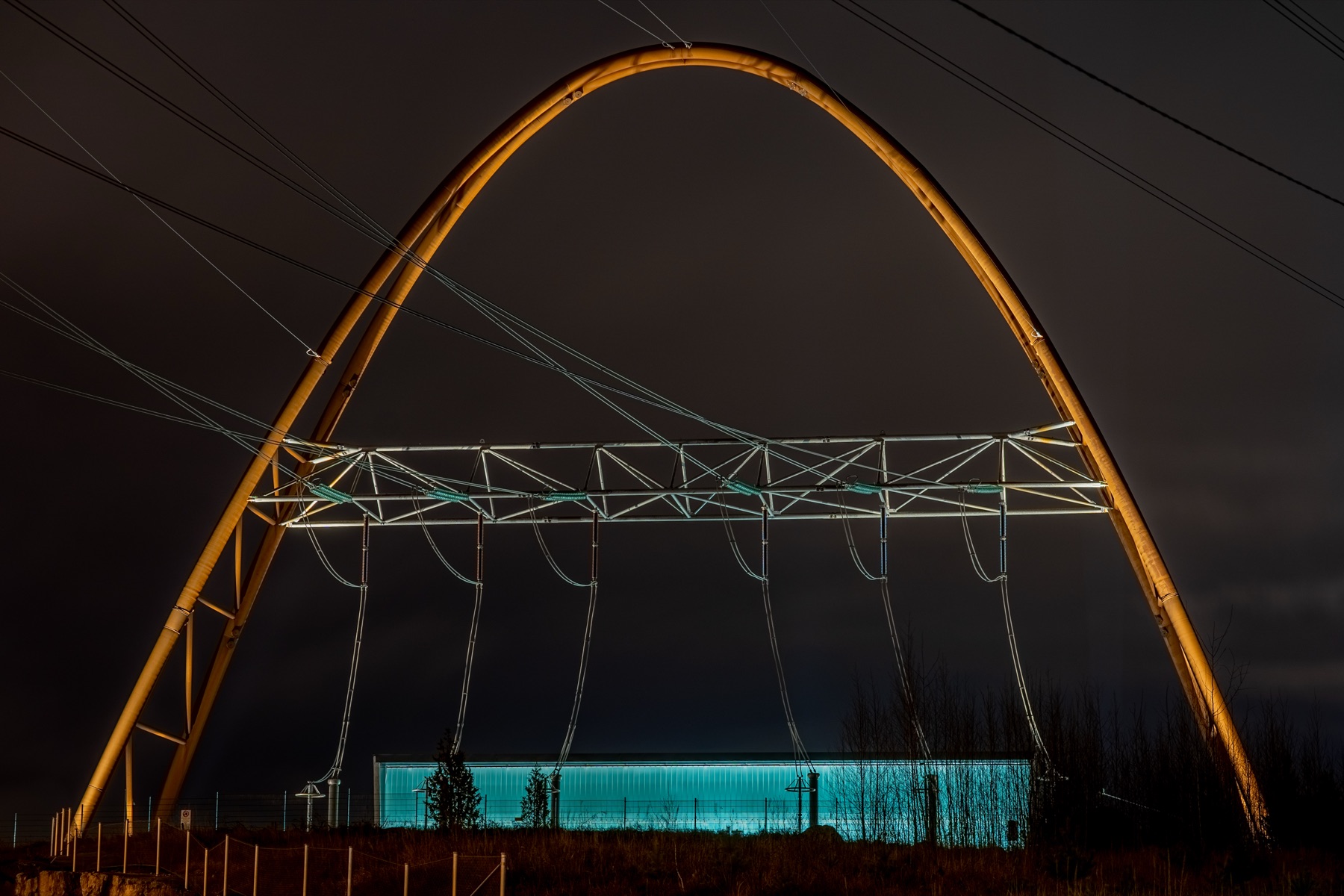
Grid operators have spent two years describing data-centre demand as a planning problem. PJM Interconnection, the largest grid in the United States, has now written down what it wants to do about it, and the document reads less like planning than triage. New large loads that have not brought their own generation would be first in line for curtailment. The market monitor's response is that the plan should be thrown out.
What PJM filed
On 13 August 2026 PJM proposed to FERC a framework that Reuters summarised as forcing data centres to use back-up generators when grid supply nears dangerously low levels, with utilities directed to reduce or transfer demand from data centres and other large users ahead of any action cutting off traditional consumers. PJM said it lacks authority to curtail such sites itself and needs state cooperation. In its own description, the Interim Resource Adequacy Service applies to new large loads that have not brought their own new capacity or had it covered by the companion Reliability Backstop Procurement; a large-load registry would track them; and from the 2029/2030 auction, new large loads without their own supply would be excluded from the auction's demand calculation. PJM attributes 30 GW of the 32 GW of demand growth it forecasts from 2024 to 2030 to data centres, and says the model is consistent with the White House's build, bring or buy pledge.
The mechanics, as reported by POWER magazine from the filing: a large load is a site with cumulative peak of at least 50 MW, including affiliated facilities within a mile; the rules apply to loads entering service after 1 June 2027; and PJM asked FERC to act by 12 October. The board has warned large-load demand could rise about 70 GW by 2038 while roughly 15 GW of generation has retired since 2022.
The shortfall and the auction
The trigger is arithmetic. PJM's 2028/2029 base residual auction, held from 30 June to 7 July, cleared 6,831 MW short of the reliability requirement at the FERC-approved cap of $325 per MW-day; the previous auction had cleared 6,623 MW short at $333.44. PJM's companion filing on 31 July proposes a one-time backstop procurement to cover the gap, with FERC approval requested by 29 September and the auction opening on 30 September, clearing over up to six weeks before the December capacity auction.
PJM capacity auction shortfall versus reliability requirement. Shortfall: 2027/2028 auction 6623 MW, 2028/2029 auction 6831 MW.
The monitor's bill
PJM's independent market monitor, Monitoring Analytics, published its quarterly state-of-the-market report on 13 August. It found that data-centre load in the capacity market raised the total cost of wholesale power by $11.11 per MWh, or 9.7%, in the first half of 2026, from $103.40 to $114.50, excluding effects on energy and transmission costs; total wholesale cost rose 50.3% year on year and capacity costs rose 207%. In a 31 August presentation the monitor calculated that existing and forecast data-centre load raised capacity-market revenues by a combined $29.4 billion across the 2025/26 to 2028/29 auctions, adding: 'This total will continue to grow until the issues associated with the addition of large data center loads are addressed.'
On 3 September the monitor filed a protest asking FERC to reject the interim service filing in its entirety, calling it 'a convoluted, inconsistent, confusing proposal', having already protested the backstop procurement on 21 August. NYU's Institute for Policy Integrity told FERC the same week that PJM had not shown the backstop auction is just and reasonable, arguing that bilateral contracting would allocate costs more precisely. The proposals did not reach stakeholder consensus and were directed by PJM's board; intervenors include the Maryland Public Service Commission, the Illinois attorney general and New Jersey's rate counsel.
Who benefits, who is at risk
Beneficiaries: existing generators and any developer that already holds capacity; households, if curtailment priority actually shields them. At risk: data-centre developers with 2027 connection dates that fall under the new rules, and, if the monitor is right about cost allocation, the ratepayers the plan claims to protect.
What happens next?
- FERC rules on the backstop procurement by 29 September and the interim service by 12 October, or sets them for further process.
- The backstop auction opens 30 September and shows what price clears the 6.8 GW gap.
- State regulators in PJM decide whether to grant the curtailment authority PJM says it lacks.
- NERC files large-load reliability standards with FERC by the end of 2026.
Related topics
Sources & references
- 01PJM proposes plan to buy more power, curtail data centers — Reutersnews
- 02PJM proposes framework to connect data centers without compromising reliability, affordability — PJM Inside Linesprimary
- 03PJM widens response to data center load as capacity shortfalls deepen — POWER Magazinenews
- 04Quarterly State of the Market Report for PJM, 2026 — Monitoring Analytics (Independent Market Monitor)primary
- 05Powering Reliability through Market Design (presentation) — Monitoring Analyticsprimary
- 06IMM protest, Docket ER26-3515 — Monitoring Analyticsprimary
- 07Comments to FERC on PJM's proposed backstop — Institute for Policy Integrity, NYUprimary
More from Energy

Record Power Demand, Even After Texas Hit Pause
EIA's September Short-Term Energy Outlook projects US generation rising 2.2% to a record 4,368 billion kWh in 2026 and a further 1.7% in 2027, with the West South Central region the largest contributor despite the Texas pause. EIA cut its 2027 Texas load-growth forecast from 14% to 6% after Governor Abbott ordered an audit of every data centre in ERCOT's queue.

Powering Intelligence: Energy as the Binding Constraint on AI
A Deep Dive on the energy demand of AI, the infrastructure racing to meet it, the political economy of who pays, and the technologies that could relieve the constraint.