Boeing Will Send Layoff Notices on 9 December, Union Says
SPEEA said after meeting senior Boeing engineering managers on 19 November 2026 that the company could not tell it who or how many of the roughly 50,500 Commercial Airplanes staff will go, or whether a second round follows.
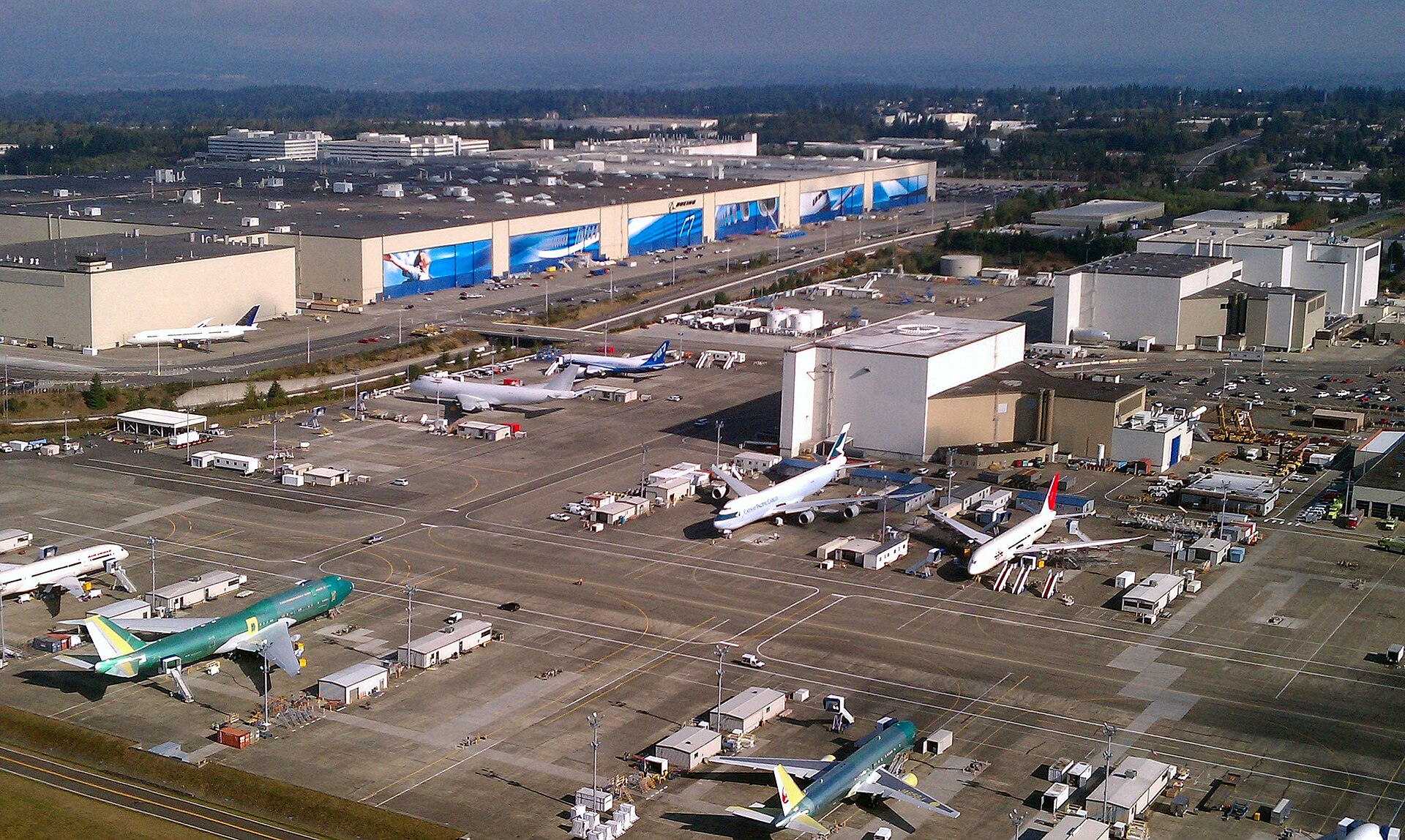
Boeing will send 60-day layoff notices to staff in its Commercial Airplanes division on 9 December 2026, with separations taking effect on 12 February 2027, the Society of Professional Engineering Employees in Aerospace said after its Joint Workforce Committee met senior Boeing engineering managers on 19 November.
Almost everything else about the cut remains undetermined, by the company's own account to the union.
We cannot say who or how many people will receive layoff notices. We cannot say whether this will be the only round of layoffs. The Boeing engineering managers said they had not yet determined those facts, which our committee found both surprising and frustrating.
Stephanie Pope, who runs the division, told employees in an internal memo on 9 November that Boeing Commercial Airplanes would reduce its workforce by about 5 per cent through attrition and involuntary layoffs, Reuters reported the same day. The division had 50,494 employees as of December 2025 according to Boeing's website, which places roughly 2,500 jobs within the scope of the reduction. SPEEA puts its own annual attrition rate at 4.9 per cent and says that alone will not meet Boeing's short-term target.
Production rates, not the contract
Asked whether the layoffs were a form of retaliation for the recent contract talks, Boeing's engineering managers said "absolutely not", according to SPEEA's account, and said instead that delays in reaching higher production rates had left some programmes overstaffed. Chief executive Kelly Ortberg told analysts in October that Boeing would miss its 737 production and delivery targets for the year. The company now expects to reach 47 of the narrowbody jets a month in early 2027, a rate it had previously projected for the summer of 2026, and it has also struggled to lift 787 output from eight a month to ten.
The cuts will be targeted rather than across the board, aimed at work statements that are ending or can be ended, and not every site will be affected, the union said. There will be no voluntary layoffs and no buy-outs. Names of staff leaving the commercial division will be passed to Boeing Defense and Space and to Boeing Global Services, where skill teams will look for places to put them.
Paid for sixty days, and told to stay home
The mechanism SPEEA objects to most is what Boeing calls a non-working reduction in force. Workers who receive a WARN notice on 9 December would continue to draw pay for the full 60 days but would be told to stay home after roughly a week. The union has raised concerns about what that does to their access to internal systems, and so to their ability to apply for other jobs inside Boeing during the only window in which they are still employees.
That detail is the one with the sharpest edge for the people involved. A 60-day WARN notice is meant to be a notice period; a week of work followed by seven weeks at home converts it into severance that happens to be paid on the payroll, and it removes the internal transfer market at exactly the moment the company says it wants to redeploy people into its defence and services arms.
Boeing's reduction is worth separating from the year's dominant workforce story. As Parallax Nexus reported on 6 November, announced US job cuts in October fell 71 per cent against October 2025, and employers' citations of AI dropped down the list of stated reasons. Nothing in Boeing's explanation involves automation or software. It is a manufacturer that cannot build aircraft fast enough, cutting the engineering staff it hired against a production rate it has not reached.
What is not known is the only thing that matters to the roughly 2,500 households in scope: whether they are in it. On the union's account Boeing had not decided that three weeks before the notices go out, and would not rule out a second round. Boeing had not responded publicly to the union's characterisation of the meeting at the time of writing, and the company's own framing of the reduction, announced on 9 November, emphasised attrition rather than involuntary cuts.
What happens next?
- WARN notices are scheduled to go out on 9 December 2026, with separations on 12 February 2027.
- SPEEA says it will press Boeing for the number of affected staff and the sites involved, and for whether further rounds follow.
- Boeing has told the union it aims to reach a 737 production rate of 47 jets a month in early 2027.
- Workers leaving the commercial division are to be considered for roles in Boeing Defense and Space and Boeing Global Services.
Related topics
Sources & references
- 01Disappointing meeting yields little information about layoffs — SPEEA IFPTE Local 2001primaryUnion account of the 19 November 2026 meeting with Boeing engineering managers; source of the notice and separation dates and the non-working RIF detail.
- 02Boeing to cut 5% of commercial jet workforce amid production struggles — ReutersnewsDan Catchpole, Seattle, 9 November 2026; Stephanie Pope memo, 50,494 division headcount, 737 and 787 rate detail.
- 03Boeing leaves open possibility of more layoffs amid stalled production plans — Reutersnews20 November 2026 wire follow-up on the union meeting.
- 04Where Will Boeing Cut Commercial Workforce? White-Collar Union Still Doesn't Know — Leeham News and Analysisnews19 November 2026; corroborates the union's quoted statement.
- 05SPEEA seeks clarity from Boeing over planned 5% Commercial Airplanes workforce cut — Aviation TodaynewsAttrition rate of 4.9 per cent and redeployment to Defense and Global Services.
More from Future
OECD Finds Schooling Reshaped Work More Than AI Exposure Did
Occupations more exposed to AI saw a smaller increase in monotonous tasks over the period, the OECD and Eurofound report, but the authors attribute more of the shift in work organisation to education. Eurofound's 2024 survey put generative AI use at 12 per cent of EU workers.

Migrants Now Hold 16% of OECD Jobs as Inflows Fall Again
The OECD's International Migration Outlook 2026, published on 12 November, records 6.1 million new permanent immigrants across member states in 2025, down 1.6 per cent but still 12.5 per cent above 2019. Immigrants account for 16 per cent of OECD employment and 12 per cent of the population, and in just over half of member countries they supplied at least half of employment growth over the decade to 2024.
US Worker Engagement Hits 29% as Remote Staff Fall Fastest
Gallup surveyed 21,648 US adults between 5 and 19 August 2026 and found 29 per cent of employees engaged, down two points on the quarter. The decline was concentrated among remote and hybrid staff at employers that have adopted AI, and the engagement advantage those employers held in the second quarter has largely gone.
Britain's Wage Floor Undershoots Its Own Target by 23p
The UK government accepted the Low Pay Commission's recommendations in full on 28 October 2026, taking the National Living Wage to £13.21 from April 2027. The Commission's own estimate of the rate needed to hit its statutory reference point was £13.44.