California Subpoenas Nvidia Over Chips and Investor Claims
Attorney General Rob Bonta wants to know whether advanced chips or confidential information reached China and whether Nvidia misled investors about the risk. The quarterly filing that would have to answer some of those questions has not been filed yet.
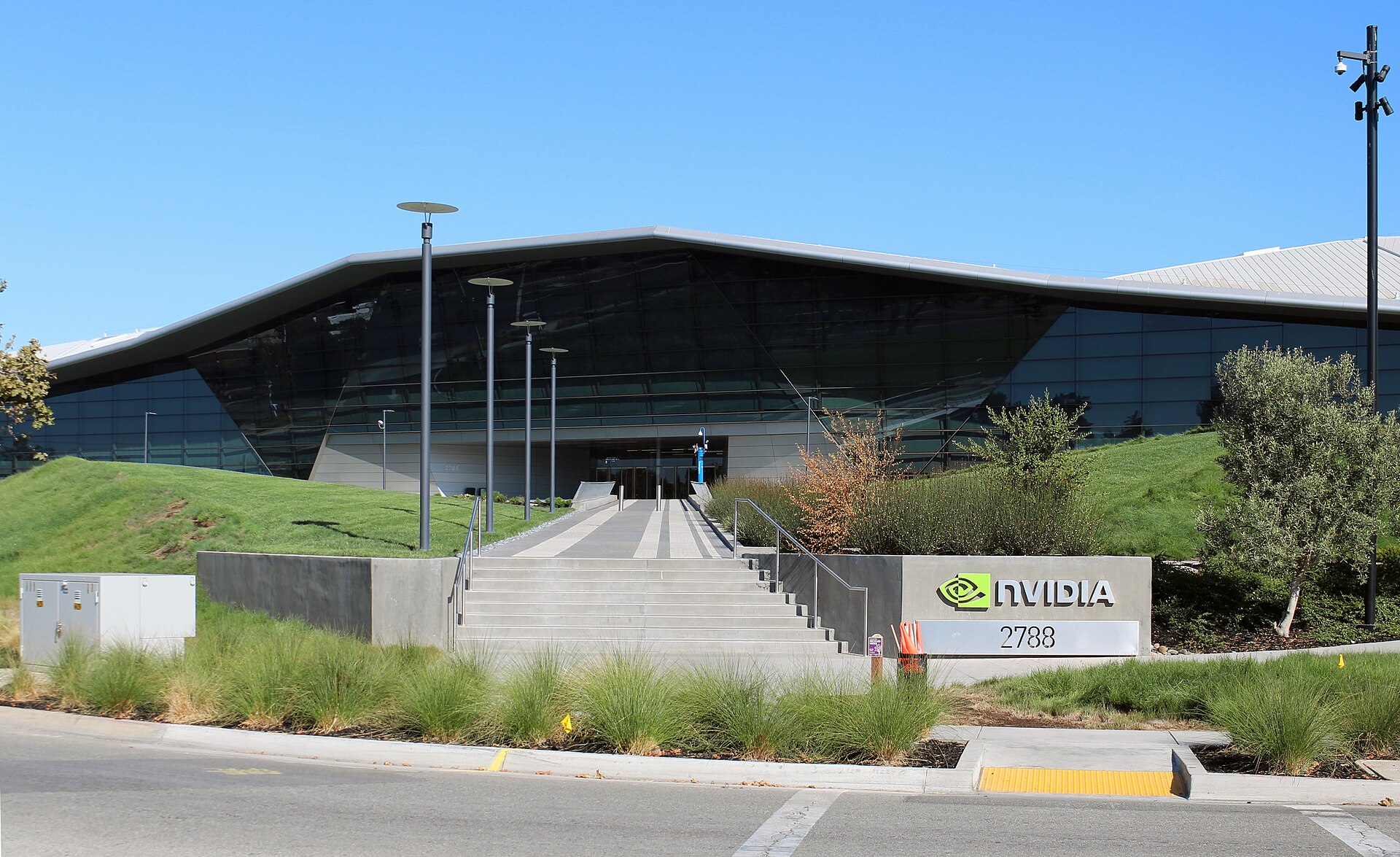
California served Nvidia with an investigative subpoena on 19 November 2026. The state's Department of Justice said it is asking the company whether its advanced chips or confidential information may have gone to China, and whether Nvidia misled investors and the public, in order to evaluate whether its actions violated California law. The office tied the demand to reporting about the affair between Jensen Huang, who resigned as chief executive this month, and a woman US officials have alleged worked for Chinese intelligence.
The conduct of Nvidia and its former CEO raises bright red flags, including about the ways in which the company may have misled investors.
Bonta added that the underlying principle of the state's corporate securities law is clear: companies cannot mislead their investors. Nvidia did not immediately respond to requests for comment, according to the Associated Press. No publicly disclosed evidence establishes that Huang knowingly assisted Chinese intelligence or that Nvidia technology was improperly transferred, and an investigative subpoena is a demand for documents rather than a finding.
The filing that has not arrived
The sharpest detail in the past week is procedural. Nvidia reported third-quarter revenue of $115.8 billion for the quarter ended 25 October 2026, up 103 per cent on the year, and guided to about $130 billion for the fourth. It did not publish its Form 10-Q alongside those results on 17 November, as it had done for nine consecutive quarters. Colette Kress, the chief financial officer now serving as interim chief executive, told the earnings call the filing would come in the coming weeks. The company is not late: a large accelerated filer has 40 days from the quarter's end, which puts the deadline at 4 December 2026.
That document matters more than the press release did. The results announcement listed an ongoing independent board committee investigation and the search for a new chief executive among its risks. A 10-Q is where a company must set out legal proceedings, subsequent events and any change in internal control over financial reporting, and where its officers sign. Whatever Nvidia has concluded about the subpoenas and inquiries now in front of it has to appear there or be explained by its absence.
What is reported and what is confirmed
Two separate federal threads are anonymously sourced and should be read as such. The Wall Street Journal reported on 17 November that the SEC had opened a civil investigation examining in part whether Nvidia's disclosures misled investors. Reuters reported on 20 November, citing two people briefed on the matter who spoke on condition of anonymity, that SEC enforcement staff are scrutinising potential accounting issues at the company. The SEC declined to comment and Nvidia did not respond to either report. Nothing about the scope of either inquiry has been established publicly.
One accounting question is a matter of record rather than rumour. The Financial Times reported on 17 November, citing company accounts, that Nvidia changed the basis on which it reports geographic revenue from customers' billing addresses to the location of their headquarters, a change that removed Singapore from its regional breakdown, and that it did so as Singapore sales rose towards almost half of global revenue. Nvidia has said the headquarters basis better reflects the geographic profile of its revenue. Both things can be true at once, which is precisely why the disclosure is being argued about.
A narrow precedent and a wide one
Nvidia has settled a disclosure case before. In 2022 the SEC found that the company had failed to disclose, in two consecutive fiscal 2018 quarterly reports, that cryptocurrency mining was a material contributor to growth in gaming graphics revenue. Nvidia paid a $5.5 million penalty and accepted a cease-and-desist order without admitting or denying the findings. Measured against a company that reported $115.8 billion in a single quarter, that is a rounding error, and it is the shape of outcome that disclosure cases usually take.
The honest reading is that the legal risk here is mostly reputational and procedural, not existential, and that investors who treat an investigation as proof of misstated revenue are getting ahead of the record. The strongest argument the other way is the sheer number of simultaneous openings: a state subpoena from Bonta, a board committee with outside counsel, congressional interviews with Huang on 1 December and Teter on 2 December, and reported federal interest in both disclosure and accounting. Any one of those is routine for a company of this size. Four at once, with the quarterly filing held back, is why the questions are not going away before 4 December.
What happens next?
- Nvidia's Form 10-Q for the quarter ended 25 October 2026 is due by 4 December, with a late-notice extension available to 9 December.
- Jensen Huang is scheduled to give a transcribed interview to congressional committees on 1 December, followed by general counsel Tim Teter on 2 December.
- California's Department of Justice will assess the subpoenaed material against state corporate securities law before deciding whether to act.
- Any formal confirmation of an SEC inquiry would most likely come from Nvidia's own filing rather than from the agency.
Related topics
Sources & references
- 01Attorney General Bonta Serves Investigative Subpoena on Nvidia — California Department of JusticeprimaryPress release of 19 November 2026 with the Bonta statement quoted.
- 02California attorney general subpoenas Nvidia over chips, former CEO's affair — Associated Pressnews19 November 2026; congressional interview dates of 1 and 2 December.
- 03California Probing If Nvidia Misled Investors Over China Risks — Bloombergnews19 November 2026.
- 04Nvidia's accounting is a focus of US SEC investigation, sources say — Reutersnews20 November 2026; based on two people who spoke on condition of anonymity. The SEC declined to comment.
- 05Nvidia facing SEC probe after Huang's resignation, WSJ reports — Reutersnews17 November 2026, relaying the Wall Street Journal report of a civil investigation.
- 06Nvidia to pay $5.5 million penalty for 'inadequate disclosures' about cryptomining — Reutersnews6 May 2022; the earlier SEC disclosure settlement cited in this piece.
More from Business
Anthropic Raises $81.3bn as the Nasdaq Closes Down 2.25%
Anthropic sold 980 million Class A shares at $83 on 18 November 2026 and began trading on the Nasdaq the next day under the ticker ANT. The stock opened at $111.50, closed at $97.17 and the Nasdaq Composite fell 2.25 per cent on the session.

US Industrial Output Falls 0.4% as Utilities Give Back a Surge
Total US industrial production fell 0.4 per cent in October 2026, the Federal Reserve's G.17 release shows, as the utilities index gave back a September surge. Factory output rose 0.3 per cent, but only because motor vehicle production jumped 4.4 per cent.

US Wholesale Prices Rise 6.5% as Fed Weighs a Bigger Move
The Bureau of Labor Statistics reported on 13 November 2026 that the producer price index for final demand rose 0.3 per cent in October, below the 0.4 per cent economists expected, while the twelve-month rate accelerated to 6.5 per cent from 6.3 per cent in September. Services prices rose for a fifth straight month.

Berkshire Spends $9.6bn on Buybacks as Operating Profit Falls
Berkshire Hathaway reported $12,705m of third-quarter operating earnings on 7 November 2026, down 5.8 per cent on a 42.9 per cent collapse in insurance underwriting profit. It repurchased about $9.6bn of its own shares, the largest quarterly total of the year.