Blizzard's First Contract Makes AI Something to Bargain Over
Nearly 1,900 workers ratified agreements with Microsoft that prohibit artificial intelligence nowhere in covered work. The clause with teeth is a 14-month recall right after a layoff.
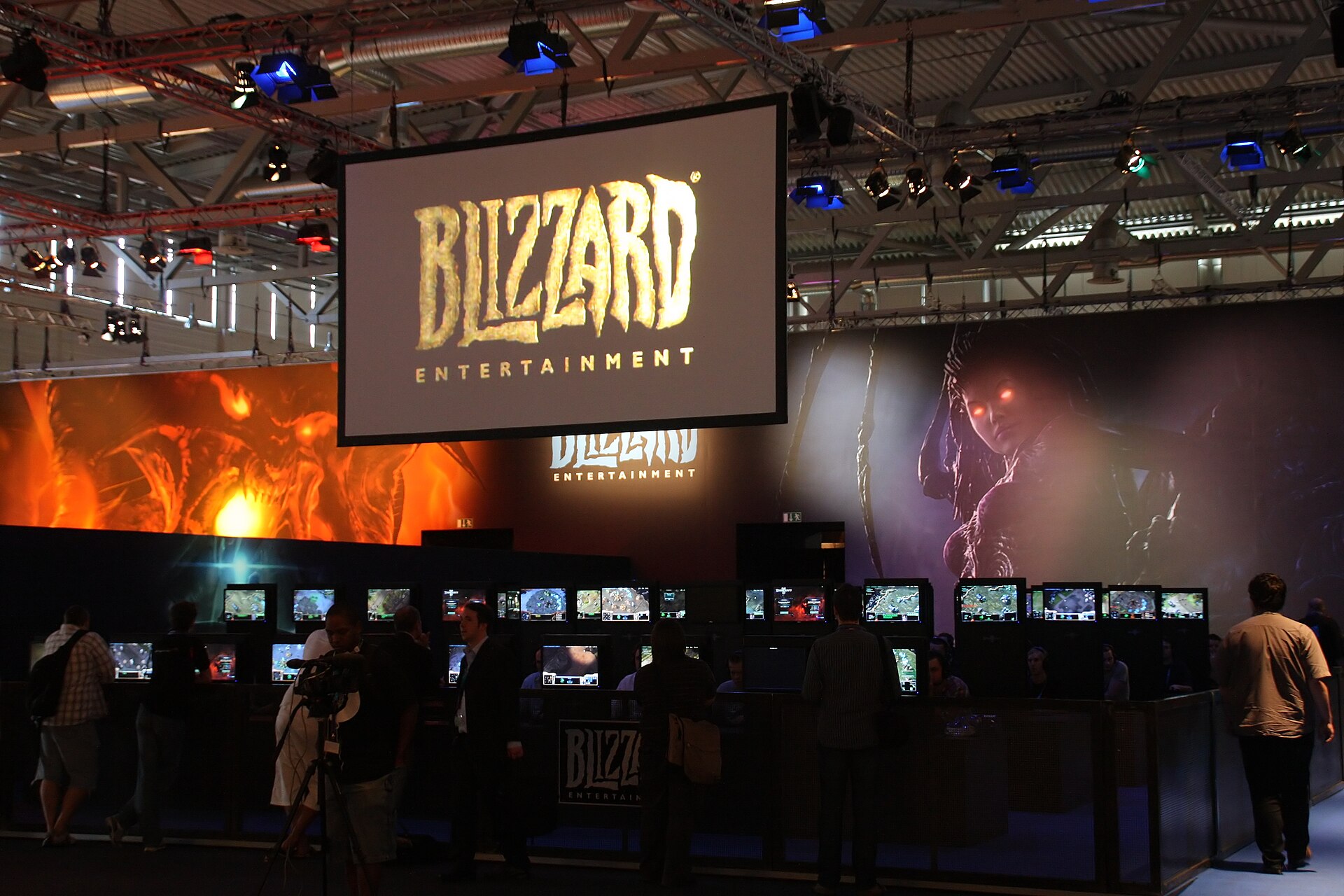
Nearly 1,900 workers at Blizzard Entertainment ratified their first union contracts on 9 September 2026 after two years of bargaining with Microsoft, and the agreements ban artificial intelligence nowhere in the work they cover. Instead, according to the Communications Workers of America, they require Blizzard to "discuss, evaluate, and bargain over the usage of artificial intelligence in the workplace". Labor Notes published a detailed account of the terms on 23 September.
That distinction is the story. A prohibition would have been the louder win and the more fragile one, because a ban written against today's tools has to be renegotiated every time the tools change. An obligation to bargain does not expire when the technology improves.
What the clause covers
The contracts reach Blizzard's game teams and shared services: World of Warcraft, Quality Assurance, Hearthstone and Warcraft Rumble, Overwatch, Diablo, Platform and Technology, and Story and Franchise Development. The units keep separate expiration dates but share terms. Alongside the AI language the agreements carry wage increases, a grievance procedure, just-cause protections, a three-day in-office hybrid week, and remote-work and disability accommodations. The union also pushed existing benefits and policies into writing, down to weather policies and the allowance workers receive to spend on the company's own games, so that they become enforceable rather than discretionary.
The bargaining units did not arrive at once. Quality assurance testers at Raven Software organised first, after a dozen of them were abruptly laid off in December 2021 and the rest went on strike. Testers at Blizzard's Albany and Austin offices followed. A 500-person wall-to-wall unit at World of Warcraft organised in 2024, then 200 developers at Overwatch, 160 people on the story and franchise team, and 450 designers, engineers, artists and support staff at Diablo in 2025.
The fourteen-month clock
The provision CWA calls an industry first is a recall right. A laid-off worker holds a claim on any open position they are qualified for, across any Blizzard bargaining unit, for 14 months from the date of their layoff announcement. Severance starts at four weeks regardless of tenure, four weeks more than before, with an additional week for every six months of service up to 39 weeks, Labor Notes reports. Just-cause protection sits underneath both, which means a layoff has to actually be a layoff rather than a dismissal wearing one.
This contract marks the beginning of a new era at Blizzard Entertainment, but it doesn't stop with us. I look forward to the day that everyone in the industry can enjoy the protections that this contract affords us, like increased severance and recall rights in the event of a layoff and the ability to grieve injustices in the workplace.
Why the timing matters
Job security has been the central issue in this unit for years, and the numbers explain why. Microsoft bought Activision Blizzard for $75 billion in 2023 and announced 1,900 gaming layoffs in January 2024, 9 per cent of the division. In July 2026 it announced 3,200 more. Half took effect immediately, including hundreds of CWA members at Bethesda and ZeniMax, and Labor Notes reports the remaining 1,600 are expected by the end of 2027. CWA and Microsoft are now bargaining over the effects of the July cuts. Workers and supporters held Save Our Devs rallies across the United States and Canada in August.
So the recall right was not written for a hypothetical. It was drafted by people who had watched two waves of cuts move through their own company and who expect a third.
Whether the structure travels
In a Game Developers Conference survey of US video game workers earlier this year, 82 per cent of respondents said they supported unionising. Organisers are betting that job-security terms, not wages, are what converts that sentiment into elections. The structure is portable in a way that industry-specific language is not. Any agreement in any sector can name four things: a trigger, an obligation to bargain, a consequence, and a clock. As Parallax Nexus reported when Meta's plan to hand thousands of employees' daily work to AI collapsed, the constraint on automating a workforce is rarely the model's capability; it is what the organisation has committed to do before it acts.
The honest reading is that the AI clause is weaker than its headlines and the recall clause is stronger. Bargaining over AI deployment buys workers a seat and a delay, not a veto, and Microsoft remains free to introduce tools after bargaining to impasse. The recall right is the part with teeth, because it converts a layoff from an ending into a fourteen-month option on a job at the same employer.
Against that, none of it has been tested. Trade reports citing Bloomberg's Jason Schreier, which rest on unnamed sources, say Blizzard faces further layoffs as part of the July restructuring, and no vacancy is guaranteed to exist for a recalled worker to fill. What is not known is how many open roles will sit inside the bargaining units when those cuts land, which is the only figure that decides whether 14 months of recall rights is a protection or a receipt.
What happens next?
- CWA and Microsoft continue bargaining over the effects of the 3,200 gaming layoffs announced in July 2026.
- Roughly 1,600 of those cuts are still expected by the end of 2027, which will be the first real test of the 14-month recall right.
- Organisers expect the job-security terms, rather than the AI language, to drive the next round of union elections at other studios.
Related topics
Sources & references
- 01Blizzard Entertainment Workers Ratify Historic Video Game Contracts with CWA — Communications Workers of AmericaprimaryUnion press release setting out the AI bargaining obligation, the 14-month recall right and the additional four weeks of severance
- 02Video Game Workers Win First Contract at Microsoft-Owned Blizzard — Labor NotesnewsPublished 23 September 2026; source for the severance schedule, unit sizes and the Microsoft layoff figures
- 03Blizzard's first union contract sets layoff terms and AI rules — HR ExecutivenewsPublished 23 September 2026
- 04CWA Members at Blizzard Ratify Historic Contract — Communications Workers of AmericaprimaryUnion newsletter dated 10 September 2026 confirming ratification
More from Future
In 34 of 37 Countries, People Expect AI to Cost Jobs
A Pew Research Center report published on 17 September 2026 finds that in 34 of 37 countries surveyed, more people expect artificial intelligence to reduce jobs than to create them. Concern has risen most in Sweden, Poland and the Netherlands, and among Americans under 35 it has gone from 40% to 55% since 2024.
What Coding Agents Teach Us About the Future of Work
Coding got agents first because it has a feedback loop. The lessons about specification, review and trust apply to law, finance and operations next.