CISA Gives Agencies Three Days to Fix a vCenter Zero-Day
The flaw sat unpatched in VMware's management plane for about eleven weeks while a suspected Chinese espionage group read domain controller files off virtual machine disks. Three of the four new catalogue entries also require forensic triage, not just a patch.

The US Cybersecurity and Infrastructure Security Agency added four actively exploited vulnerabilities to its Known Exploited Vulnerabilities catalogue on 20 November 2026 and set a remediation deadline of 23 November for federal civilian agencies. The most serious is CVE-2026-123890, an authentication bypass in VMware vCenter Server that a suspected Chinese espionage group had already been exploiting for about eleven weeks.
Broadcom disclosed and patched the flaw on 19 November 2026. The catalogue entry describes it as an authentication bypass in the VMware Directory Service that "allows an unauthenticated attacker with network access to vCenter to bypass authentication and gain unauthorized access to the system". Broadcom scored it 9.8 out of 10 on the CVSS scale. Fixed builds exist for vCenter 9.1.1.0200, 9.0.2.0200 and 8.0 U3m. Version 7.0, which left general support in October 2025, has no public patch.
Eleven weeks inside the management plane
Google Threat Intelligence Group and Mandiant published their account on 19 November, the same day the fix shipped. Mandiant says forensic evidence places first exploitation in early September 2026. The intrusion did not start at vCenter: the group, which Google tracks as ARMORY CASTLE and formerly as UNC5221, came in through a zero-day in BeyondTrust Remote Support, CVE-2026-102764, described in a 15 October analysis, then scanned the internal network for TCP ports 9080, 5480 and 2012.
Port 2012 carries vCenter's single sign-on control interface. A Go utility that Mandiant calls BONESAW exploits the rpc_srp_verifier service listening there, exposing a shared Secure Remote Password session key that creates a session as administrator@vsphere.local with no password at all. From that position the operators streamed out vCenter's internal directory database, extracted the Security Token Service private RSA signing key, forged administrative SAML assertions to bypass multi-factor authentication, created a backdoor administrator account, enabled SSH through the appliance management API and then disabled it again, and finally read Windows domain controller files directly off a mounted VMFS volume using a Python tool.
We strongly recommend that affected organizations immediately apply the security patches provided by Broadcom to remediate the vulnerability.
The recovered BONESAW binary carries a Go build timestamp of 13 July 2026, sixteen days before Broadcom disclosed a different vCenter authentication bypass, CVE-2026-59309, on 29 July. Google is careful to note that Go build metadata can be altered before compilation, so the date points towards early knowledge of the bug rather than proving it.
What the catalogue now demands
The other three additions are hard-coded credentials in Cisco Expressway Series devices (CVE-2026-76466), a data query injection flaw in SAP NetWeaver Enterprise Portal (CVE-2025-42884) and deserialisation of untrusted data through the XML-RPC endpoint in Apache Roller (CVE-2026-129448). All four carry the same 23 November due date. Three of them, every entry except the SAP flaw, are marked as requiring forensic triage under Binding Operational Directive 26-04, which means an agency that installs the patch has still only done half of what the directive asks. The catalogue held 1,790 entries when checked on 23 November 2026.
The pattern is familiar from the past fortnight. As Parallax Nexus reported on 17 November, CISA told organisations to patch the Java4Shell flaw in OpenJDK's Base64 decoder immediately, and both Google's Project Zero and Anthropic have since cut their vendor disclosure windows while maintainers question whether the new deadlines can be met. The vCenter case inverts that argument. Here the vendor patched promptly once Mandiant reported the bug; the eleven-week gap belongs to the period before anyone outside the attacker knew it existed.
The question a patch does not answer
No one has said how many organisations were affected. Broadcom's advisory does not mention exploitation in the wild, and CISA records ransomware use as "Unknown" for all four entries. The strongest case against alarm is that Mandiant describes one targeted intrusion, not mass scanning, and no public exploit code has been released. The honest reading is that the deadline is the easy half of this. An administrator who patched on Friday has closed the door; they have not established whether anyone copied the SAML signing key during the eleven weeks the door stood open, and a stolen signing key keeps working after the patch lands.
What happens next?
- The BOD 26-04 remediation deadline for all four catalogue entries falls on 23 November 2026, with forensic triage required for the vCenter, Cisco and Apache Roller flaws.
- Organisations running vCenter 7.0, which has no public patch, must either obtain extended support from Broadcom or upgrade.
- Mandiant has published indicators of compromise and YARA rules, so any wider victim count is likely to emerge from third-party hunting rather than from Broadcom or CISA.
Related topics
Sources & references
- 01Known Exploited Vulnerabilities Catalog — Cybersecurity and Infrastructure Security AgencyprimaryFour entries added 2026-11-20 with due date 2026-11-23; checked 23 November 2026, catalogue total 1,790.
- 02ARMORY CASTLE Exploits vSphere — Google Threat Intelligence Group and MandiantresearchPublished 19 November 2026; exploitation dated to early September 2026.
- 03VMSA-2026-0009 security advisory — BroadcomcompanyAdvisory of 19 November 2026 cited in the CISA catalogue entry for CVE-2026-123890.
- 04Newly Patched VMware vCenter Flaw Exploited as Zero-Day by Chinese APT — SecurityWeeknews20 November 2026; notes Broadcom's advisory does not mention exploitation and that version 7.0 has no public patch.
More from Security
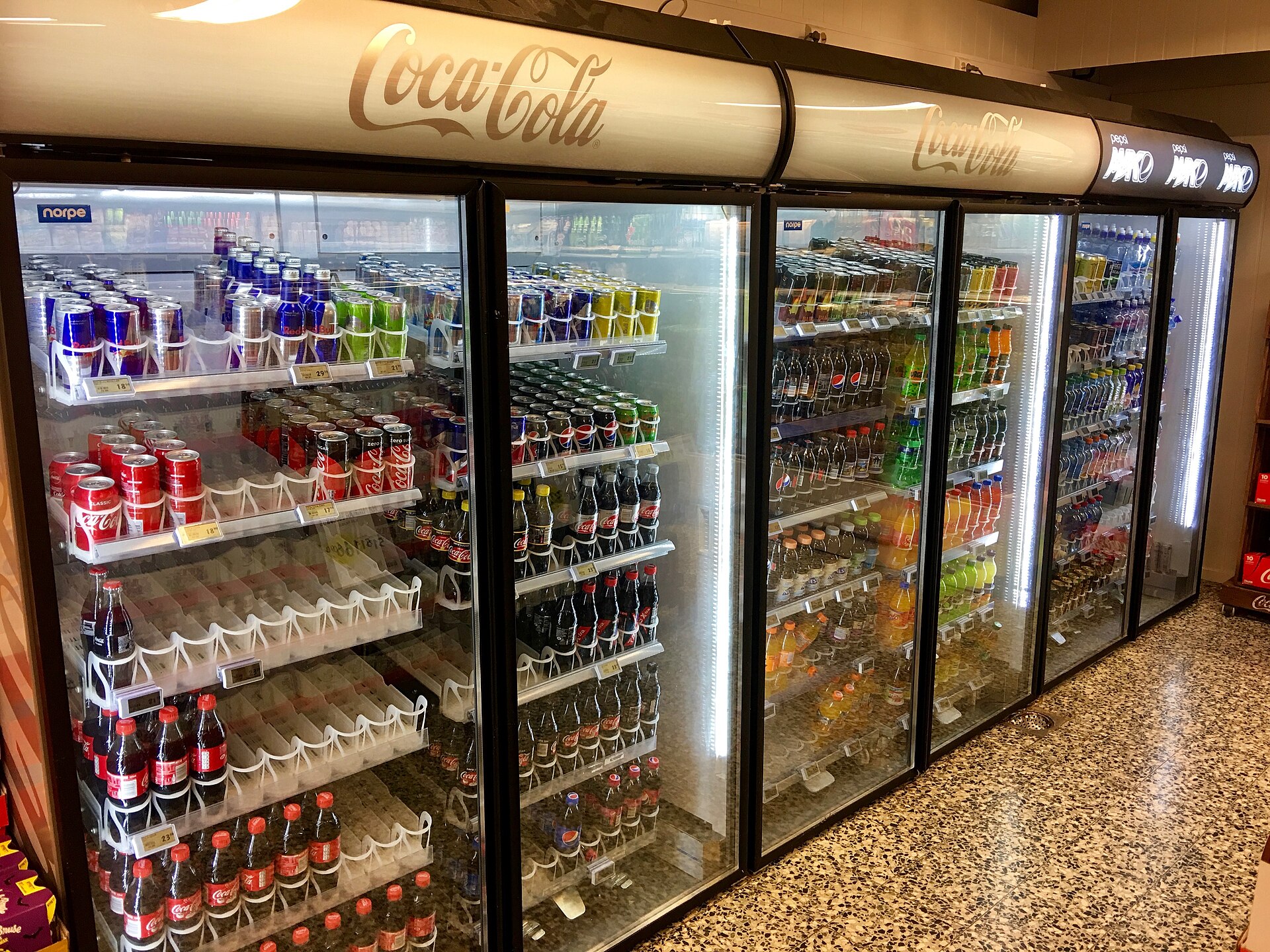
France Names an IRGC Cyber Unit Behind 700 Fridge Attacks
France attributed the October attacks on refrigeration controllers at more than 700 retail sites to an offensive cyber unit of Iran's Islamic Revolutionary Guard Corps on 9 November 2026, summoned the Iranian ambassador and said it will propose further European sanctions.

Five US Agencies Warn on Exposed Refrigeration Controllers
CISA, the FBI, HHS, USDA and the Department of Transportation told owners of industrial refrigeration and cold chain monitoring systems to take controllers off the public internet. The one quantified sign of progress, a 53 per cent fall in exposed devices, came from a scanning company rather than the government.
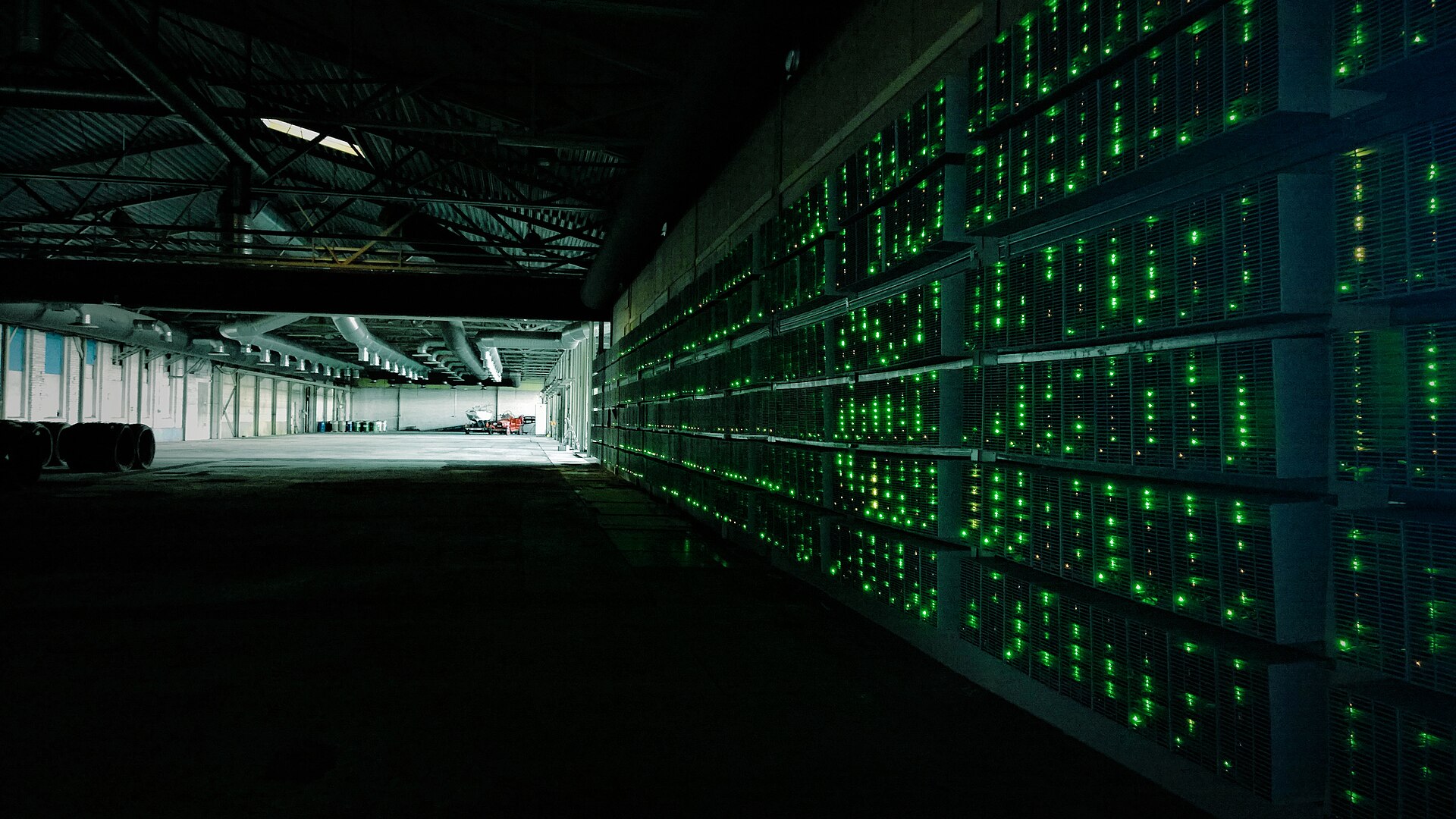
Binance Saw $3.64bn of Net Outflows on Its First Day Back
Binance says it has replaced 95 per cent of the stolen tokens with its own money, having set aside $6.34 billion. The FBI has attributed the largest cryptocurrency theft on record to North Korea, and about $3 billion of the proceeds was frozen on-chain.
CISA Adds the Two Ivanti Flaws That Complete the Root Chain
CISA added CVE-2026-111357 and CVE-2026-118527 to its Known Exploited Vulnerabilities Catalog on 30 October 2026. Both entries say the flaws chain with CVE-2026-104935, listed 17 days earlier, completing the path to root that Volexity documented.