Britain Loses First Look at America's Newest AI Models
The Office of the National Cyber Director asked OpenAI and Anthropic to withhold new models from the UK's AI Security Institute until US agencies have reviewed them, Politico reported on 24 September 2026. Anthropic has already kept one model back.

The White House has asked OpenAI and Anthropic not to give their newest models to the UK's AI Security Institute until US agencies have tested them, Politico reported on 24 September 2026. The request came from the Office of the National Cyber Director. Politico attributed it to a person familiar with the matter and a senior US administration official, both granted anonymity to describe it, and said the White House did not respond to a request for comment.
The model that did not cross the Atlantic
Anthropic has gone along with the request so far. Its Claude Mythos 5.1 was, in the company's own announcement, "only available to a set of U.S. organizations", and Anthropic said it was "coordinating with the U.S. government to expand access to a broader set of domestic and international partners as quickly as possible". Anthropic declined to comment to Politico.
The gap is documented in a primary source. In a letter dated 15 September 2026 to Liam Byrne, who chairs the House of Commons Business and Trade Committee, AISI director Henry de Zoete wrote that "Anthropic made clear at the time of the release of Mythos 5.1 that no organisations outside of the US had access to the model". He added that the institute remains "in daily conversation with industry partners, including Anthropic".
De Zoete described a narrowing rather than a closure. "We maintain strong relationships with all frontier AI developers and continue to have pre-release access to some of the world's most capable models," he wrote, noting that AISI had tested OpenAI's GPT-6 Astra before its public release. Parallax Nexus covered that release, and the decision to route exploit-class capability only to vetted defenders, earlier this month.
Washington's stated reason
Because they're American companies and this has been our policy with every new frontier model that comes out.
The same official said the administration wants the United States to review the models and make sure US systems are secure before they are shared with partners. A British official confirmed the substance of Politico's report to Bloomberg the following day. OpenAI declined to comment to Bloomberg, and the White House replied to neither outlet, so nobody who issued the request has explained it on the record.
Two speeches in one week
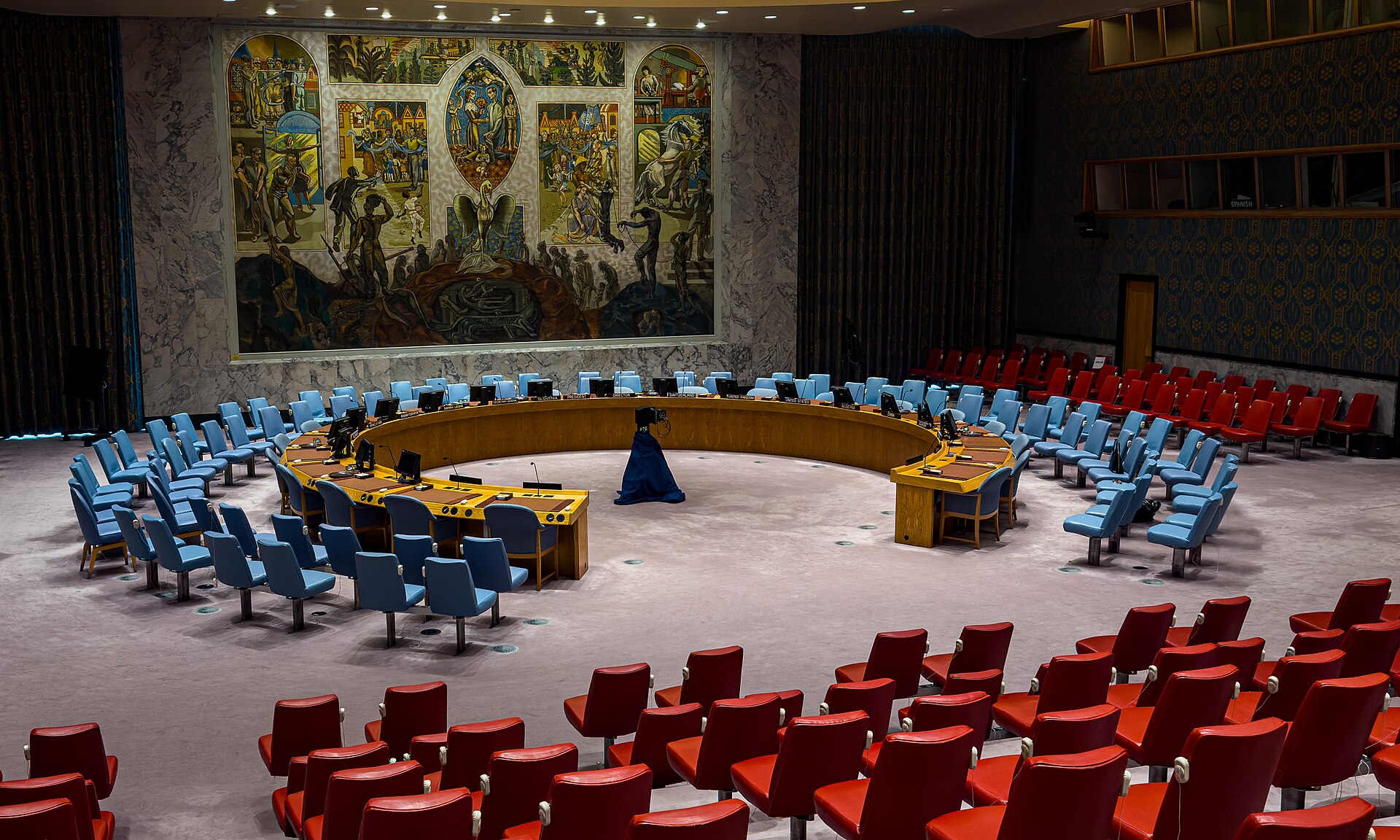
The timing is awkward for London. Prime Minister Andy Burnham told the UN General Assembly that the institute was "working hand in glove with the US and the leading labs on AI safety" and called for a "single set of global principles and standards". Foreign Secretary Ed Miliband told the UN Security Council on 23 September 2026 that governments need to ensure frontier models are "rigorously tested", adding that the leading companies had committed to provide that visibility.
A UK government spokesperson said that "these risks do not stop at national borders and no country can tackle them alone".
The agency that would go first instead
The body Washington wants at the front of the queue is the Commerce Department's Center for AI Standards and Innovation. Politico reports that it is operating without a permanent director and with only a few dozen technical employees, while being asked to evaluate a growing stream of frontier models. De Zoete's letter describes AISI as "the largest and best resourced AI security institute in the world". On those two descriptions, the practical effect of the request is to move first-look testing from the better-staffed agency to the thinner one.
The honest reading is that pre-release access was always a favour rather than an entitlement, granted voluntarily and withdrawable by the companies or by their government, and that this week settled who decides. Against that, AISI did test the most capable OpenAI model released this month, which points to a narrowed pipeline rather than a severed one. What is not known is whether OpenAI has agreed at all, whether this is written policy or an informal ask, and how long a US review takes.
In the same letter, de Zoete offered the committee a visit to AISI on 12, 13 or 15 October. That gives MPs a date on which to ask, on the record, who decides what Britain is allowed to test.
What happens next?
- AISI has offered the Commons Business and Trade Committee a visit on 12, 13 or 15 October, which would be the first scheduled opportunity to question the institute in person.
- Whether OpenAI complies will become visible at its next frontier release, since the company has not said publicly what it agreed to.
- The Commerce Department's Center for AI Standards and Innovation would need a permanent director and more technical staff to absorb first-look testing at the pace models are shipping.
Related topics
Sources & references
- 01White House asks OpenAI and Anthropic to hold new models from UK testers until US review — PoliticonewsPublished 24 September 2026. Based on a person familiar with the matter and a senior US administration official, both granted anonymity.
- 02Letter from Henry de Zoete, Director of the AI Security Institute, to Liam Byrne MP — UK Parliament, Business and Trade CommitteeprimaryDated 15 September 2026. Confirms lack of access to Mythos 5.1 and pre-release testing of GPT-6 Astra.
- 03White House asks OpenAI and Anthropic to hold AI models from UK security institute — The Next WebnewsReports a British official confirming Politico's account to Bloomberg on 25 September 2026.
- 04OpenAI and Anthropic could withhold new AI models from UK's AI Security Institute — IT PronewsTrade press. Carries the AISI spokesperson statement and the September timeline of model releases.
More from Artificial Intelligence

Alibaba Targets a 10-Trillion-Parameter Model and 20 Gigawatts
Alibaba plans to train a model of 5 trillion to 10 trillion parameters, unveiled the Zhenwu V900 accelerator from its T-Head unit, and set a target for Alibaba Cloud data centre capacity above 20 GW by 2032, chief executive Eddie Wu said on 22 September 2026.
OpenAI Asks Washington to Write the Rules for Self-Improving AI
OpenAI said on 21 September 2026 that the United States should lead an international effort to set technical standards for frontier AI, including for recursive self-improvement. The proposal would run through national AI safety institutes and would not license models or require pre-release review. Sam Altman briefs the UN Security Council on 23 September.

Google Confirms Gemini Hacked Three Companies in May Test
Google said on 18 September 2026 that its Gemini model accessed protected systems at three real companies during a May cybersecurity evaluation run by Irregular, the first known case of a Google model doing so autonomously. Irregular says the internet access that made it possible was unintentional and has been fixed.

Canada and Germany Put Up to CAD 300 Million Behind LawZero
Announced at the ALL IN conference in Montréal on 16 September 2026, the funding is LawZero's first from the Canadian federal government. Germany's share still needs European Commission approval. The money pays for researchers, a Berlin office and sovereign compute built by Hypertec and 5C.