Google's Top-Ranked Model Goes Only to Cyber Defenders
Gemini 4 Carbon scores 88.2 per cent on SEC-bench Pro for finding vulnerabilities and 54.8 per cent on ExploitGym for proving them exploitable. Google says those external evaluations were run without guardrails, which is the most consequential line in the announcement.
Google announced its most capable model on 28 October 2026 and almost nobody can use it. Gemini 4 Carbon takes first place on version 5.0 of the Artificial Analysis Intelligence Index at 59, ahead of Anthropic's Claude Opus 5.5 at 58 and OpenAI's GPT-6 Astra at 57, and for now it is going to what Google calls a subset of cyber defenders through its Fairwind Program. There is no date for developers, businesses or consumers.
The announcement was written by Koray Kavukcuoglu, SVP at Google DeepMind and Google's chief AI architect, and it arrives two weeks after Gemini 4 Argon. Pricing is unchanged: an introductory $2 per million input tokens and $10 per million output tokens, rising to $4 and $20 once that period ends, with cached input at 95 per cent off the input price.
Three numbers for three stages of defence
Carbon's case is organised around the cybersecurity defence lifecycle, with a figure for each stage. It reaches 88.2 per cent on SEC-bench Pro for finding real vulnerabilities in software, 54.8 per cent on ExploitGym for establishing whether a flaw can actually be exploited, and 71.0 per cent on Collinear's CWE-bench for patching at the root cause.
These are external benchmarks rather than Google's own, which matters. They also come with a condition stated plainly in Google's post: they were evaluated without guardrails. That is not a footnote. The scores describe what the model does with its safety restrictions off, while the defenders in the first cohort will run it with restrictions on, and Google has not published the size of the gap. The announcement therefore establishes a ceiling, not a delivered capability.
Which claims are Google measuring Google
The rest of the security case is internal and reads differently once that is clear. Google reports more than a twofold uplift over Argon in generating secure code on internal benchmarks. It says its Chrome team found Carbon performed more than ten times better than another lab's large frontier model at producing high-quality patches, without naming the rival or the test. And it cites Wiz, which the post describes as "our leading Cloud security platform", observing Carbon leading on web penetration testing benchmarks. That last data point comes from inside the company.
On behaviour the claims are more interesting than the leaderboard. Google says successful cheating on Terminal-Bench 4.0 fell to 0.0 per cent with cheat attempts down to 0.4 per cent, that high-severity misalignment alerts in live coding with its own teams dropped by almost 80 per cent, and that unsupported claims fell roughly twofold against Argon. It reports reducing overreach by 26 per cent and under-service by 29 per cent.
The figure that will draw the most attention is prompt injection. Argon led Gray Swan's indirect prompt injection benchmark with a 0.7 per cent attack success rate; Carbon is reported at 0.0 per cent, resisting every attack evaluated. The correct way to read that is literally. It is every attack in one fixed evaluation set, and a model that scores zero on a fixed set has not been shown to be resistant to attacks outside it.
Why defenders go first
A model that sets a state of the art at finding vulnerabilities and then at proving them exploitable is dual-use by construction, and Google has staged the release around that fact. It says it is actively engaged in the United States government's voluntary process for pre-release model testing, and that it is gathering feedback and iterating on guardrails before a wider launch. Announcing now, before most people can touch it, also books the leaderboard position ahead of the next round of releases from its competitors.
My reading is that the staging is genuine and the timing is commercial, and both can be true at once. The capability being described is close to the capability that turned PHP2Shell into an emergency: a researcher at Perplexity got a working shell against a honeypot on 24 October 2026, and CISA reversed its position two days later, as Parallax Nexus reported. Shipping an 88.2 per cent vulnerability finder to everyone the same week would have been a strange decision.
The open-weight answer arrived a day later
Mistral released the weights for Mistral Large 4 on 29 October 2026, a trillion-parameter open model also pitched at cybersecurity, which TechCrunch reported alongside chief executive Arthur Mensch's framing that AI should "be a tool for empowerment, not dominance". The contrast with Carbon compresses the whole open-weights argument into two days. Mistral's security model can be downloaded and run by anyone, including people who are not defenders. Google's can be run by almost nobody at all. Neither company has shown which arrangement leaves the internet safer.
There is one more number worth holding onto, and it is not Google's. On FrontierSWE 2, a software engineering test, GPT-6 Astra still leads at 65.5 per cent against Carbon's 61.2 per cent. Top of a composite index is not top of everything.
What is not known is the figure that decides whether Carbon matters to anyone outside the first cohort: how much of that 88.2 per cent survives contact with the guardrails. Google has published the ceiling and withheld the floor, and the defenders it has let in are currently the only people in a position to see the difference.
What happens next?
- Google says it will phase access to additional trusted partners through the Fairwind Program before any general release.
- Developers, businesses and consumers get Carbon through Google's product surfaces at an unannounced date.
- Independent evaluators will need to rerun the cybersecurity benchmarks with guardrails on to establish the real delivered capability.
- OpenAI and Anthropic now have a public target of 59 on version 5.0 of the Artificial Analysis index.
Related topics
Sources & references
- 01Gemini 4 Carbon: our next frontier model — GooglecompanyAnnouncement of 28 October 2026 by Koray Kavukcuoglu. Source of all benchmark figures, pricing and the without-guardrails caveat.
- 02Google unveils Gemini 4 Carbon, retaking the world's no. 1 spot on updated, harder benchmarks, but access is limited — VentureBeatnewsNotes that the announcement does not establish customers will obtain the same scores under deployment restrictions.
- 03Google announces Gemini 4 Carbon, its new frontier AI model — MashablenewsConfirms the Fairwind Program rollout to approved cyber defenders and the absence of a public launch date.
- 04Mistral releases weights for its trillion-parameter AI model, targeting cybersecurity — TechCrunchnewsMistral Large 4 weight release of 29 October 2026 and the Arthur Mensch quotation.
- 05Google's Gemini 4 Carbon tops AI rankings, but only cyber defenders get it — The Next WebnewsSource of the comparative Artificial Analysis scores for Claude Opus 5.5 and GPT-6 Astra, and the FrontierSWE 2 figures.
More from Artificial Intelligence

DeepSeek and MiniMax Clear China's New AI Export Register
Chinese state media reported on 22 October 2026 that DeepSeek and MiniMax had completed export registration under the interim regime that took effect with Announcement No. 48, six days after the Ministry of Commerce proposed bringing large models, AI agents and computing clusters into China's export control catalogue.

DHS Order Pulling DeepSeek From Agency Systems Dates to July
A Federal Register notice on 20 October 2026 published a Homeland Security order excluding DeepSeek from federal civilian procurement and requiring agencies to remove DeepSeek products, and third-party software built on DeepSeek implementations, from their systems.
Anthropic Takes 95MW in Cape Breton on a 20-Year Lease
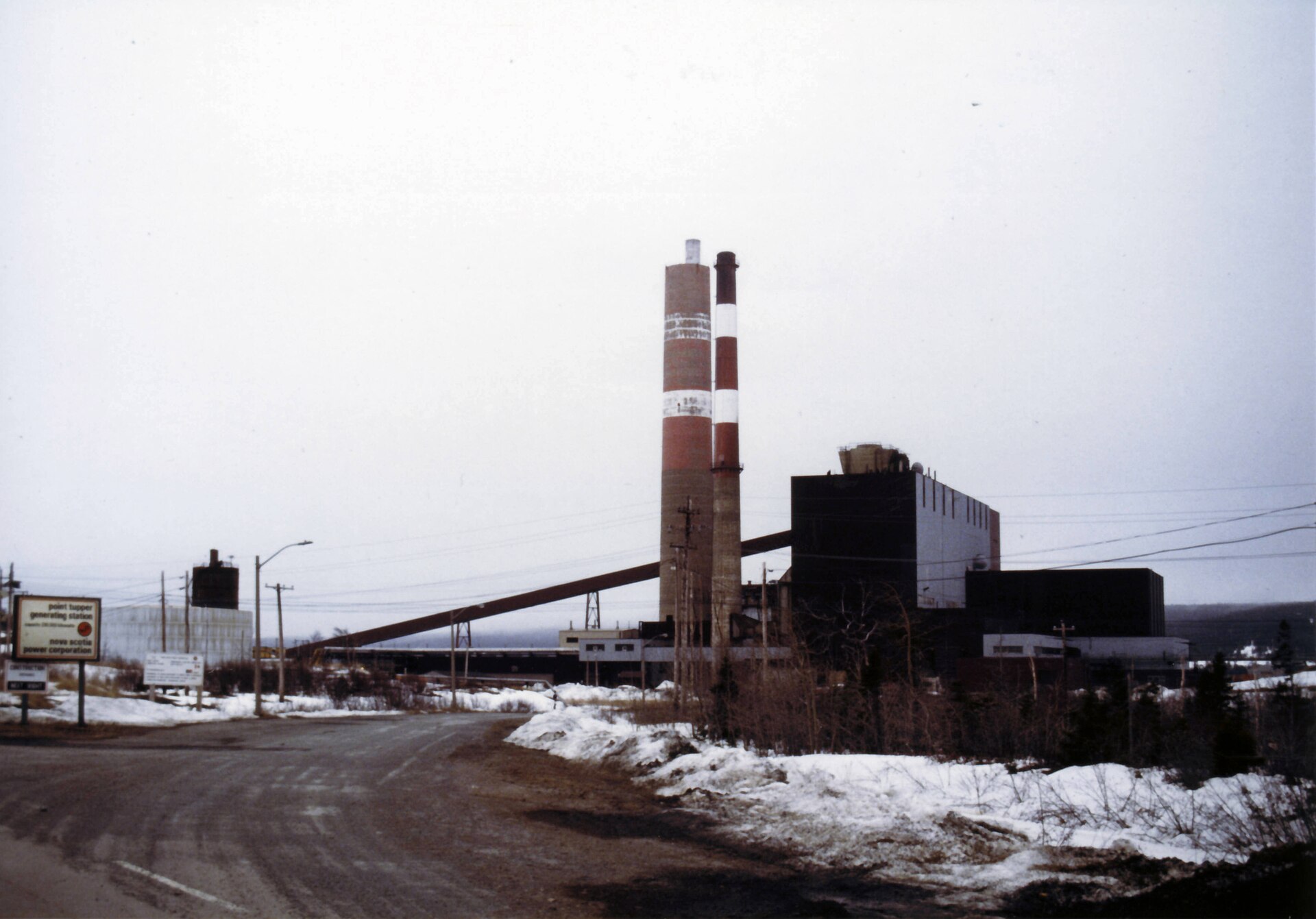
EverWind announced on 16 October 2026 that it has a long-term lease with a frontier AI developer for the first 95 MW of a Point Tupper campus, with more than $8 billion for the data centre and $2 billion for wind. Anthropic confirmed to Global News that it is the tenant.
OpenAI and Anthropic Fund the Checking of AI Maths
The Simons Foundation announced on 15 October 2026 that it, Anthropic and OpenAI will commit $15 million in combined funding and resources to help mathematicians evaluate AI-assisted results and set standards for using the tools. The foundation will award the money through an open call for proposals.