OpenAI and Anthropic Fund the Checking of AI Maths
The Simons Foundation will administer $15 million in combined funding and resources, of which OpenAI's share is $5 million, nine days after OpenAI posted 722 machine-written manuscripts.
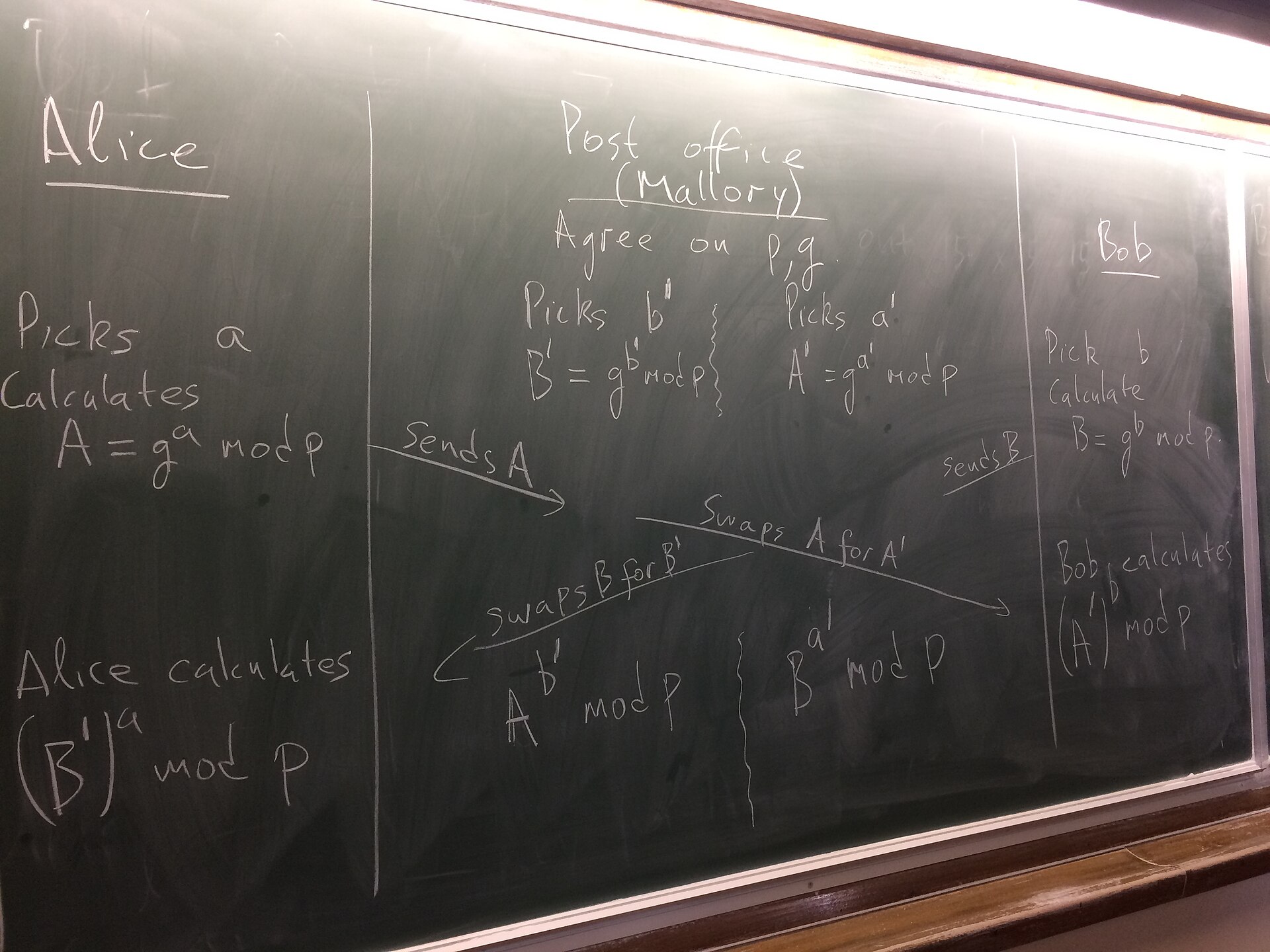
The Simons Foundation, Anthropic and OpenAI will commit $15 million in combined funding and resources to help mathematicians judge which AI-assisted results hold up, the foundation announced on 15 October 2026. OpenAI is putting in $5 million of that, The Verge and The Independent both reported the same day. Anthropic's share has not been disclosed, and the announcement does not separate cash from the value of donated tools and computing time.
The foundation will administer and award the money, including through an open call for proposals, to support workshops and initiatives that, in the words of its announcement, help researchers "evaluate recent AI-assisted results, learn and use new tools, share perspectives and shape collective standards for AI use". Anthropic and OpenAI will also provide AI tools and computing resources to researchers the foundation supports, and that part of the arrangement reaches past mathematics into basic science.
Nine days after the flood
The date sets the context. On 6 October OpenAI posted 722 mathematical manuscripts in 372 result families, produced by an unreleased internal model, as Parallax Nexus reported at the time. The company withheld the model's name, the prompts and all but ten of the reasoning summaries. The Independent reported on 15 October that the donation follows criticism from the mathematical community over that release, and The Verge noted that the money arrives just over a week after the company, in its words, dumped hundreds of preprints on the research community.
What the mathematicians were short of was not interest but capacity. Checking a proof is slower than generating one, and a result that reads as correct is not the same as a result that has been verified. The foundation has a claim on that problem: it was an early funder of the development of Lean, the proof assistant that lets a machine check an argument line by line, and which its announcement credits with making AI-assisted proofs possible in the first place.
Who gets to set the standard
The community should be driving discussions of how these tools are evaluated, adopted and used, not any single company or institution. The goal of the program is to support the mathematics community.
That is the sentence the structure is built around, and it is also the sentence the structure strains against. The two labs whose output prompted the argument are now among the three parties paying for the forum in which the argument will be settled, even with a philanthropy holding the chequebook and running the open call. Spergel's framing concedes the risk by naming it. The honest reading is that the governance question is not answered by who administers the grant, but by whether the standards the workshops produce are ones a lab would find inconvenient.
Against that, the alternative on offer has been worse. Google DeepMind took the slower route with the same technology: the peer-reviewed account of its AlphaProof Nexus system, which solved nine Erdos problems, appeared in Science on 8 October, Science News reported, with a description of how the results were obtained and human mathematicians having vetted many of the proofs. Thomas Bloom, the mathematician who curates the Erdos problems list, told Science News that this was "quite different" from how OpenAI and Anthropic have been handling their mathematical results. A fund that pays people to do that checking is a response to a real shortage, whoever wrote the cheque.
Several things are not public. The announcement names no models, gives no figure for the compute, sets no per-lab breakdown beyond OpenAI's $5 million, and gives no date for the open call or the first workshops. Nor does it say who decides which AI-assisted results are worth a reviewer's time, which is the decision that will determine whether $15 million buys standards or a backlog.
What happens next?
- The Simons Foundation is to open a call for proposals for workshops and initiatives, with no date yet announced.
- Anthropic and OpenAI are to begin supplying AI tools and computing resources to foundation-supported researchers in mathematics and basic science.
- Anthropic's share of the $15 million remains undisclosed and may be confirmed when the programme's terms are published.
- The 722 manuscripts OpenAI posted on 6 October still await community verification, which is the workload the new money is meant to address.
Related topics
Sources & references
- 01Simons Foundation Launches $15M Effort To Help Mathematicians Navigate AI Era — Simons FoundationprimaryAnnouncement of 15 October 2026 and source of the David Spergel quotations and the Lean funding history.
- 02OpenAI is giving $5 million to help mathematicians make sense of AI-generated research — The Vergenews15 October 2026. Source for OpenAI's $5 million share of the $15 million initiative.
- 03OpenAI donates $5 million to try and make peace with distraught mathematicians — The Independentnews15 October 2026. Links the donation to criticism from the mathematical community.
- 04Can math stay human in the age of AI? — Science NewsnewsSource for the AlphaProof Nexus paper in Science of 8 October 2026, the nine Erdos problems, and the verbatim remark by Thomas Bloom.
More from Artificial Intelligence

DeepSeek and MiniMax Clear China's New AI Export Register
Chinese state media reported on 22 October 2026 that DeepSeek and MiniMax had completed export registration under the interim regime that took effect with Announcement No. 48, six days after the Ministry of Commerce proposed bringing large models, AI agents and computing clusters into China's export control catalogue.
DHS Order Pulling DeepSeek From Agency Systems Dates to July
A Federal Register notice on 20 October 2026 published a Homeland Security order excluding DeepSeek from federal civilian procurement and requiring agencies to remove DeepSeek products, and third-party software built on DeepSeek implementations, from their systems.
Anthropic Takes 95MW in Cape Breton on a 20-Year Lease
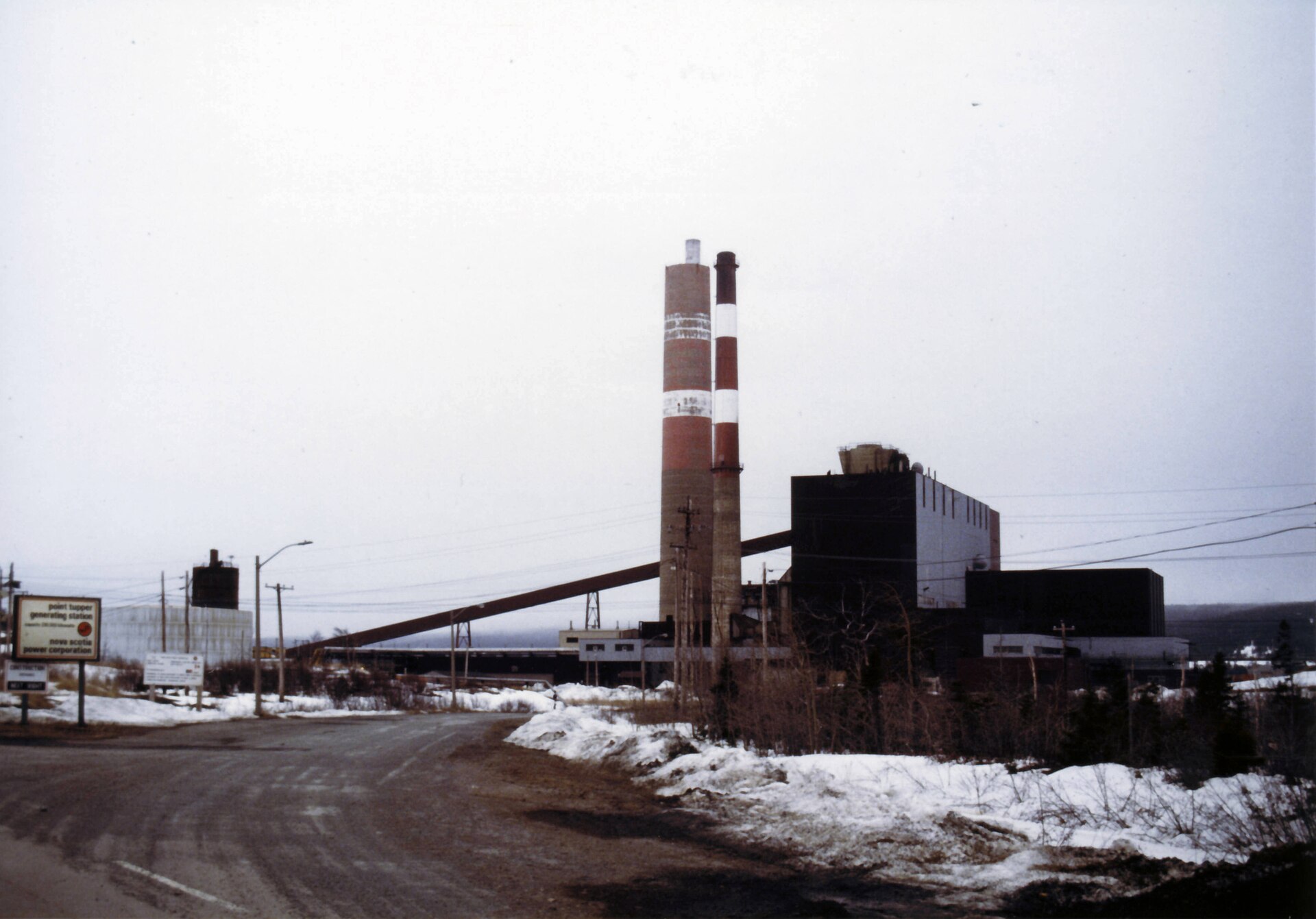
EverWind announced on 16 October 2026 that it has a long-term lease with a frontier AI developer for the first 95 MW of a Point Tupper campus, with more than $8 billion for the data centre and $2 billion for wind. Anthropic confirmed to Global News that it is the tenant.
Google's Argon Tops One Benchmark League and Trails Another
Google released Gemini 4 Argon to developers, enterprises and consumers on 13 October 2026, thirteen days after a restricted launch to cyber defenders. It ranks first on the Vals Index and joint fourth on Artificial Analysis's Intelligence Index.