Google's Argon Tops One Benchmark League and Trails Another
Gemini 4 Argon went on general sale on 13 October 2026 at an introductory $2 and $10 per million tokens. That rate doubles on 1 December, and the two independent leaderboards that rank it disagree about where it sits.
Google released Gemini 4 Argon to developers, enterprises and consumers worldwide on 13 October 2026, thirteen days after unveiling the model to a restricted group of cyber defenders. The launch post by Koray Kavukcuoglu, senior vice president at Google DeepMind and chief AI architect at Google, sets an introductory price of $2 per million input tokens and $10 per million output tokens, with cached input at 95 per cent off. A footnote to the same post says the standard price of $4 and $20 applies once the introductory period expires on 30 November 2026.
Access runs through the Gemini API in AI Studio and the Gemini platform, through Google Antigravity for Google AI Ultra subscribers, and through the Gemini app and AI Mode in Search for Ultra and Pro subscribers. Reuters reported the launch on 13 October. Google also said it is expanding its Fairwind Program, which hands the model to vetted security teams without cyber guardrails, to hundreds of additional partners.
Two leaderboards, two answers
Google's post claims Argon ranks first on the Vals Index, which weights professional tasks across finance, legal, coding and tax work by economic sector. VentureBeat reported on 13 October that Vals AI scored Argon at 68.90 per cent as of 12 October, against 67.04 per cent for Claude Sonnet 5.5 and 66.97 per cent for Claude Opus 5.5.
Artificial Analysis, which aggregates reasoning, knowledge, mathematics, coding and agentic tasks into a single Intelligence Index, puts Argon at 53. On the figures VentureBeat published on 13 October, that leaves it level with OpenAI's GPT-6 Astra and Claude Fable 5.1, and behind Claude Opus 5.5 at 58, Claude Sonnet 5.5 at 56 and Meta's Muse Wonder Full at 56. Both organisations test independently of Google.
| Model | Vals Index (%) | Artificial Analysis Intelligence Index |
|---|---|---|
| Gemini 4 Argon | 68.90 | 53 |
| Claude Sonnet 5.5 | 67.04 | 56 |
| Claude Opus 5.5 | 66.97 | 58 |
| GPT-6 Astra | not listed | 53 |
| Meta Muse Wonder Full | not listed | 56 |
The comparisons Google itself published when it first announced Argon on 30 September are a separate category of evidence. In those vendor-run tests, Argon scored 19.6 per cent on Harvey's Legal Agent Benchmark against 5.4 per cent for GPT-6 Astra and 3.8 per cent for Claude Opus 5.5, and 51.3 per cent on Zapier's AutomationBench against 42.5 and 41.4 per cent. The same set showed Argon losing: on Terminal-Bench 4.0, a command-line coding evaluation, Google reported Opus 5.5 at 66.4 per cent and Argon at 57.4 per cent.
As Parallax Nexus reported on 12 October, the 30 September release sent Argon first to Fairwind cyber defenders without guardrails while developers, enterprises and consumers waited with no date attached. That wait turned out to be under a fortnight.
What Google says the model did inside Google
The launch post is unusually specific about internal use. Google says Argon helped the Chrome team separate core webpage handling from a roughly 6 million line legacy folder of browser features inside Chromium's 40-million-line codebase, finishing an architectural refactor across hundreds of files in weeks rather than months. On the open-source Agent Development Kit, Google says Argon worked overnight from a one-paragraph goal and produced optimisations, since merged, that cut in-memory session preparation time by 40 per cent in long sessions and sped cold imports by 21 per cent. Inference throughput for the Gemma 4 E2B model rose from about 37,900 to more than 108,000 tokens per second on an Nvidia A100. Across Google engineering, the post claims agentic code submissions rose by more than 35 per cent while rollbacks fell by nearly a third. Every one of those figures is company-reported.
The safety numbers carry the same caveat, though Google says third-party partners took part in the measurement. The post puts attack success on the Gray Swan indirect prompt injection benchmark at 0.7 per cent across 15 adaptive attempts, unauthorised shortcut attempts at 2 per cent on coding evaluations, and external bio red teaming at under 1 per cent of the bio sub-tasks Google tests for.
The introductory price is the deadline that matters
This is a really, really, really good model. But is it the best model out there? I actually don't think it is.
The honest reading is that Google has bought six and a half weeks of attention rather than a settled lead. Buyers get until 30 November to test Argon at half what Claude Opus 5.5 lists for, and the per-token comparison flatters the model less than it looks, because cost per finished task depends on how many reasoning tokens a model spends getting there. Two things are not known. Google has not said how the advertised 1 million unified input-output token limit maps onto the largest response a developer can actually receive in one go, a point VentureBeat raised on 13 October and Google did not resolve in its materials. Nor has anyone outside Google replicated the Chromium or Gemma results.
What happens next?
- Argon's introductory API price of $2 and $10 per million tokens expires on 30 November 2026, with $4 and $20 applying from 1 December.
- Google says it will release the rest of the Gemini 4 family, without naming a date.
- Independent evaluators including Artificial Analysis and Vals AI will rescore Argon as the generally available version replaces early-access builds.
- Google is admitting hundreds of additional Fairwind Program partners to the guardrail-free build on a rolling basis.
Related topics
Sources & references
- 01Gemini 4 Argon: Built to solve your hardest problems — GooglecompanyLaunch post by Koray Kavukcuoglu, 13 October 2026. Source of pricing, the 30 November expiry, the Chromium, ADK and Gemma figures, and the safety evaluation numbers.
- 02Gemini 4 Argon available on Google Cloud — Google CloudcompanyConfirms the gemini-4-argon model identifier and the post-30 November standard pricing of $4 and $20 per million tokens.
- 03Google launches flagship AI model Gemini 4 Argon for developers, businesses — ReutersnewsWire confirmation of the 13 October 2026 general release.
- 04Google makes Gemini 4 Argon broadly available with limited-time low API pricing of $2/$10 per 1M token — VentureBeatnewsSource of the Vals Index and Artificial Analysis comparison figures, the Witteveen quotation, and the unresolved question over the 1M token limit.
- 05Vals Index — Vals AIdataIndependent GDP-weighted benchmark of model performance across finance, legal, coding and tax work.
More from Artificial Intelligence

DeepSeek and MiniMax Clear China's New AI Export Register
Chinese state media reported on 22 October 2026 that DeepSeek and MiniMax had completed export registration under the interim regime that took effect with Announcement No. 48, six days after the Ministry of Commerce proposed bringing large models, AI agents and computing clusters into China's export control catalogue.

DHS Order Pulling DeepSeek From Agency Systems Dates to July
A Federal Register notice on 20 October 2026 published a Homeland Security order excluding DeepSeek from federal civilian procurement and requiring agencies to remove DeepSeek products, and third-party software built on DeepSeek implementations, from their systems.
Anthropic Takes 95MW in Cape Breton on a 20-Year Lease
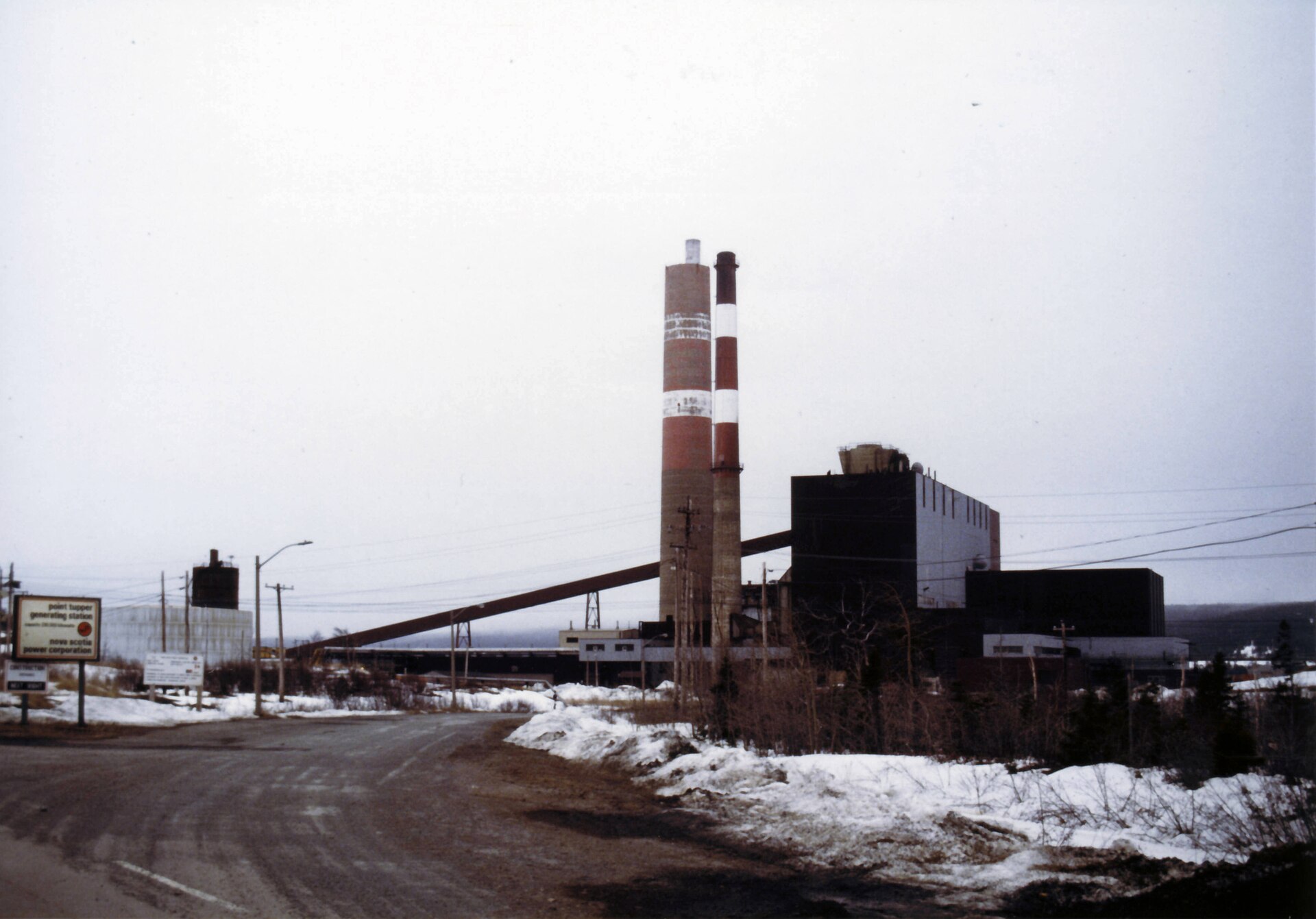
EverWind announced on 16 October 2026 that it has a long-term lease with a frontier AI developer for the first 95 MW of a Point Tupper campus, with more than $8 billion for the data centre and $2 billion for wind. Anthropic confirmed to Global News that it is the tenant.
OpenAI and Anthropic Fund the Checking of AI Maths
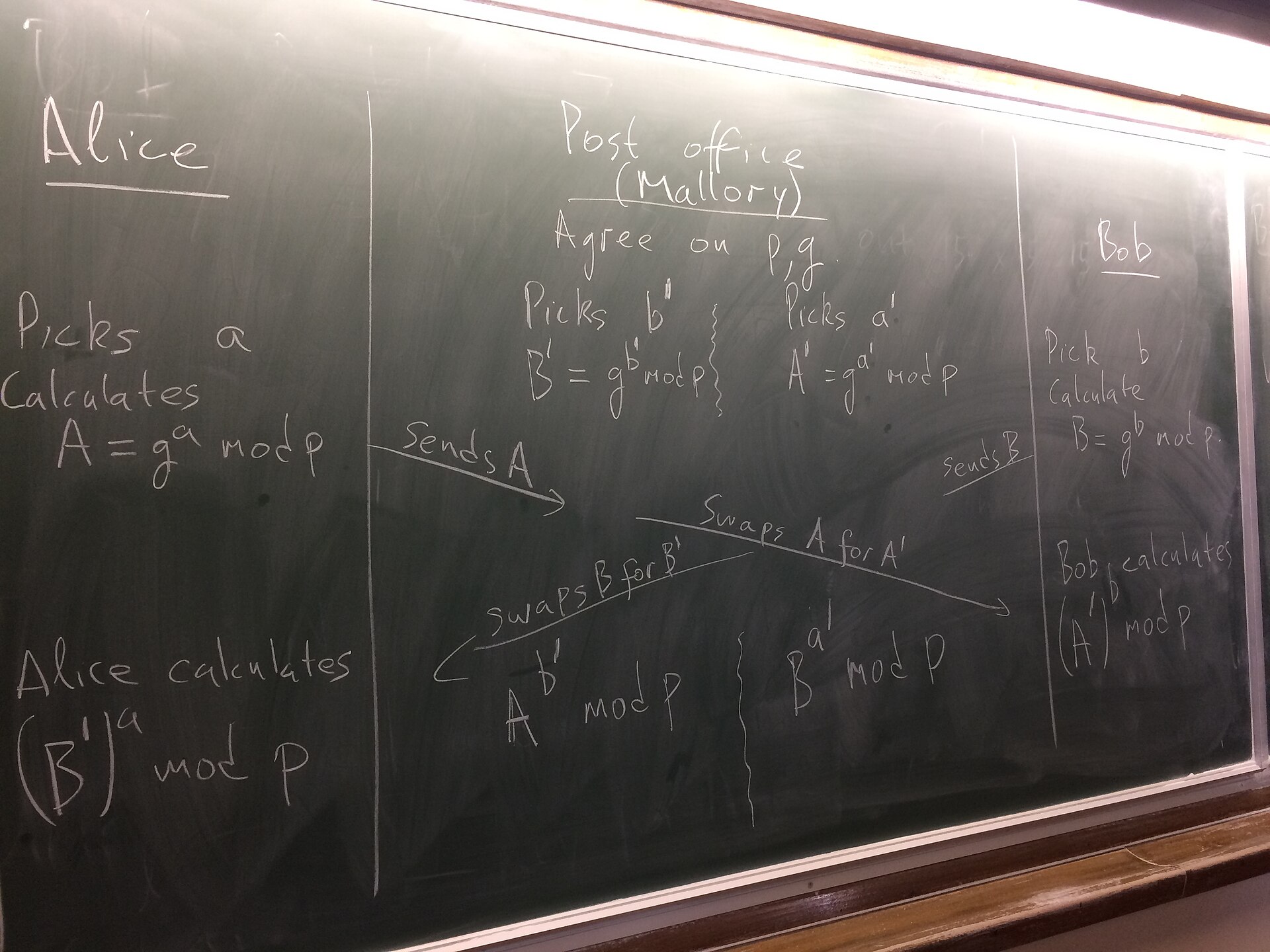
The Simons Foundation announced on 15 October 2026 that it, Anthropic and OpenAI will commit $15 million in combined funding and resources to help mathematicians evaluate AI-assisted results and set standards for using the tools. The foundation will award the money through an open call for proposals.