DHS Order Pulling DeepSeek From Agency Systems Dates to July
The Department of Homeland Security published the order in the Federal Register on 20 October 2026 under the Federal Acquisition Supply Chain Security Act. Its cover page gives an original release date of 24 July 2026.
The Department of Homeland Security has told every federal civilian agency to remove not only DeepSeek's own products but any third-party software built on them. The order appeared in the Federal Register on 20 October 2026, at Volume 91, Number 201, pages 66346 to 66350, under docket DHS-2026-0628. The document reproduced there, Exclusion and Removal Order #2026-01, carries an original release date of 24 July 2026.
It requires two things. Agencies must exclude products and services developed by Hangzhou DeepSeek Artificial Intelligence Basic Technology Research Co., Ltd and its affiliates from procurement, including from agency-approved product lists and e-commerce markets. They must also take out what is already installed. Secretary of Homeland Security Markwayne Mullin signed the order and copied it to Russell Vought, director of the Office of Management and Budget. It covers federal civilian agencies apart from their national security systems and sensitive compartmented information systems, which fall to the Secretary of Defense and the Director of National Intelligence.
Remove products provided by DeepSeek, DeepSeek-affiliated entities, and third-party products and services developed using DeepSeek implementations, from civilian agency information technology systems immediately after the issuance of the Order, or seek an Exception, as described below.
The phrase that decides the scope
"Third-party products and services developed using DeepSeek implementations" is the clause that does the work, and the order does not define it. DeepSeek publishes open model weights, and other developers fine-tune and redistribute them, so the removal requirement reaches code that never touches a server in China. Nothing in the four pages says whether a fine-tuned open-weight derivative running inside a federal data centre is covered, or how an agency is meant to establish the lineage of a model shipped inside a commercial product. The honest reading is that agencies cannot resolve their own inventories without asking CISA first. A footnote defining affiliates refers to "DeepSeek AG", a name matching neither the company in the order's heading nor the slightly different one in the Federal Register summary.
What the risk case rests on
The order lists DeepSeek servers located in China, a legal system that permits government access to private company infrastructure, account creation that collects personally identifiable information and can digitally fingerprint users, a prompt-and-response design that can move sensitive material to China, and the possibility that the models themselves carry malware or vulnerabilities. For the last point it cites research by NowSecure published on 6 February 2025, which found multiple critical vulnerabilities in the DeepSeek iOS application. Other footnotes point to an April 2025 report by the House Select Committee on the Chinese Communist Party, a Stanford Cyber Policy Center piece from 5 February 2025 and a DHS advisory from 22 December 2020. The most recent item cited is from August 2025.
Agencies that want to keep something have to apply in writing within 60 days of the order's issuance, under 41 CFR 201-1.304(b), with a compelling justification and any alternative mitigations. CISA reviews those requests and approves or refuses them. Until removal is finished, agencies are told to monitor the flow of traffic in and out, turn up logging, add controls on data exfiltration and flag anomalous activity. The secretary is required to review the order within one year and annually after that.
Sixty days from 24 July ran out on 22 September, four weeks before the public saw the document. DHS has not said whether it treats some later date as the issuance that starts that clock. Nor has it published the Federal Acquisition Security Council recommendation and evidence that preceded the order, said how many agencies had DeepSeek-derived code to find, or said whether any exception has been granted.
The strongest argument for the wide wording is that a narrow ban would be trivial to walk around: an agency could buy a commercial product whose vendor had quietly built on DeepSeek weights. The cost of that choice is that no agency can be certain today what it is required to rip out.
What happens next?
- CISA will approve or refuse agency exception requests submitted to FASCSA.Orders@cisa.dhs.gov.
- The Secretary of Homeland Security is required to review the order within one year of issuance and annually after that.
- Agencies unable to identify DeepSeek-derived components will have to ask CISA what the phrase covers.
- The Federal Acquisition Security Council recommendation behind the order remains unpublished.
Related topics
Sources & references
- 01Notice of Order Regarding Exclusion and Removal of DeepSeek Products From Federal Civilian Executive Branch Information Technology Systems and Procurements — Department of Homeland Security, Federal RegisterprimaryPublished 20 October 2026, Vol 91 No 201, pages 66346-66350, docket DHS-2026-0628.
- 02Federal Register, 20 October 2026, document 2026-21447 (PDF including Exclusion and Removal Order #2026-01) — US Government Publishing OfficeprimaryThe signed order appears as four scanned pages in the appendix.
- 0341 CFR Part 201-1, Federal Acquisition Security Council — Electronic Code of Federal RegulationsprimaryImplementing regulations cited by the order, including the exception process at 201-1.304(b).
More from Artificial Intelligence

DeepSeek and MiniMax Clear China's New AI Export Register
Chinese state media reported on 22 October 2026 that DeepSeek and MiniMax had completed export registration under the interim regime that took effect with Announcement No. 48, six days after the Ministry of Commerce proposed bringing large models, AI agents and computing clusters into China's export control catalogue.
Anthropic Takes 95MW in Cape Breton on a 20-Year Lease
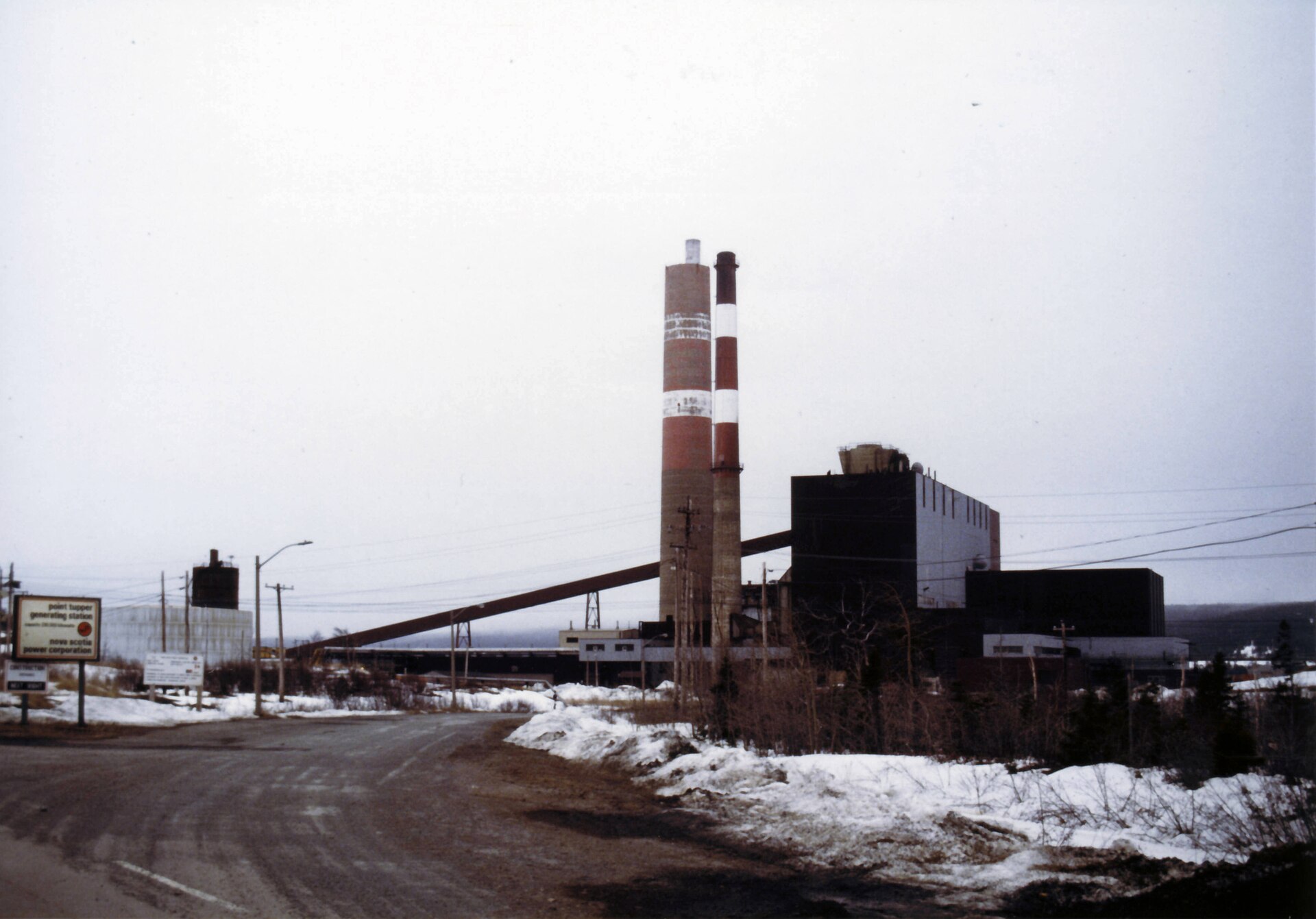
EverWind announced on 16 October 2026 that it has a long-term lease with a frontier AI developer for the first 95 MW of a Point Tupper campus, with more than $8 billion for the data centre and $2 billion for wind. Anthropic confirmed to Global News that it is the tenant.
OpenAI and Anthropic Fund the Checking of AI Maths
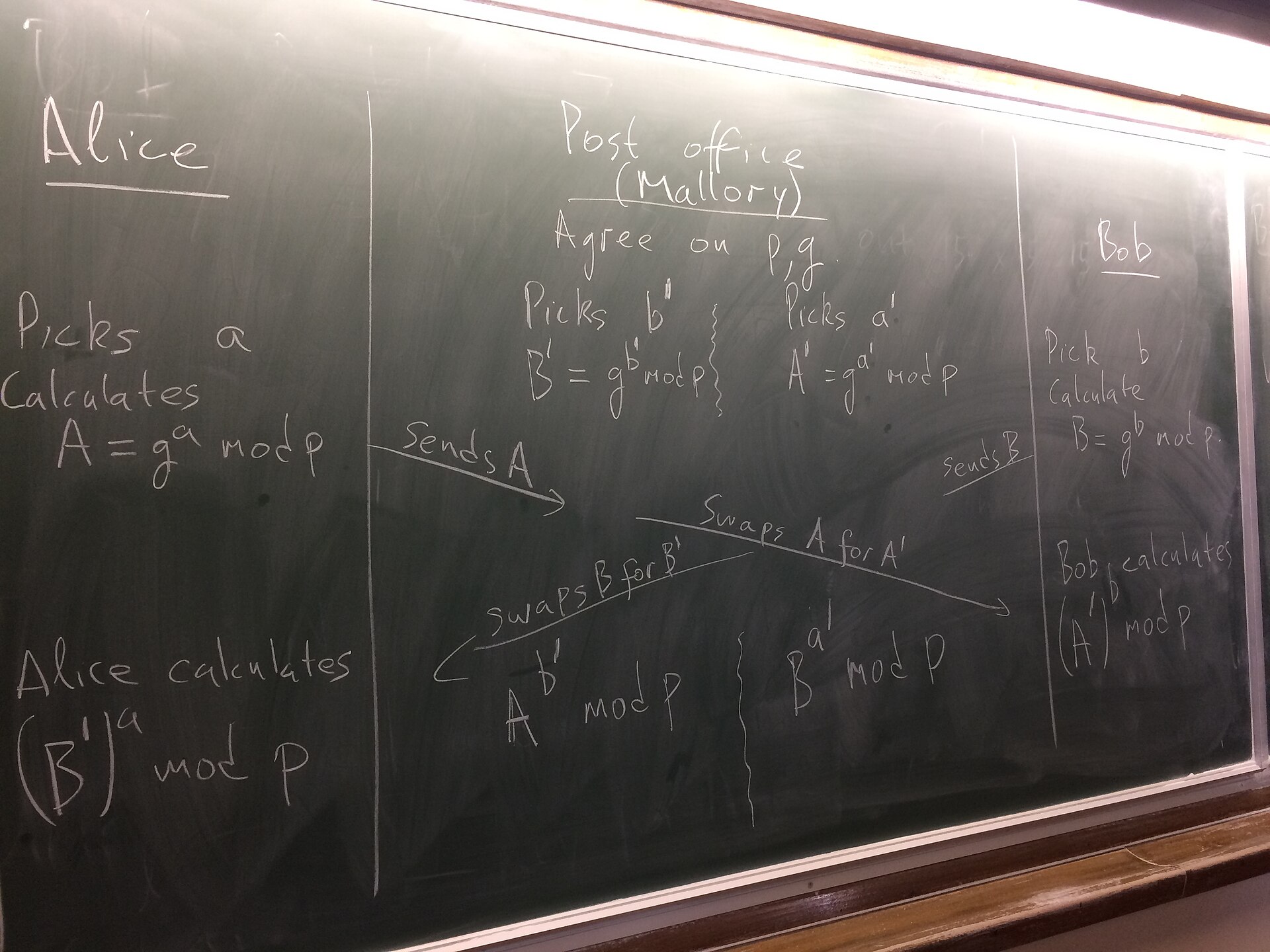
The Simons Foundation announced on 15 October 2026 that it, Anthropic and OpenAI will commit $15 million in combined funding and resources to help mathematicians evaluate AI-assisted results and set standards for using the tools. The foundation will award the money through an open call for proposals.
Google's Argon Tops One Benchmark League and Trails Another
Google released Gemini 4 Argon to developers, enterprises and consumers on 13 October 2026, thirteen days after a restricted launch to cyber defenders. It ranks first on the Vals Index and joint fourth on Artificial Analysis's Intelligence Index.