OpenAI's Grid Programme Starts With a Deal Approved in August
OpenAI said on 2 November it will design future compute campuses to cut electricity demand when grids are strained. The one firm commitment it named, 1,000 megawatts of flexible demand in Effingham County, Georgia, sits inside a contract state regulators cleared on 26 August.
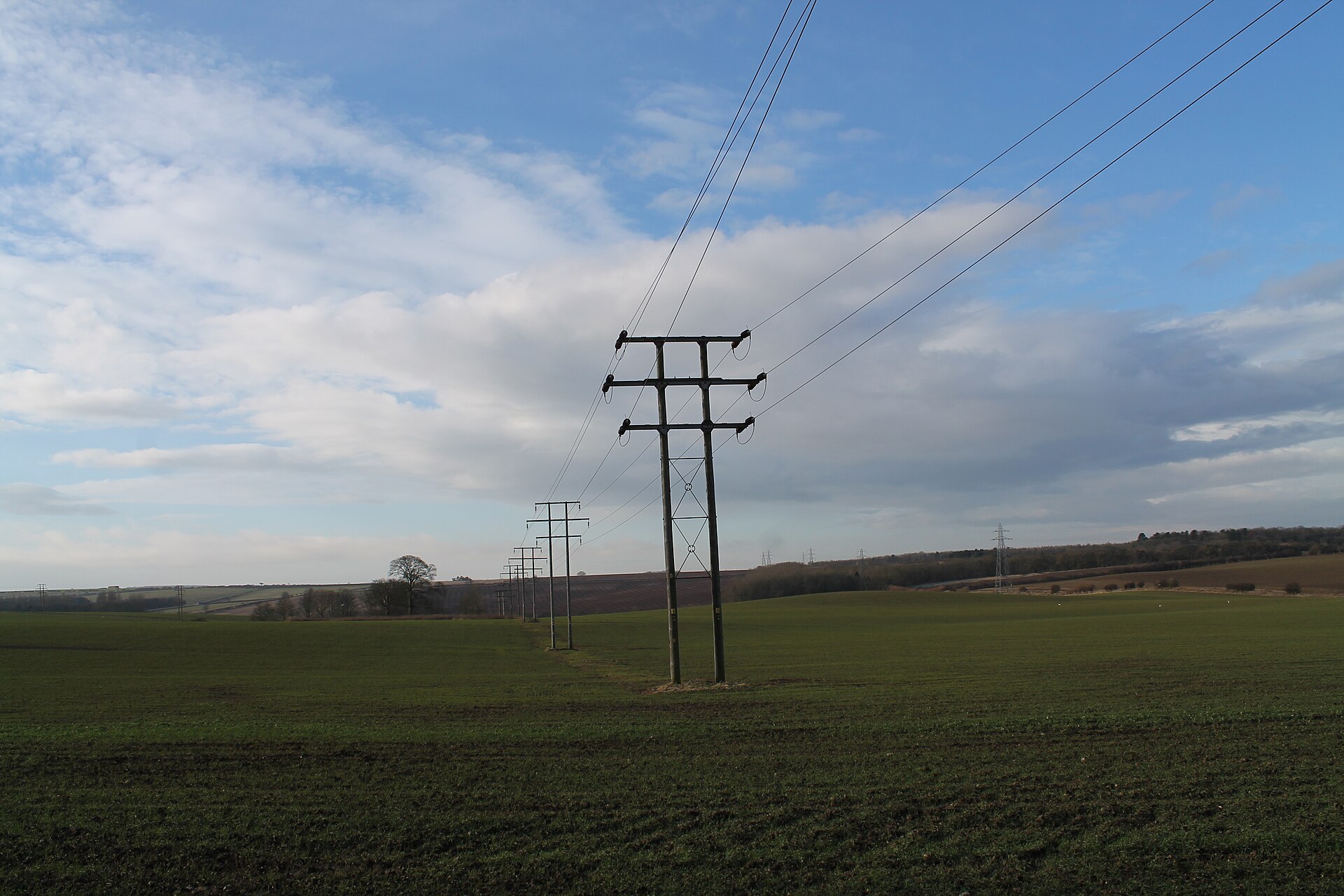
OpenAI launched a programme on 2 November 2026 to negotiate electricity demand reductions with utilities for compute campuses it has not yet built. The Grid Protectors Program, posted by the company's global affairs team, names exactly one location: a planned campus in Effingham County, Georgia, where OpenAI's agreement with Georgia Power includes up to 1,000 megawatts of flexible demand response.
The commitment at Effingham is real, and it is also ten weeks old. Georgia Power announced on 26 August 2026 that the Georgia Public Service Commission had approved its contract to serve the project, a contract the utility filed with the commission in July covering 3,200 megawatts of new demand. The same release set out the flexibility term OpenAI restated on Monday, describing up to 1,000 MW that lets Georgia Power reduce energy delivered to the facility during periods of high demand and "invest in fewer new generation resources to serve future growth".
What the Effingham contract covers
OpenAI says it has committed to pay the full infrastructure and electric-service costs required to serve the project, and frames that as a principle rather than a concession. "Families and small businesses should not be asked to subsidize a compute campus's electricity needs," the announcement states. It puts the 1,000 megawatts in household terms, calling it the equivalent of the average electricity demand of roughly 700,000 homes, more than Washington DC and Boston combined.
On price, OpenAI points to Georgia Power's own forecast. The utility projects approximately $950 million in annual customer savings beginning in 2029 from its portfolio of large-load agreements and expected growth, including Project Camellia, and estimates a benefit of at least $15 a month for a typical residential customer using 1,000 kilowatt-hours. Its August release put the three-year total at $2.847 billion across 2029 to 2031, an increase on the $102 a year it committed to in December 2025. Those are projections from a regulated utility seeking approval for large-load contracts, not realised savings, and they depend on the new revenue arriving on time.
Whether it arrives on time is the live question across the sector. Dominion Energy's third-quarter disclosure, which Parallax Nexus covered on 31 October, showed a Virginia data centre pipeline of 54.9GW growing 13 per cent in nine months while the slice authorised for construction shrank. Microsoft terminated its agreement at Nscale's Loughton site in Essex in October after the grid connection slipped into the 2030s.
A gigawatt other companies have already claimed
The 1,000 megawatt figure is not a frontier number. Axios reported on 16 September 2026 that Google's Tyler Norris said the company had committed 1 gigawatt of power demand it can reduce when needed through utility agreements across the United States, on the day Google, Nvidia and Emerald AI launched the AI Energy Management Alliance with roughly 20 members, Anthropic among them. The alliance wants regulators to grant faster grid connections to facilities that can prove they will curtail. OpenAI's programme enters a field where that bargain is already organised and where, as Axios noted, it is not yet clear whether regulators will create the fast lane.
Flexibility cannot replace investment in new energy supply and transmission.
The honest reading is that Grid Protectors is a commitment to a method, not to a quantity. OpenAI has not said how many campuses it expects to cover, which utilities it is negotiating with, how quickly its facilities can shed load, how long they can hold it down, or when the next arrangement will be signed. The company does say long-term contracts and financial assurances can protect other customers if a project is delayed, reduced or cancelled, which is the clause that matters most if the build-out slows rather than accelerates. The engineering claim underneath all of it cannot be tested yet: Effingham is still in development, and a campus that has never run has never curtailed.
What happens next?
- OpenAI says it will share additional commitments as they are finalised, without naming a date or a next utility.
- The Effingham County campus remains in development, so its 1,000 megawatts of flexible demand cannot be demonstrated until the site is operating.
- Georgia Power's projected $950 million of annual customer savings begins in 2029 and will be measurable against rates from that year.
- Regulators in other states will decide whether curtailable load earns faster interconnection, the central ask of the AI Energy Management Alliance.
Related topics
Sources & references
- 01Introducing the Grid Protectors Program — OpenAIcompanyPublished 2 November 2026; source of the 1,000 MW and 700,000 household figures
- 02Georgia Power's contract with OpenAI approved — Georgia Powercompany26 August 2026; 3,200 MW of new demand, up to 1,000 MW of flexible demand response, $950m annual savings from 2029
- 03Tech giants launch flexible-power coalition for data centers — Axiosnews16 September 2026; Google's 1 GW flexible demand commitment and the AI Energy Management Alliance launch
- 04Georgia Power says OpenAI data center could bring $950 million in annual savings for customers — WJCLnewsUpdated 28 August 2026; PSC clearance of the Effingham power agreement
More from Artificial Intelligence
Google's Top-Ranked Model Goes Only to Cyber Defenders
Google announced Gemini 4 Carbon on 28 October 2026, first on version 5.0 of the Artificial Analysis Intelligence Index at 59, and is releasing it initially to a subset of cyber defenders with no date for general availability. The headline security scores were measured with the model's restrictions off.
OpenAI Halves API Prices With Its New Computer-Use Model
OpenAI released GPT-6.1 Terra on 26 October 2026 at half the standard API price of its predecessor, pitching it at screen-reading and form-filling work rather than at the top of the benchmark tables. The independent scores confirm the positioning.

DeepSeek and MiniMax Clear China's New AI Export Register
Chinese state media reported on 22 October 2026 that DeepSeek and MiniMax had completed export registration under the interim regime that took effect with Announcement No. 48, six days after the Ministry of Commerce proposed bringing large models, AI agents and computing clusters into China's export control catalogue.
DHS Order Pulling DeepSeek From Agency Systems Dates to July
A Federal Register notice on 20 October 2026 published a Homeland Security order excluding DeepSeek from federal civilian procurement and requiring agencies to remove DeepSeek products, and third-party software built on DeepSeek implementations, from their systems.