Humanoids Clock In: What the First Factory Contracts Reveal
BMW is running a humanoid pilot in Leipzig and Schaeffler has signed for up to 2,000 robots. The shipment data says most humanoids still perform, teach or collect data. Both things are true.
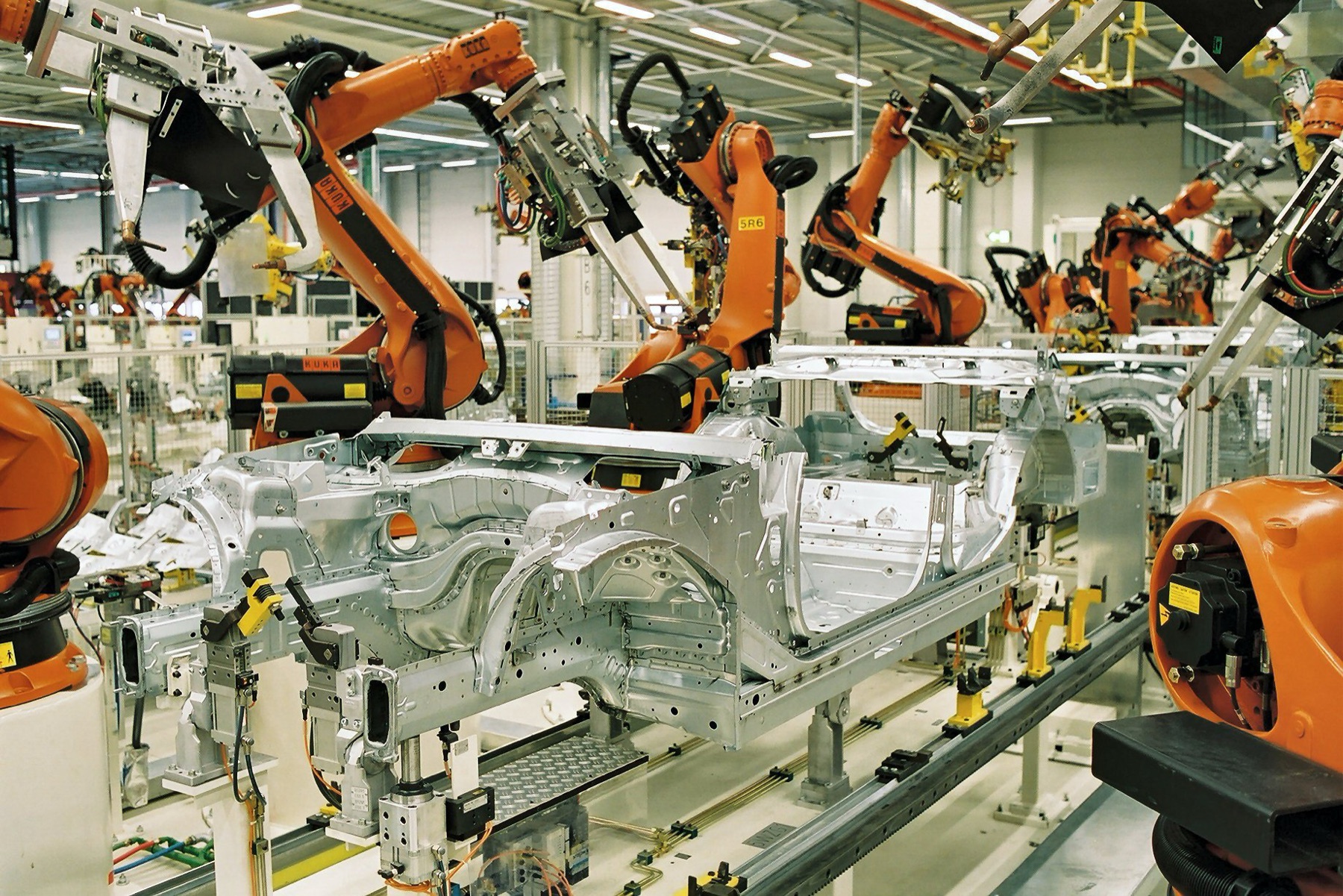
There are two honest ways to describe the humanoid robot market in September 2026, and the industry's problem is that its marketing chooses only one. The first: shipments grew several hundred percent last year and the first binding contracts to put humanoids into live European factories have been signed. The second: most of those shipments went to stages, classrooms and data-collection labs, and every factory deployment is still called a pilot by the manufacturer running it.
What shipped, and where it went
Omdia's count for 2025 is 13,318 humanoid units shipped worldwide, up almost 480% in a year, with Shanghai's AgiBot first at 5,168 units, Unitree second at 4,200 and UBTech third at 1,000. IDC, using a broader definition, puts 2025 shipments at about 18,000 units and market revenue near $440 million, a rise of roughly 508%, with Chinese vendors dominant and international vendors largely in pilot phases.
Where the robots went is the more important number. IDC estimates that more than 85% of 2025 deployments went into performances, education, data collection, reception and guided services. Industrial manufacturing and logistics remained at the pilot stage. The volume story and the factory story are, for now, different stories.
Global humanoid robot shipments, 2025. Units shipped: Omdia 13318, IDC 18000.
BMW: a pilot, and proud of it
On 27 February 2026 BMW Group announced it would deploy humanoid robots in production in Germany for the first time, at its Leipzig plant, in collaboration with Hexagon Robotics and its AEON robot. BMW's language is precise: an initial test deployment in December 2025, a further test from April 2026, and the pilot phase proper from summer 2026, focused on high-voltage battery assembly and component manufacturing for exterior parts. The company established a Center of Competence for Physical AI in Production and said a first pilot with humanoids had been completed at its Spartanburg plant in the United States.
By June, Hexagon reported AEON performing production tasks in Leipzig while being trained on further applications, with deployment in production targeted by the end of 2026. AEON is not a science-fiction humanoid: it moves on casters rather than legs, stands about 65 inches, carries up to 15 kilograms and docks a variety of grippers and scanning tools. BMW's Michael Nikolaides described humanoids as a 'value adding complement to existing automation', aimed at monotonous, ergonomically demanding or safety-critical tasks.
Schaeffler: the first four-digit contract
The larger commercial signal came on 13 May 2026, when UK-based Humanoid announced a binding, phased deployment and supply agreement with German motion-technology supplier Schaeffler. A company spokesperson told Reuters the plan covers an estimated 1,000 to 2,000 robots across Schaeffler's global sites by 2032. The initial phase, from December 2026 to June 2027, runs at two German plants: box handling in a live production environment at Herzogenaurach, and a three-month capability demonstration followed by three months validating continuous operation near full-scale production at Schweinfurt.
Three terms of the deal matter more than the unit count. The robots are wheeled, not bipedal. The first task is box handling, work that autonomous mobile robots already do. And the commercial model is robot-as-a-service, with Humanoid supplying the systems, fleet software, maintenance and performance management rather than selling hardware outright. Schaeffler, in turn, becomes preferred supplier for more than half of Humanoid's joint-actuator demand through 2031, a seven-digit number of actuators. The customer is also the component supplier, which says a great deal about how early the supply chain is.
What to watch
The metrics that will decide this market are the ones no vendor has yet published at scale: cost per task including supervision, hours of autonomous operation between interventions, and the ratio of robots to human overseers. BMW's staged language and Schaeffler's six-month validation phases are the industry admitting, in contract form, that those numbers are still being measured. When a manufacturer publishes them and then orders more, the pilot era ends.
Who benefits, who is at risk
Beneficiaries: Chinese vendors with thousand-unit production capacity, actuator and sensor suppliers such as Schaeffler that sit on both sides of the trade, and operators with repetitive, well-structured logistics tasks. At risk: humanoid developers whose valuations assume near-term factory scale, and buyers who confuse shipment growth in entertainment and education with proven industrial economics.
What happens next?
- Schaeffler's German sites go live in December 2026; the first continuous-operation data follows in 2027.
- BMW moves AEON from pilot to production in Leipzig by year end, per Hexagon's stated target.
- More automakers and tier-one suppliers sign RaaS agreements with staged validation rather than capital purchases.
- Research houses converge on shipment definitions as industrial deployments become a measurable share.
Related topics
Sources & references
- 01Chinese firms outpace US rivals in 2025 humanoid robot shipments, as AgiBot takes lead — South China Morning Post (reporting Omdia)news
- 02Worldwide Humanoid Robotics Market Analysis 2026 — IDCreport
- 03BMW Group to deploy humanoid robots in production in Germany for the first time — BMW Group PressClubcompany
- 04New milestone with BMW Group: industrial humanoid deployment — Hexagon Roboticscompany
- 05BMW to Deploy Humanoids at German Assembly Plant — ASSEMBLYnews
- 06Humanoid to deploy up to 2,000 robots at Schaeffler plants — Reutersnews
- 07Humanoid Secures Landmark Deal with Schaeffler to Deploy Thousands of Humanoid Robots — Humanoidcompany
More from Artificial Intelligence
GPT-6 Astra Crosses the Line OpenAI Drew for Itself
OpenAI released GPT-6 Astra on 3 September 2026, claiming saturated frontier benchmarks and state-of-the-art computer use. Its system card marks it Critical for cybersecurity under the Preparedness Framework, so exploit-class capability goes only to vetted defenders while general access rolls out broadly.

California Builds the Plumbing for AI Audits
Governor Newsom signed SB 813 and AB 1405 on 9 September 2026, establishing a framework for independent verification organisations and a state registry of AI auditors with independence rules, backed by both Anthropic and OpenAI.
Open Weights Just Got Bought
In one summer, the largest open-weight models ever released arrived from Moonshot, DeepSeek and Alibaba, and the two platforms through which developers find and route them were acquired by NVIDIA and Stripe. Open weights are strategic infrastructure, and the strategy now has owners.

The Age of AI Employees Has Begun
Agents are being connected to the systems where work actually happens. That changes what companies buy, how they organise and what a productive employee looks like.