The Licence-and-Hire Playbook Meets the Justice Department
Nearly every big AI talent deal of the last two years was structured to avoid merger review. The DOJ's probe into Nvidia's Groq arrangement is the first real test of whether that structure holds.
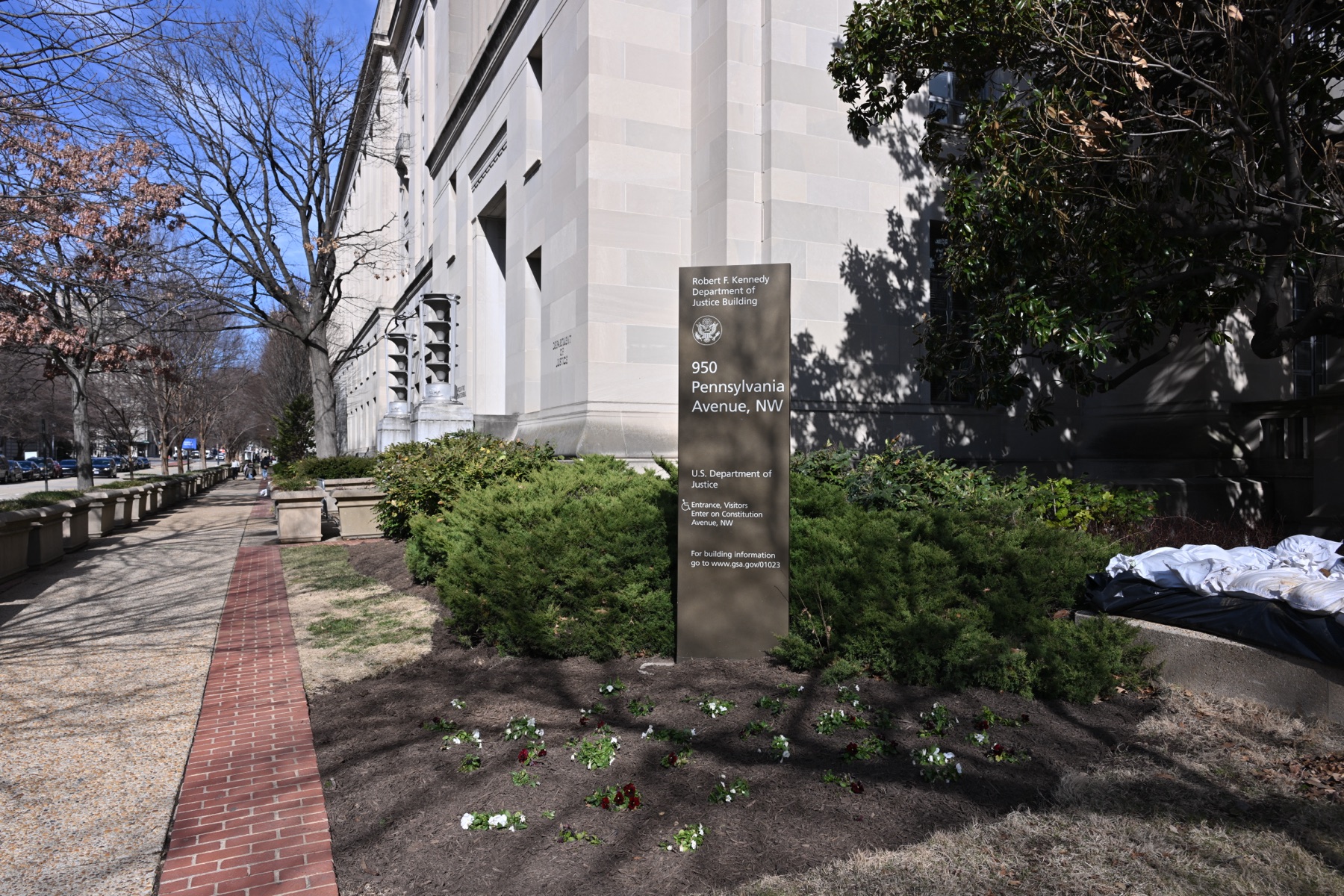
There is a deal structure that the AI industry has used so often it has a nickname: the reverse acqui-hire. A large company licenses a startup's technology, hires its founders and key staff, and leaves the corporate shell standing. Nothing is acquired, so nothing is reported under the Hart-Scott-Rodino merger rules. Nvidia's arrangement with the inference-chip company Groq is the biggest example, and it is now the first to draw a formal Justice Department inquiry.
The deal
On 24 December 2025 Groq announced a non-exclusive licensing agreement with Nvidia for its inference technology. Founder and chief executive Jonathan Ross, chief operating officer Sunny Madra and other members of the Groq team joined Nvidia. Groq said it would continue as an independent company under a new chief executive, Simon Edwards, with its GroqCloud service operating without interruption. No financial terms were disclosed. CNBC reported the same day that Nvidia had agreed to pay about $20 billion in cash, a figure attributed on the record to Alex Davis, whose firm led Groq's September 2025 funding round at a $6.9 billion valuation. Reuters relayed the CNBC figure, noting neither company commented.
The probe
The New York Times reported on 9 September 2026 that the Justice Department is investigating whether Nvidia tried to skirt antitrust scrutiny of the deal, that the inquiry began shortly after the December announcement, and that the department has sent Nvidia a formal demand for information. If fault is found, the Times reported, the agency may fine Nvidia but would probably not require the deal to be undone. Reuters relayed the report on 10 September, describing a $17 billion non-exclusive licence; Bloomberg independently reported the probe, valuing the licence at $20 billion. Nvidia, Groq and the department did not immediately respond to Reuters.
The political groundwork was laid months earlier. On 19 March Senators Elizabeth Warren and Richard Blumenthal wrote to Nvidia chief executive Jensen Huang that the deal 'appears to be structured to evade scrutiny by antitrust regulators', citing the $20 billion figure and asking whether the licence-and-hire structure was chosen to avoid review. Nvidia's public position, given to The Next Web after the probe was reported, is that 'the Groq story is a prime example of the American system working as designed to promote innovation, reward entrepreneurs, and benefit consumers'.
The pattern
Reuters placed the Groq deal in a lineage when it was announced: Microsoft's $650 million arrangement with Inflection, Meta's roughly $15 billion investment in Scale AI, and Amazon's hiring of Adept's team. None has been unwound. What is different now is the enforcement posture. The National Law Review, citing Reuters, reports that the acting head of the DOJ's antitrust division has called acqui-hires a potential red flag when structured to circumvent merger review, and that the FTC chair has said the agency is examining such deals. Groq, meanwhile, raised $650 million in June 2026 and is targeting roughly 200 MW of inference capacity by the end of 2027, according to TechTarget.
| Deal | Structure | Reported value | Status |
|---|---|---|---|
| Microsoft / Inflection (2024) | Licence plus hires | $650m | Not unwound |
| Amazon / Adept (2024) | Licence plus hires | Undisclosed | Not unwound |
| Meta / Scale AI (2025) | Minority investment plus hires | ~$15bn | Not unwound |
| Nvidia / Groq (Dec 2025) | Non-exclusive licence plus hires | $17bn to $20bn, unconfirmed | DOJ inquiry |
Who benefits, who is at risk
Beneficiaries: startups whose founders now have leverage to demand full acquisitions at full review; antitrust practitioners. At risk: acquirers holding licence-and-hire deals that could be re-characterised, and the founders inside them, whose employment may become evidence. Nvidia's exposure appears to be a fine rather than a forced separation, but the precedent would travel.
What happens next?
- Nvidia responds to the DOJ's demand for information; a settlement with a fine is the outcome the Times reporting points toward.
- The FTC and DOJ publish guidance on when licence-and-hire arrangements count as acquisitions.
- Future talent deals shift toward outright acquisitions with HSR filings, or toward smaller, clearly non-controlling structures.
- Groq's independence is tested by whether it can raise and build capacity without its founders.
Related topics
Sources & references
- 01US DOJ probes Nvidia's licensing deal with AI startup Groq, NYT reports — Reutersnews
- 02Nvidia Groq antitrust investigation — The New York Timesnews
- 03DOJ probes Nvidia's license deal with Groq on antitrust concerns — Bloomberg Lawnews
- 04Groq and NVIDIA enter non-exclusive inference technology licensing agreement — Groqcompany
- 05Nvidia to buy AI chip startup Groq for about $20 billion, CNBC reports — Reutersnews
- 06Letter from Senators Warren and Blumenthal to Nvidia on the Groq deal — Office of Senator Elizabeth Warrenprimary
- 07DOJ reportedly probes Nvidia-Groq deal for antitrust concerns — TechTargetnews
More from Business
The AI IPO Race Has One Runner Left This Year
Reuters reports Anthropic will begin marketing its IPO in mid-October at the earliest, completing days before the US midterms, after finalising a $15 billion revolving credit facility and holding talks with Nvidia about an anchor investment of up to $10 billion. OpenAI's chief executive told Fortune that 'right now would be an ill-advised moment to go public'.
The Agent Gap: Everyone Is Deploying, Few Are Scaling
McKinsey finds 88% of organisations use AI but only 23% are scaling agents anywhere; Gartner expects 40% of enterprise applications to embed task-specific agents by end 2026 and more than 40% of agentic projects to be cancelled by 2027. Inside OpenAI, agents already do three times the human workday.

The AI-First Company
What an AI-first operating model actually looks like, why investors are pricing it, and what incumbents must change to compete.