Berlin and Paris Drop the Offset From the 2035 Car Target
France and Germany want new car fleets to cut CO2 by 90 per cent rather than 100 per cent by 2035, with nothing required to cover the remaining tenth. In return, public money for cars would be tied to European content.
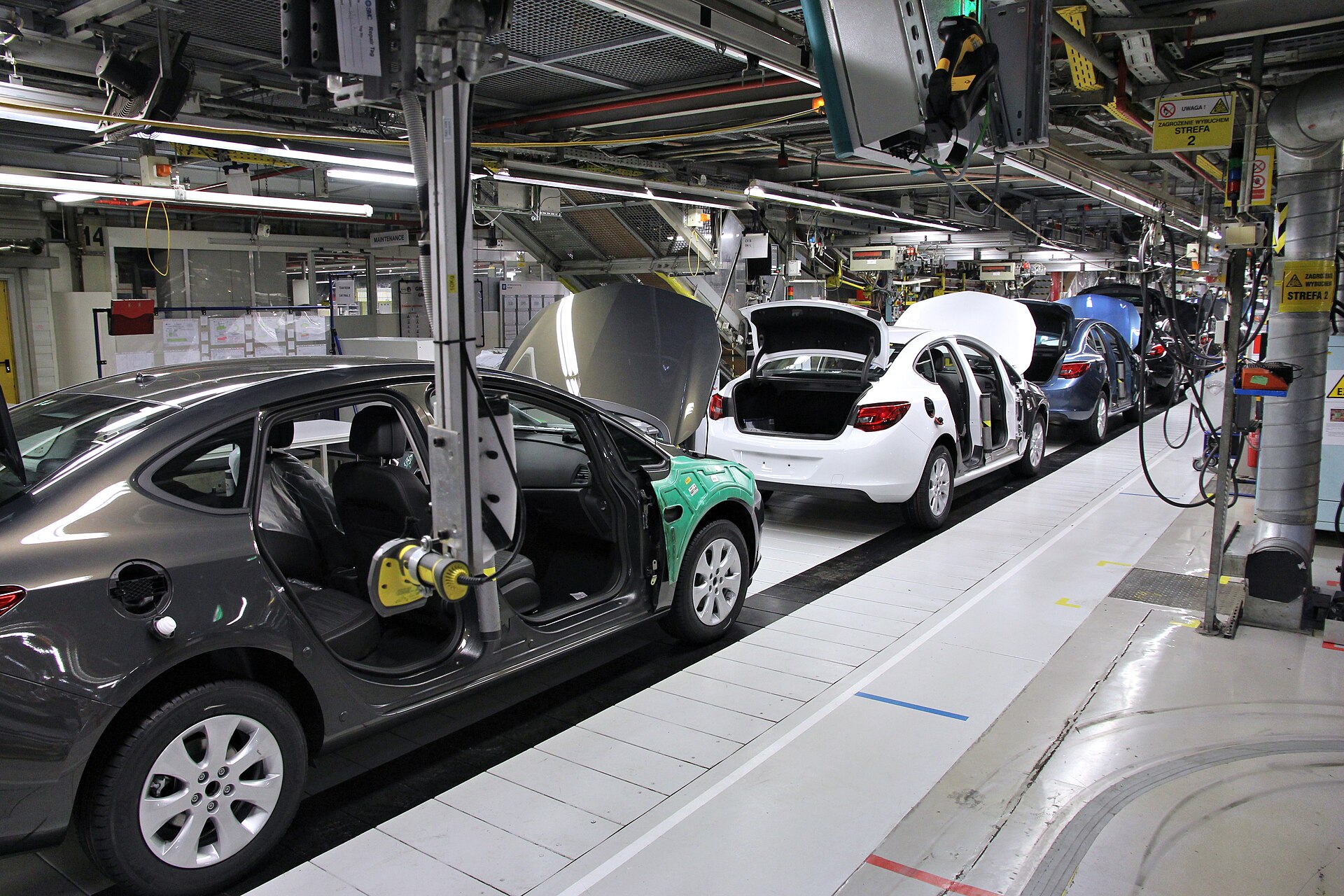
Germany and France agreed on 16 October 2026 to let new petrol and diesel cars stay on sale in the European Union after 2035. Under their joint position, carmakers would have to cut the average carbon dioxide emissions of their new fleets by 90 per cent against 2021 levels rather than 100 per cent, and would not have to offset the remaining tenth. The Élysée published the text that day.
Reuters reported on 16 October that the two countries had "struck a deal on cars to water down EU-wide CO2 emission targets for 2035" and had opened the door for Britain under the bloc's Made in EU rules. The deal was struck on the sidelines of the European Council in Brussels, Euronews reported.
The ten points that no longer need covering
Current EU law requires a 100 per cent cut in fleet-average CO2 from new cars by 2035, which ends sales of conventional petrol and diesel models. The Commission had already proposed softening that to 90 per cent in December 2025, but only if the residual tenth were covered with low-carbon European steel, e-fuels or biofuels.
That condition is what Berlin and Paris have removed. Brussels Signal reported on 16 October that the position leaves a fleet average of roughly 11 grammes of CO2 per kilometre, that further flexibility for renewable fuels could pull the effective requirement down to about 80 per cent, and that binding electric vehicle quotas for commercial fleets would become non-binding national targets.
What Paris took in return
Germany's concession was on industrial policy. Euronews reported on 16 October that 70 per cent of a car's components, excluding batteries, and 10 per cent of its battery content would have to be European for the vehicle to qualify for state aid or public procurement. The restriction would apply from 2028 to purchase premiums, leasing subsidies and public contracts, Brussels Signal reported. Norway, Iceland, Switzerland and the United Kingdom could qualify under reciprocal agreements, with Britain's inclusion tied to its tariffs on Chinese electric cars.
This creates a European preference to ensure that our factories do not become mere assembly plants.
Two governments, not twenty-seven
Nothing in the paper is law. Parliament and Council must both approve any change, and MEPs vote on the Commission's proposal in Strasbourg on 23 November, Euronews reported. France itself, with six other member states, opposed easing the rules in June. The text was held up for two days inside Germany's coalition, where the Social Democrat ministers Carsten Schneider and Lars Klingbeil pressed for 95 per cent, with the last 5 points offset using low-carbon steel. Klingbeil welcomed the outcome anyway, saying the government had "made the right decisions for the hundreds of thousands of employees".
Emmanuel Macron and I have agreed on a package for freedom of choice, technological openness and upholding climate goals. This is an investment signal to industry.
Susanne Goetz, mobility officer at the German branch of Transport and Environment, said the two countries were "making a historic mistake", arguing that dropping the offset slows investment in affordable electric models and European battery plants, which is where both governments say they want the jobs.
The figures are not in the published text
The statement on the Élysée website contains no numbers. It commits the two countries to "an ambitious European decarbonisation pathway" with unspecified regulatory flexibility. The 90 per cent, the 70 per cent and the 2028 date all come from the position paper, described first by Handelsblatt on 15 October and then by Reuters and Euronews. Neither capital has published that text, and neither has said what the extra transport emissions do to the EU's binding 2040 target.
The honest reading is that this is a narrower change than the headlines suggest and a more consequential one than the Élysée text admits. The Commission conceded 90 per cent ten months ago, so the fight was always over the residual tenth, and conceding it turns a requirement to buy green steel and e-fuels into a requirement to do nothing. As Parallax Nexus reported on 14 October, California's corporate emissions rule took effect with terms that let some companies file nothing at all. The pattern holds in Brussels: the target survives in name, and the obligation attached to it is what gets traded away.
What happens next?
- MEPs vote on the Commission's proposal to amend the 2035 car rules in plenary in Strasbourg on 23 November 2026.
- The Council of the European Union could settle a common position as early as December, according to Brussels Signal.
- Norway, Iceland, Switzerland and the United Kingdom would each need an agreement with the EU to count as Made in Europe, with British eligibility tied to its tariffs on Chinese electric cars.
- Watch for either government to publish the full position paper with its figures, which neither has yet done.
Related topics
Sources & references
- 01Joint Franco-German Press Statement on the Future of the European Automotive Industry — ÉlyséeprimaryPublished 16 October 2026. Sets out the joint approach but contains no figures.
- 02'A good day for motorists and for jobs': Reactions to Germany-France car deal — Reutersnews16 October 2026. Wire account of the deal and collected reactions, including Merz.
- 03France and Germany strike car-industry deal linking 2035 engine rules to 'Made in Europe' push — Euronewsnews16 October 2026, syndicated copy. Source of the 70 per cent components and 10 per cent battery content figures and the 23 November plenary vote.
- 04Germany and France move to ease EU 2035 combustion-engine ban — Brussels Signalnews16 October 2026. Detail on the 11g/km fleet average, the 2028 start date, the 95 euro penalty and the SPD's 95 per cent demand.
More from Climate
Europe's Summer Heat Killed 50,391 in 854 Cities
Researchers at Imperial College London and the London School of Hygiene and Tropical Medicine modelled heat-related mortality across 854 European cities for June to August 2026 and found the highest total the method has produced for any European summer, with roughly two-thirds of the deaths attributed to fossil fuel warming.

The IPCC Has No Date for AR7 and No Budget for 2027
The IPCC ended a week in Addis Ababa without agreeing when the three Seventh Assessment Report volumes will appear or how to fund them. The split is between delivery in 2028, before the next Global Stocktake, and pushing two reports into 2029.

Forecast El Niño Peak Beats the 2015 Record by 1.1C
WMO's Global Seasonal Climate Update, published on 8 October 2026, puts the probability that El Niño persists through February 2027 at near 100 per cent. NOAA reported the following day that global sea surface temperature departures in September had reached an all-time high for any month.

Models Put 2023-Level Tropical Heat Every Year From 2043
A study in Earth's Future finds that 75 per cent of tropical forests endured simultaneous extreme heat and drought for an average of six months during the 2023-24 El Nino, and projects those conditions as the annual norm in most tropical regions by 2043 under any scenario short of carbon neutrality by 2075. A companion paper in Communications Earth & Environment estimates that fire-derived ozone adds carbon losses equal to 24 per cent of the fires' direct emissions.