Models Put 2023-Level Tropical Heat Every Year From 2043
Three quarters of the world's tropical forests were hot and dry at the same time for an average of six months during the 2023-24 El Nino. Two papers published on 7 October 2026 put that combination on track to become routine, and price the carbon cost of the ozone that fires leave behind.
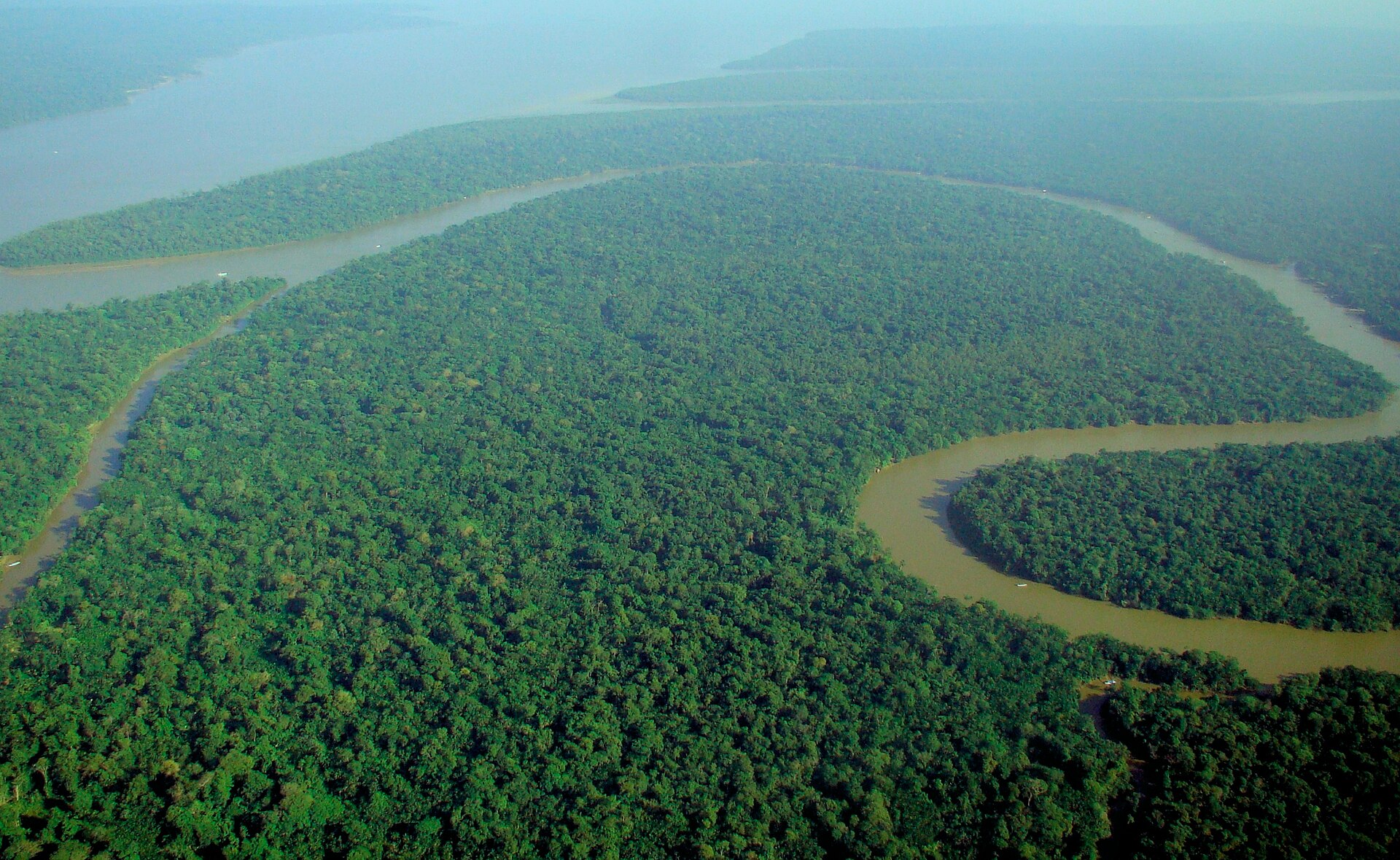
Three quarters of the world's tropical forests endured extreme heat and drought at the same time for an average of six months during the 2023-24 El Nino, according to a study published in the American Geophysical Union journal Earth's Future on 7 October 2026. Projections in the same paper put conditions like those at annual frequency across most tropical regions by 2043.
Johanna Van Passel and colleagues at Ghent University's Q-ForestLab, with co-authors at Wageningen University, the University of Campinas and the Laboratoire des sciences du climat et de l'environnement, analysed 12 observational datasets of heat and drought covering the past 25 years. The study area ran to nearly 16 million square kilometres of tropical forest. The team searched for months-long spells roughly half a degree Celsius hotter than a normal month.
Every tropical forest region ran hot, and stayed hot for roughly 18 months on average. Eighty per cent were drier than normal, taking 22 to 56 millimetres less rain a month than usual across multiple months. Parts of the Amazon had two full years of anomalous drought. At the port of Manaus in Brazil, water levels fell to their lowest since record-keeping began more than a century ago.
Share of global tropical forest hit by the 2023-24 El Nino. Share of tropical forest area: Anomalously hot 100%, Drier than normal 80%, Hot and dry at once 75%.
What 24 models say about 2043
For the projections the team drew on 24 Earth system models across a range of emissions scenarios, then asked how likely the 2023 and 2024 conditions would be in any given year, El Nino or not. If the world reaches carbon neutrality by 2075, the high annual temperatures of those two years still become at least six times more likely across all tropical regions by 2100 than they were over the past 25 years. Under any less optimistic scenario they become the annual norm in most tropical regions by 2043.
Drought projections diverge more widely than temperature. Asia will probably see drought less often. For the Amazon under a high-emissions scenario, the low rainfall of 2023-24 becomes up to nine times as likely in any given year. The mechanism that worries the authors is circular: water released by trees through evapotranspiration supplies as much as 30 per cent of the Amazon's total rainfall, so when one region stops transpiring, it withholds rain from the next.
It's either dying of lack of water or dying of heat. They have to choose one.
The ozone the fires leave behind
A second paper published the same day, in Communications Earth & Environment, puts a figure on an effect that had never been quantified against the Amazon's carbon budget. Flossie Brown, an atmospheric chemist at ETH Zurich, and co-authors ran a land surface model driven by hourly ozone concentrations from the UK Earth System Model to estimate how much carbon uptake is lost when nitrogen oxides from fires form ground-level ozone, which damages leaves well away from the flames.
Their central estimate is that the reduction in net annual carbon uptake from fire-derived ozone damage equals 24 per cent of the direct carbon emissions of the fires themselves. The paper reports an uncertainty range of 18 to 35 per cent, derived from observed variation in how susceptible tropical tree species are to ozone, and says the contribution should be interpreted as an order-of-magnitude estimate. Earlier studies had put fire-related ozone damage at roughly a 15 per cent cut in Amazon plant productivity without translating it into carbon emissions.
Both findings are modelled rather than measured, and the limits are stated in the papers. Brown's team notes that its simulations do not fully capture year-to-year changes in broadleaf forest extent, forest degradation or shifts in forest edges along active deforestation frontiers, which may introduce regional bias. One of its own results cuts against the headline: across the 1997 to 2024 study period ozone damage declined on the whole, because rising carbon dioxide concentrations let trees photosynthesise more efficiently and so draw less air, and less ozone, through their stomata. The authors' argument is that this gradual improvement is outweighed by what happens during the extremes.
Together the papers describe a pressure on the Amazon that forest policy has little direct purchase on. As Parallax Nexus reported, Brazilian Amazon deforestation more than halved between 2022 and 2025 on INPE's PRODES record. Clearance rates and sink strength are now moving in opposite directions, and the forest left standing is being asked to absorb carbon in a climate it did not grow up in.
The honest reading is that the number worth arguing over is 2043, not 2100. A projection for the end of the century is a claim about emissions policy, and can be discounted or deferred accordingly. A projection 17 years out is a claim about forests that are already standing, measured against a cycle that has started again: Inside Climate News reported on 7 October that a powerful El Nino is now driving drought in the region, with the agricultural burning season due to begin within weeks.
What happens next?
- The agricultural burning season in the Amazon begins within weeks, against a developing El Nino, which will test the ozone paper's prediction that high fire activity during extreme drought still causes damage despite stomatal closure.
- Brown and co-authors call for changes in how agricultural fires are managed, including alternatives to burning, alongside slower deforestation and degradation.
- The Earth's Future projections will be checked against the next cycle of observations, since the paper's 2043 estimate is a model average rather than a single scenario.
- Both papers are open access, which leaves their model assumptions on forest extent and ozone susceptibility open to independent reanalysis.
Related topics
Sources & references
- 01The 2023-2024 El Nino as a Preview of Future Tropical Forest Climate — Earth's Future (American Geophysical Union)researchVan Passel et al., published 7 October 2026. Source of the 75 per cent, 18-month, 2043 and 2100 figures.
- 02Fire-derived ozone intensifies carbon loss in Amazon forests under extreme droughts — Communications Earth & EnvironmentresearchBrown et al., received 26 February 2026, accepted 28 August 2026, published 7 October 2026. Source of the 24 per cent central estimate and 18 to 35 per cent range.
- 03For tropical forests, record 2024 heat and drought could become annual norm within 20 years — American Geophysical UnionprimaryPublisher's release of 7 October 2026, with verbatim quotes from Johanna Van Passel and the study's methods and author list.
- 04Compounding Climate Impacts Drive Tropical Forest Decline — Inside Climate NewsnewsReporting of 7 October 2026 on both papers, including the developing El Nino and the coming burning season.
More from Climate
Europe's Summer Heat Killed 50,391 in 854 Cities
Researchers at Imperial College London and the London School of Hygiene and Tropical Medicine modelled heat-related mortality across 854 European cities for June to August 2026 and found the highest total the method has produced for any European summer, with roughly two-thirds of the deaths attributed to fossil fuel warming.
The IPCC Has No Date for AR7 and No Budget for 2027
The IPCC ended a week in Addis Ababa without agreeing when the three Seventh Assessment Report volumes will appear or how to fund them. The split is between delivery in 2028, before the next Global Stocktake, and pushing two reports into 2029.
Berlin and Paris Drop the Offset From the 2035 Car Target
A joint Franco-German position published on 16 October 2026 would let new petrol and diesel cars stay on sale in the EU after 2035 by cutting the fleet target to 90 per cent and removing the obligation to offset the rest, in exchange for stricter Made in Europe rules on subsidies and public contracts.
California's Emissions Rule Took Effect With 29 Days to File
California's corporate greenhouse gas reporting regulation cleared its final administrative hurdle on 12 October 2026. Companies with more than $1 billion in revenue that do business in the state now have under a month to file, under enforcement terms that let some of them file nothing at all.