The Weather Forecast Is Now an AI Model
Google DeepMind's WeatherNext 3 refreshes every hour from raw satellite data, tops an independent leaderboard, and adds turbine-height wind and solar radiation. It sits behind Search, Maps and Gemini.
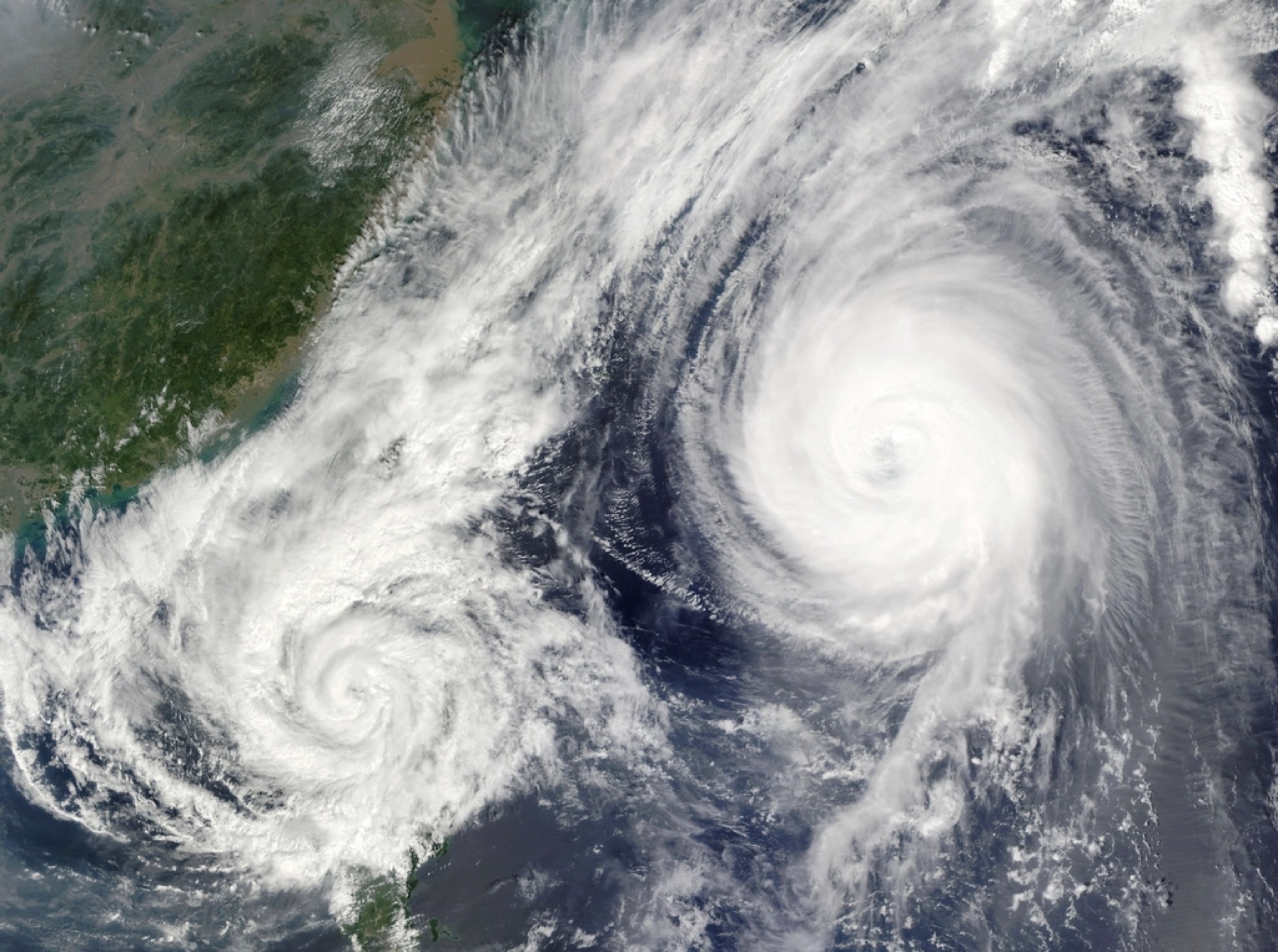
For most of the last decade, the question about AI weather models was whether they could match the physics-based systems run by national agencies. WeatherNext 3, released by Google DeepMind and Google Research on 3 September 2026, changes the question. It is the first operational global model to refresh every hour, it learns directly from satellite and station observations rather than from another model's output, and it is now the forecast that billions of people see in Google Search, Maps and Gemini.
What changed
The launch post describes three shifts. Resolution: temperature and moisture at 5 km, other surface variables at 10 km, atmospheric variables at 25 km, roughly five times sharper than WeatherNext 2. Cadence: the model ingests a mosaic of live geostationary satellite data and issues a new forecast every hour, whereas models trained on numerical weather prediction carry what Google calls a six-hour data lag. Skill: Google reports precipitation improvements in continuous ranked probability score of up to 60% against NASA's IMERG product, 30% against MRMS radar and 10% against rain gauges at early lead times.
The accompanying paper on arXiv gives the architecture: a functional generative network mesh transformer, with latent size increased from 768 to 1,024 and mesh depth from 24 to 32 layers over the previous model, trained through a curriculum from one degree to 0.1 degree and using ERA5 reanalysis back to 1959. The live satellite feed uses 11 spectral channels from the GOES, Meteosat and Himawari satellites, regridded to 0.1 degree, with an archive back to 2016.
Against the incumbents
The paper reports a quasi-real-time comparison from 1 July to 11 August 2026 in which the production model, trained through 30 June, outperformed the European Centre for Medium-Range Weather Forecasts' AIFS ENS v2 on what it calls a vast majority of analysis metrics, while cautioning that six weeks is a small sample. The independent check is Brightband's Operational WeatherBench, which tracks live forecasts: on 850 hPa temperature error over days one to seven, WN3 ranks first, winning 18 of the last 30 global cycles, with WeatherNext 2 second on 11 and ECMWF's AIFS ENS third with one. Microsoft's Aurora, ECMWF's IFS ensemble, NVIDIA's Atlas and NOAA's GEFS and GFS won none in that window. WeatherNext 2 still leads over Europe.
Operational WeatherBench: global cycles won, last 30. Cycles won: WeatherNext 3 18, WeatherNext 2 11, ECMWF AIFS ENS 1, Aurora / IFS ENS / Atlas / GEFS / GFS 0.
The energy variables
WeatherNext 3 adds 100-metre wind speed, roughly turbine hub height, along with high-resolution cloud cover and solar radiation. Google DeepMind research scientist Ferran Alet told The Verge that making renewables 'a very appealing opportunity is very important for us' as Google's and humanity's energy needs rise. An experimental 0.05-degree dataset is available on Earth Engine under a CC BY 4.0 licence, with a warning that it is not validated for real-world use, and Google's blog directs users to national meteorological agencies for official warnings.
Who benefits, who is at risk
Beneficiaries: wind and solar operators, grid schedulers and energy traders with access to hourly, turbine-height forecasts; Google, which now owns a forecast advantage across its consumer products. At risk: commercial forecast vendors reselling agency output, and national agencies whose public role now depends on independent benchmarks to demonstrate parity.
What happens next?
- ECMWF's hourly AIFS interpolation model enters the same benchmark and the comparison gets a fair test.
- Grid operators and renewable developers evaluate WN3's wind and solar variables against their own scheduling tools.
- National meteorological agencies clarify the line between AI product forecasts and official warnings.
- Google's Earth Engine dataset moves from experimental to supported for commercial use.
Related topics
Sources & references
- 01Introducing WeatherNext 3 — Google DeepMindcompany
- 02WeatherNext 3 technical paper — arXivresearch
- 03Operational WeatherBench — BrightbanddataIndependent live benchmark, accessed 14 September 2026.
- 04WeatherNext 3 experimental dataset — Google Earth Enginedata
- 05Google's new weather model uses live satellite data — The Vergenews