Iowa Got a Nuclear Restart Loan and a Data-Centre Freeze in the Same Week
The Energy Department closed a loan of up to $1.9 billion to bring the 615 MW Duane Arnold plant back for Google's data centres. Fifty-five miles away, Waterloo's council voted to block new data centres for three months, and Dubuque is moving the same way.
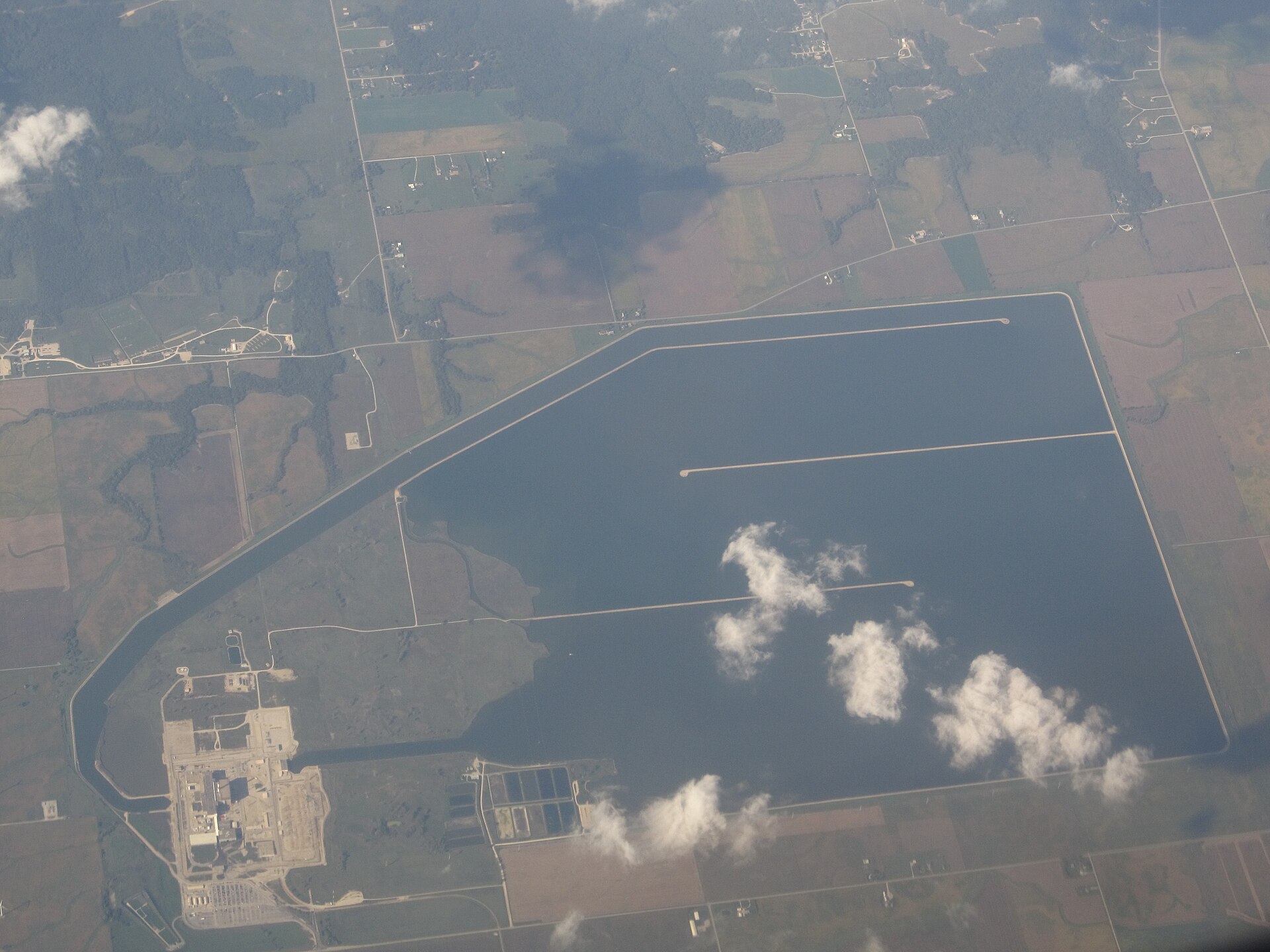
Two votes of confidence in Iowa's electricity future landed on the same Tuesday, pointing in opposite directions. On 8 September 2026 the US Department of Energy's Office of Energy Dominance Financing announced financial close on a loan of up to $1.9 billion to NextEra Energy to restart the Duane Arnold Energy Center, the state's only nuclear plant, whose power is contracted to Google. That evening, the city council in Waterloo, about 55 miles northwest of the plant, approved a 90-day moratorium on new data centres.
What the loan buys
Duane Arnold, a single 615 MW boiling water reactor near Palo in Linn County, ceased operations in 2020 after 45 years of service. NextEra announced in October 2025 that it would restart the plant no later than the first quarter of 2029, pending regulatory approvals, and the DOE loan, structured as a combined conditional commitment and financial close, finances that work. The department says the restart will return enough generation to the grid to power nearly 500,000 homes and frames it under the administration's executive order on reinvigorating the nuclear industrial base. Gregory Beard, the financing office's director, called it 'exactly the kind of investment that will help restore American nuclear leadership,' according to Reuters.
The buyer is the reason the money exists. Reuters reports the restart is backed by a 25-year agreement signed by Google last year to purchase the plant's power, and Broadband Breakfast reports it will supply a proposed Google data centre. NextEra's chief executive John Ketchum described the project as 'delivering new power to meet new demand while generating billions of dollars in economic value for Iowans,' as quoted by Power Engineering. The company cites an economic-impact study estimating more than $9 billion in benefits for the state over 25 years, thousands of construction jobs and more than 400 permanent operations positions. The Iowa Utilities Commission issued a certificate authorising construction and operation in June, Fox Business reports; the Nuclear Regulatory Commission must still restore the plant's operating licence basis before any fuel is loaded.
What Waterloo stopped
Hours after the DOE announcement, Waterloo's council voted for a three-month pause on data-centre projects, effective immediately. Council member David Morrow told Radio Iowa, as quoted by Broadband Breakfast, that 'many people wanted it longer than that, but three months was what we could come to an agreement on.' The council intends to vote on a six-month pause for hyperscale projects at a later meeting. Residents had pushed for the measure since learning the city had approved an initial agreement with a data-centre developer on a 12-acre industrial site last December. Dubuque is also moving toward a moratorium, Broadband Breakfast reports.
Iowa is not alone. Waterloo joins what the outlet describes as a growing list of Iowa communities voting to block projects temporarily, and the pattern mirrors moves in Texas, where the governor paused new data-centre approvals in August pending an audit, and in Finland, where opposition parties called for a national permitting regime the day after Google's investment there.
The two votes are the same vote
It is tempting to read the day as contradiction: federal money for a plant to power data centres, local rules to keep data centres out. The honest reading is that both are responses to the same fact, which is that nobody has settled who pays for the grid the AI build-out needs. A restart with a single 25-year corporate buyer socialises almost nothing; that is why it can be financed. A hyperscale site connecting to a municipal utility raises questions about rates, water and land that a council of five can answer only by stopping the clock. Duane Arnold's own timeline, 2029 at the earliest, shows how long firm power takes to arrive. The moratoriums show how quickly consent can be withdrawn.
What is not yet known is whether the Google-contracted output leaves anything for the communities now hesitating. Reuters reports the 25-year agreement covers the plant's power; NextEra's release does not state what share goes to Google versus the plant's minority owners, and Google has not disclosed its investment in the restart. Until those figures are public, Iowa's cities are deciding on data centres without knowing how much of the state's new nuclear power they would ever see.
What happens next?
- The Nuclear Regulatory Commission acts on NextEra's licence restoration requests, the gating item for a first-quarter 2029 restart.
- Waterloo votes on the six-month hyperscale pause and Dubuque decides on its own moratorium.
- NextEra or Google disclose the share of Duane Arnold output contracted to Google and to the plant's minority owners.
- More Midwestern councils adopt moratoriums as data-centre proposals arrive ahead of large-load tariff rules.
Related topics
Sources & references
- 01Energy Department Closes $1.9 Billion Loan to Restart Duane Arnold Nuclear Plant — US Department of Energyprimary
- 02U.S. Department of Energy Closes Up to $1.9 Billion Loan to Restart NextEra Energy's Duane Arnold Energy Center — NextEra Energycompany
- 03NextEra secures US loan of up to $1.9 billion for restart of Iowa nuclear plant — Reutersnews
- 04Iowa City Hits Pause on Data Centers — Broadband BreakfastnewsWaterloo council quotes via Radio Iowa.
- 05Duane Arnold's nuclear restart in eastern Iowa gets $1.9B boost from DOE — Power Engineeringnews
- 06NextEra secures $1.9B federal loan to restart Iowa nuclear plant for Google — Fox BusinessnewsSource for the June Iowa Utilities Commission certificate.
- 07DOE Closes $1.9B Loan to Help Restart Iowa's Duane Arnold Nuclear Plant — ConstructConnectnewsSource for NextEra's economic-impact figures.
More from Energy
Record Power Demand, Even After Texas Hit Pause
EIA's September Short-Term Energy Outlook projects US generation rising 2.2% to a record 4,368 billion kWh in 2026 and a further 1.7% in 2027, with the West South Central region the largest contributor despite the Texas pause. EIA cut its 2027 Texas load-growth forecast from 14% to 6% after Governor Abbott ordered an audit of every data centre in ERCOT's queue.
The Largest US Grid Wants to Switch Off Data Centres First
PJM Interconnection, which serves 67 million people, filed an Interim Resource Adequacy Service with FERC on 13 August 2026 that would direct new data centres to their own back-up generation when supply runs short, alongside a large-load registry and a backstop procurement to cover a 6,831 MW shortfall. The independent market monitor has protested both filings.
The 470-Gigawatt Queue
ERCOT's large-load queue has reached roughly 470 GW of requests, about 90% tied to data centres, against 9 GW approved and under 4 GW actually drawing power. Interconnection, not chips, is now the constraint on AI.
Power Is the New Bottleneck for AI
Interconnection queues, transformer lead times and political scrutiny are now shaping the AI build-out more than accelerator supply.