CDC Counts 5,838 Measles Cases, 2.5 Times All of 2025
The first federal update since the United States lost its measles elimination status on 17 November 2026 added 426 confirmed cases in a week. The agency's own death count still stands at six, against ten reported by states.
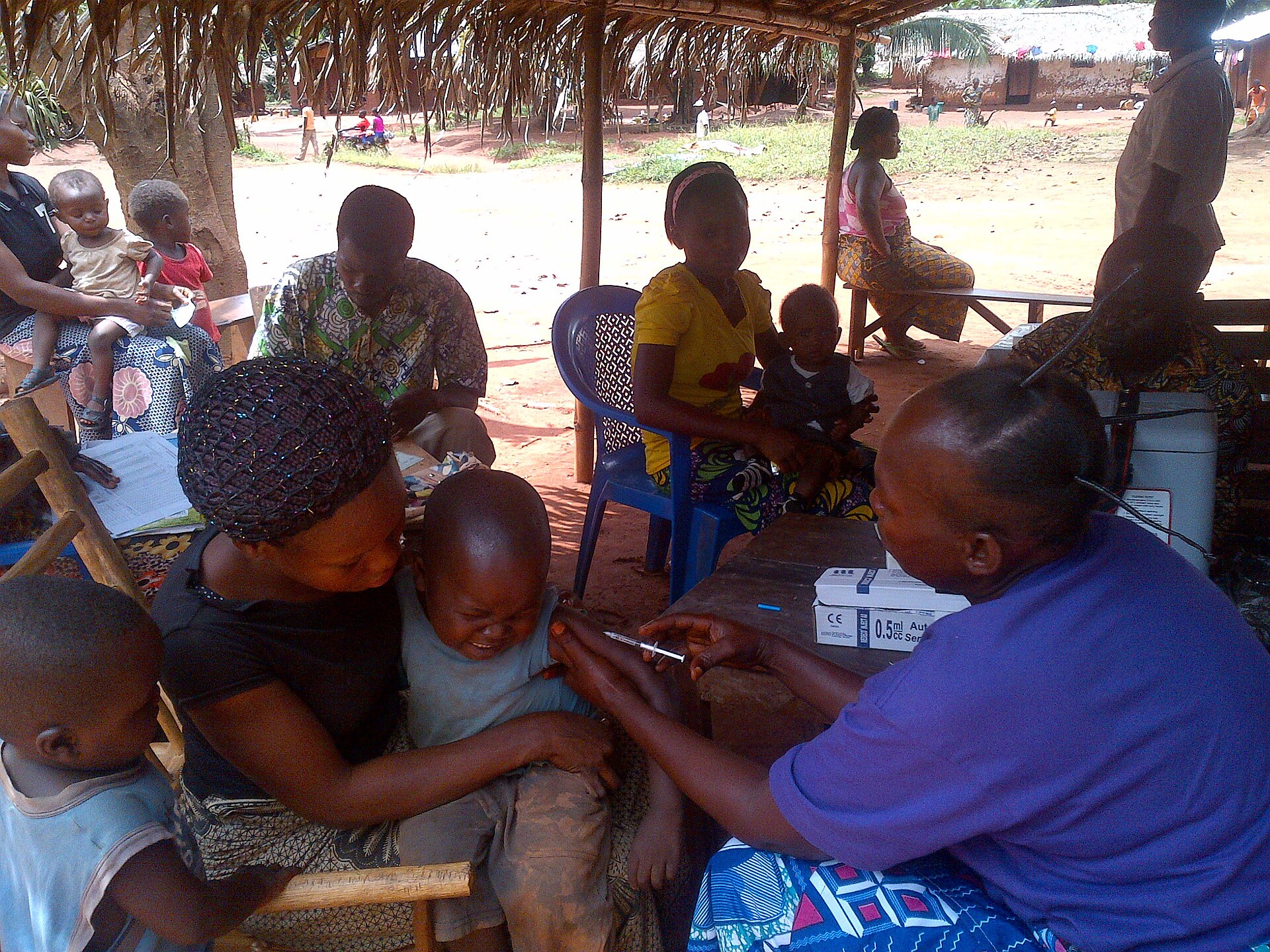
The Centers for Disease Control and Prevention recorded 5,838 confirmed measles cases in the United States for 2026 as of 19 November 2026, Reuters reported from the agency's weekly update. That is 426 more than the 5,412 the CDC published a week earlier, and about 2.5 times the 2,289 cases confirmed in all of 2025. The CDC Foundation says this year's total has passed the previous annual record set since measles was declared eliminated from the country in 2000.
It is the first count the agency has released since the Pan American Health Organization announced on 17 November that the United States had lost the elimination status it earned in 2000. PAHO's reviewers found uninterrupted transmission of the same measles genotype for more than twelve months, the point at which spread is classified as endemic rather than imported. Mexico and Bolivia lost their status in the same decision.
A death toll the federal tables have not caught up with
The CDC's hospitalisation, death and vaccination-status tables had not been refreshed to match the new case figure when the update appeared, and still rested on the 5,412 base. On that base the agency listed 591 hospitalisations, 11 per cent of cases, and six deaths in 2026 against three for the whole of 2025.
State health departments have reported ten measles-associated deaths this year: seven in Pennsylvania, two in Wisconsin and one in New York, according to KFF's tally published on 13 November and updated on 17 November. That is the highest annual toll in more than three decades. The CDC flags its own death figure as subject to change and says it is working with the Council of State and Territorial Epidemiologists on a standardised case definition for measles deaths, so that jurisdictions classify them the same way.
The four-death gap is not a rounding artefact. Health Secretary Robert F Kennedy Jr has disputed how Pennsylvania counts its measles deaths, and the CDC has declined for now to enter some of them in its database, the BBC reported on 17 November.
US confirmed measles cases by year. Confirmed cases: 2019 1274cases, 2020 13cases, 2021 49cases, 2022 121cases, 2023 59cases, 2024 285cases, 2025 2289cases, 2026 5838cases.
The shape of that series matters more than the newest number. Measles in the United States ran in the low hundreds or below for most of the past decade, with 59 cases confirmed in 2023 and 285 in 2024. The 2019 spike of 1,274 cases, then the worst year since 1992, was contained in time to keep elimination status. This one was not.
Pennsylvania carries a quarter of it
Of the 5,412 cases counted on 12 November, 5,216, or 96 per cent, were linked to an outbreak, the CDC said, across 43 new outbreaks declared this year. The single largest is in Pennsylvania, which began in April 2026 and which state health officials had linked to more than 1,500 cases and seven deaths as of 16 November. The Center for Infectious Disease Research and Policy at the University of Minnesota calls it the largest US outbreak in more than 35 years. PAHO's decision rested on data from January 2025 to January 2026, a window that closes before the Pennsylvania outbreak had even begun.
The age profile has shifted too. Around 40 per cent of US cases this year were in people aged 20 and older, Nature reported on 17 November, and in Pennsylvania two-thirds of infections were in adults. Paul Offit, quoted in that report, described it as "a different kind of epidemiology". Adults face worse complication rates than anyone except the youngest children.
The 92.4 per cent floor
MMR coverage among US kindergarteners fell from 95.2 per cent in the 2019-20 school year to 92.4 per cent in 2025-26, the CDC's figures show, which it estimates left about 280,000 kindergarteners unprotected in that year alone. Two doses of the vaccine are 97 per cent effective and one is 93 per cent effective. Community immunity needs coverage above 95 per cent, and national averages hide the local pockets where it collapses.
The honest reading is that the weekly case tally has become the least informative number in the file. Cases are climbing in a straight line and will keep climbing; what the data cannot yet settle is how lethal this year has been, because the federal and state death ledgers disagree by two thirds and the dispute is partly definitional rather than empirical. Against that, one piece of counter-evidence deserves weight: only 18 of this year's cases arrived with international visitors, which means the outbreak is almost entirely domestic transmission and therefore, in principle, within reach of a domestic vaccination campaign. Brazil lost elimination status in 2019 and regained it in 2024.
What happens next?
- The United States is expected to submit a corrective action plan to PAHO in the coming weeks, as are Mexico and Bolivia.
- The CDC is due to refresh its hospitalisation, death and vaccination-status tables against the higher case base.
- The Council of State and Territorial Epidemiologists is developing a standardised case definition for measles deaths, which should narrow the gap between federal and state counts.
- Regaining elimination status requires twelve consecutive months without uninterrupted transmission of the same genotype.
Sources & references
- 01Measles Cases and Outbreaks — Centers for Disease Control and PreventiondataCase, hospitalisation, death and MMR coverage figures; page carried 5,412 cases as of 12 November 2026 before the 19 November update.
- 02US CDC reports 5,838 confirmed measles cases in US as of November 19, 2026 — ReutersnewsWire report of the 19 November 2026 case count.
- 03Joint Statement: Loss of U.S. Measles Elimination Status — CDC NewsroomprimaryOfficial US response to the PAHO decision, 17 November 2026.
- 04US loses measles elimination status: what it means for the world — Naturenews17 November 2026; adult share of cases and PAHO director's remarks.
- 05The U.S. Lost Its Measles Elimination Status, Marking A Step Back for Public Health — KFFreportState-reported death breakdown; published 13 November 2026, updated 17 November 2026.
- 06US loses measles elimination status after 26 years amid record case numbers — BBC Newsnews17 November 2026; dispute over Pennsylvania death counts.
- 07'A national embarrassment': Measles is again endemic in the US — CIDRAP, University of MinnesotanewsScale of the Pennsylvania outbreak and the PAHO review window.
More from Science

TOP500 Adds Just 27 New Systems, the Fewest on Record
New entries to the ranking of the world's most powerful supercomputers fell to 27, the lowest turnover in the list's 33-year history, while combined performance still rose to 19.70 exaflops. The organisers say the slowdown reflects a shift of new hardware towards AI data centres.

Euclid Publishes 900 Million Galaxies From 13 Months of Sky
ESA released the first major batch of Euclid data on 12 November 2026: about 1.7 petabytes drawn from 13 months of observations, with more than 900 million galaxies, around 15,000 strong lensing candidates and spectra from more than 160 million sources. The weak lensing and clustering products that carry the cosmology are not in it.

Rubin Finds Two Milky Way Satellites in 7% of the Sky
The Vera C. Rubin Observatory's Early Data Preview 2 covered roughly 7 per cent of the night sky and yielded two previously unknown companions of the Milky Way, described in a research note and a peer-reviewed letter published in late October 2026.

A Milky Way Star Cluster Now Dated to 13.4 Billion Years
The new figure would place the cluster's stars roughly 400 million years after the Big Bang. It comes with the most precise distance yet reported for VVV CL001, and it contradicts an earlier age for the same object by 1.3 billion years.