Samsung, SK hynix and Micron Must Face DRAM Price Case
Judge Noel Wise denied the three memory makers' joint motion to dismiss on 14 November, finding that allegations of near-identical customer vetting support a plausible inference of an agreement. No conduct has been proven.
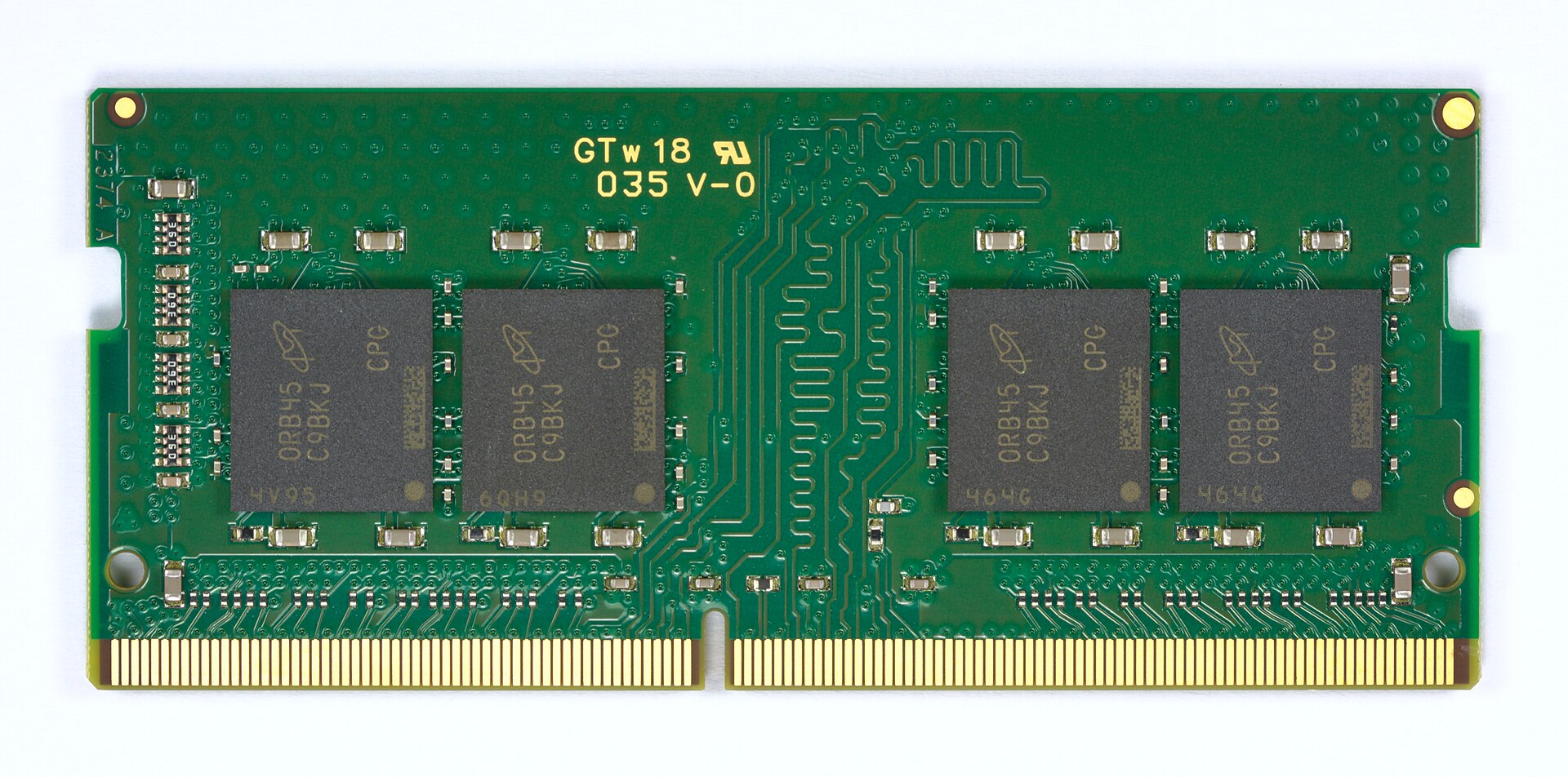
Samsung Electronics, SK hynix and Micron Technology must answer a proposed class action alleging they restricted the supply of conventional DRAM, after US District Judge Noel Wise of the Northern District of California denied their joint motion to dismiss on 14 November 2026. The ruling decides nothing about whether the companies broke the law. It decides that the plaintiffs have pleaded enough to get to discovery.
The complaint was filed on 25 June 2026 by 17 consumers and small businesses. It alleges four parallel moves: simultaneous production cuts between October 2022 and April 2023, a coordinated shift of capacity towards high-bandwidth memory for AI accelerators, announcements winding down DDR4 production within a three-month window, and a refusal to add capacity despite prices that the plaintiffs call the strongest supply signal the industry has produced. A fifth allegation concerns customer vetting procedures adopted in January 2026 that the plaintiffs say were near-identical across the three firms.
The vetting allegation did the work
Judge Wise did not accept every theory in the complaint. On the reporting of the order, it was the customer vetting allegation that she found strongly supportive of a plausible inference of an agreement, while other theories were rejected. The legal standard she applied is a low bar by design. Quoting the order, MLex reported on 14 November that plaintiffs "need only plead facts that are 'largely' (i.e., not necessarily entirely) 'inconsistent with unilateral conduct but largely consistent with explicitly coordinated action'", and that "the Court finds Plaintiffs have done so here".
She also allowed that innocent explanations remain available, writing that it is possible each of the defendants' decisions, even ones made near-simultaneously, was made independently. The defendants had argued that they watch each other closely because the market is highly concentrated and all three face the same pressures, and that the case was a rerun of antitrust litigation brought against the industry in 2018. The order rejected the framing in a line that has since circulated widely: their contentions, Wise wrote, are "more akin to hawks flying in formation", an activity she noted hawks do not ordinarily perform.
How much prices rose is not settled
Published accounts of the alleged price increase do not agree. Trade reports of the complaint and the order variously put the rise at 171.8 per cent in the year to the third quarter of 2025, at as much as 500 per cent in one year, and at 697 per cent over eighteen months. These are plaintiffs' allegations covering different products and periods, and the court made no finding on any of them. What is not in dispute is concentration: the complaint puts the three companies' combined share of global DRAM revenue above 91 per cent as of the third quarter of 2025.
The history matters to the schedule rather than the merits. Wise declined to disregard the DRAM cartel that US prosecutors broke up in the early 2000s, in which Samsung and Hynix paid criminal fines and Micron received immunity for cooperating. That earlier case is one reason a pleading-stage ruling in this one carries weight with investors: Micron shares fell nearly 7 per cent during trading on 16 November, the first session after the decision became public.
The judgment to make here is narrow. A motion-to-dismiss denial is not evidence of collusion, and the memory industry has an obvious lawful explanation for its behaviour, which is that HBM for AI servers earns more per wafer than DDR4 and capital went where the margin was. But the defendants have now lost the argument that the pattern is self-evidently innocent, which means two years of discovery into internal communications about capacity decisions taken while prices were climbing.
That discovery will not produce a single additional wafer. SK hynix's chief executive has said publicly that he expects the shortage to run to 2030, and all three makers reported in August 2026 that their 2027 capacity was already sold through. The case tests whether the shortage was engineered, not whether it ends.
What happens next?
- Samsung, SK hynix and Micron must respond to the complaint by 7 December 2026.
- An initial case management conference is set for 12 January 2027, which will fix the discovery schedule.
- Antitrust authorities in the European Union and South Korea have opened their own inquiries into memory pricing, and may move faster than the US litigation.
- Micron's fiscal first-quarter results in December will show whether contract DRAM prices are still rising.
Related topics
Sources & references
- 01Samsung, SK Hynix, Micron must face US DRAM price-fixing case — MLexnewsFiled 14 November 2026, 20:12 GMT; quotes the order directly.
- 02Judge denies motion to dismiss DRAM price-fixing lawsuit against Micron, Samsung, and SK hynix — Tom's HardwarenewsSource of the 'hawks flying in formation' passage, the four alleged parallel moves and the 7 December and January 2027 dates.
- 03Micron stock sinks nearly 7% after judge lets DRAM supply lawsuit proceed — Yahoo FinancenewsDated 16 November 2026; source of the share move, the 25 June filing date and the 171.8 per cent allegation.
- 04Samsung, SK hynix, and Micron Fail to Get DRAM Antitrust Suit Dismissed — TechPowerUpnewsSource of the 91 per cent revenue share figure, the 12 January 2027 conference date and the 697 per cent allegation.
- 05Samsung, SK Hynix and Micron Lose Bid to Dismiss US DRAM Antitrust Suit — Competition Policy InternationalnewsPublished 16 November 2026; notes the price increase is an allegation, not a court finding.
More from Technology
Onsemi Drops Its $2bn Czech Silicon Carbide Expansion
onsemi will not build the end-to-end silicon carbide production it promised at Rožnov in June 2024. In the same announcement the company named AI data centres among the growth markets its remaining Czech sites will serve.
Marvell Buys Lumentum for $115bn in Stock, Closing in 2028
Marvell is paying in its own stock for the maker of lasers and optical components that AI data centres use to move data between racks, at a multiple Reuters put at about 33 times forward core operating profit against a peer median near 16.
Intel's Data Centre Arm Passed Its PC Arm on Operating Profit
Intel's results, filed with the SEC on 29 October 2026, show server revenue up 78 per cent and the data centre segment earning more operating income than the PC segment. Fourth-quarter guidance of $15.0bn to $16.0bn and a 37.1 per cent GAAP gross margin sent the stock down sharply.
Alphabet's Quarterly Capex Passed Its Operating Cash Flow
Alphabet's results filed on 28 October 2026 show capital spending of $51,355m against $42,290m of operating cash flow for the quarter, with buybacks suspended and $29bn of new debt. Microsoft, reporting the same day, covered a comparable capex jump out of operating cash.