SK Hynix Weighs Making Memory Chips at Intel's Ohio Site
Reuters reports exploratory talks that could put South Korean DRAM or HBM production on US soil for the first time, either by leasing part of Intel's delayed Ohio fab or through a venture with cloud companies. Seoul may object.
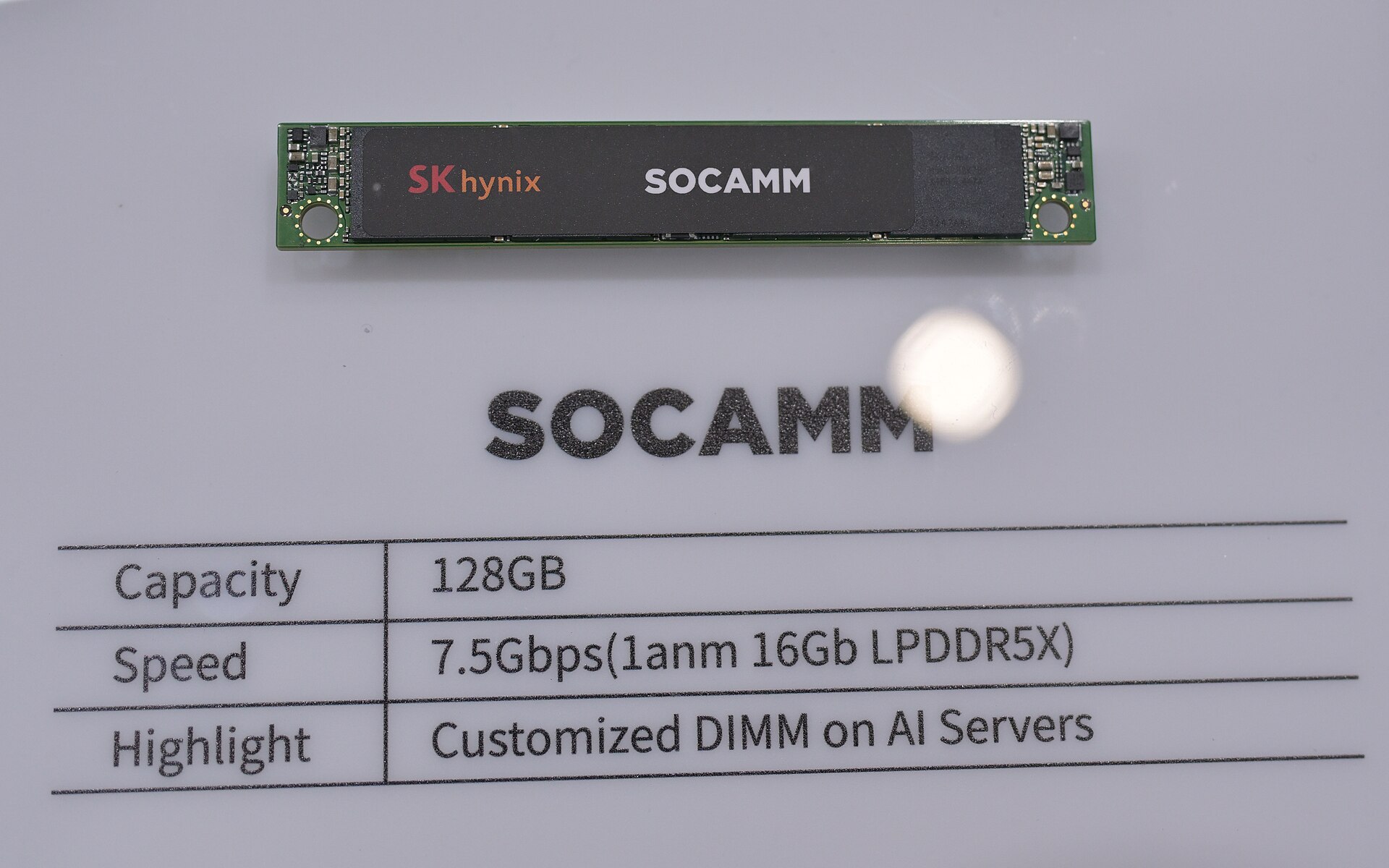
The world's largest supplier of high-bandwidth memory is discussing whether to build chips in Ohio, inside a factory Intel has not finished. Reuters reported on 16 September 2026, citing three people familiar with the talks, that SK Hynix and Intel are exploring a deal that would give the South Korean company its first chip fabrication on American soil. One person described the discussions as exploratory and said no decisions have been made.
Two ways the deal could be built
Under one scenario reported by Reuters, SK Hynix would lease part of Intel's long-planned complex in Ohio. Under another, it would form a venture with Intel and major cloud companies keen to lock in memory supply, two of the people said. Reuters could not learn which chips SK Hynix might make there. Its lineup spans DRAM for servers, PCs and phones, NAND flash for storage, and the HBM stacks that sit beside AI accelerators, where it is the leading supplier.
The Ohio site itself is the second half of the story. Intel announced in 2022 that it would invest up to $100 billion to build what could be the world's largest chipmaking complex there, with production to begin in 2025. Completion of the two plants has since slipped to 2030 and 2031, per Reuters. A tenant with product to run would ease the financial strain on Intel, which is part-owned by the US government after last year's $8.9 billion investment for a 9.9% stake. Intel declined to comment on what it called speculation but said it was continuing investments to ready the site.
Why Seoul is the obstacle
Any agreement to produce advanced memory such as HBM, or even DRAM, could run into opposition from the South Korean government because those technologies are treated as sensitive, the three sources told Reuters. Asked about the possibility, South Korea's trade ministry said any decision would be at the company's discretion, but that a deal involving a 'national core technology' would be subject to review under the Industrial Technology Protection Act. Seoul has also urged SK Hynix and Samsung Electronics to speed up a new cluster of fabs in the country's southwest.
SK Hynix's own statement kept every door open. The company told Reuters it is 'reviewing various measures, including establishing additional production bases, to strengthen the competitiveness of its memory business,' adding that 'no matters have been determined at this stage.' Its chairman had been less guarded in July. 'I think we need to build a factory in the United States. If possible, I believe we should build it,' SK Group chairman Chey Tae-won told reporters then, describing enormous pressure from customers and governments to supply more chips.
The pressure from Washington
Reuters frames the talks against two levers. Commerce Secretary Howard Lutnick has threatened tariffs of up to 100% on South Korean and Taiwanese companies unless they commit to more production in America. And the two governments are still wrangling over the execution of a $350 billion investment commitment South Korea made last year in exchange for lower US tariffs; about $150 billion has been earmarked for shipbuilding, with the remaining $200 billion undecided. Two of the sources said that leaves SK Hynix squeezed between Seoul, which wants to use any US investment as leverage, and Washington, which wants a quick commitment.
The economics point the other way. Manufacturing semiconductors in the United States costs much more than in South Korea, two of the sources said, because of labour and construction costs and a supply chain concentrated in Asia. SK Hynix, which completed a secondary listing on the Nasdaq in July, currently has only a chip packaging facility under construction in the United States, in Indiana. The honest reading is that a memory fab in Ohio would be a political decision first and a commercial one second, which is exactly why the talks are exploratory and the ministry's review is the fact to watch.
What happens next?
- SK Hynix decides whether to formalise talks, and Seoul's trade ministry signals whether HBM or DRAM production abroad triggers a core-technology review.
- Intel discloses whether Ohio's 2030 and 2031 completion dates move if a tenant commits.
- Cloud providers named as potential venture partners either confirm interest or stay silent through the Korea-US investment negotiations.
- Any deal terms surface in the wider talks over South Korea's $350 billion US investment commitment.
Related topics
Sources & references
- 01EXCLUSIVE: SK Hynix in talks with Intel about deal to make memory chips in US for the first time, sources say — ReutersnewsThree anonymous sources; SK Hynix, Intel and the South Korean trade ministry statements are on the record.
- 02SK Hynix is in talks with Intel to make memory chips in the U.S. for the first time — Quartznews
- 03EXCLUSIVE: Silver Lake, Intel-backed Altera prepares IPO that could raise over $2 billion — ReutersnewsContext on Intel's restructuring and the US government's 9.9% stake.
More from Technology
The Chip Industry Agrees to Change a Forty-Year-Old Standard
High-NA EUV's optics halve the exposure field, forcing large AI dies to be stitched from two exposures at a heavy throughput cost. On 8 September 2026 the leading-edge industry aligned on a move to 12-inch masks, with TSMC targeting High-NA in high-volume manufacturing from 2030 and Samsung planning High-NA for DRAM by 2028.
Amazon Takes a Stake in Its Next Chip Supplier
Qualcomm announced a multi-generation collaboration with Amazon on custom AI inference silicon and 1.6T optical connectivity on 8 September 2026. An SEC filing shows Amazon received a warrant for up to 25 million Qualcomm shares at $161.26, vesting in tranches tied to commercial arrangements and purchases up to a $60 billion cap.
The Inference Economy
A data story on why inference is overtaking training as the dominant compute and cost story, and what it means for chips, data centres and pricing.