AMD Buys a Model Lab to Learn What Its Chips Must Run
The all-stock deal for World Labs is worth about $8.2 billion and puts Fei-Fei Li on Lisa Su's direct reports as chief scientist. AMD is not buying a product line; it is buying early sight of the workloads its next accelerators have to serve.
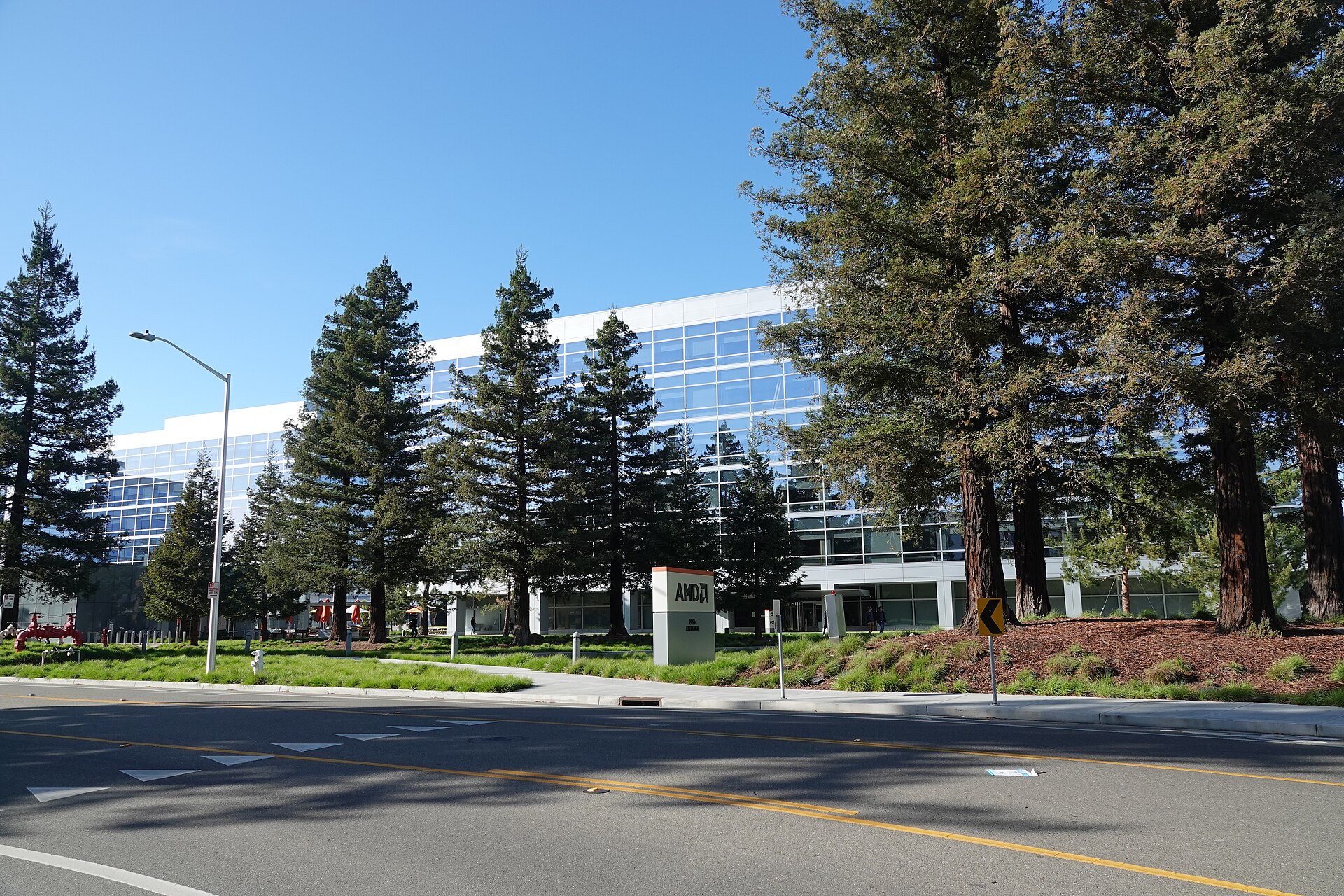
AMD has agreed to pay about $8.2 billion in its own shares for a four-year-old research lab that does not sell a chip. The company announced the definitive agreement to acquire World Labs on 28 September 2026, said the all-stock transaction is expected to close by the end of the year subject to regulatory approvals, and said Fei-Fei Li will join as executive vice president and chief scientist reporting to chair and chief executive Lisa Su.
World Labs, headquartered in San Francisco and founded in 2024, develops what AMD's announcement calls spatial-intelligence models: systems that "generate, reconstruct and simulate interactive 3D environments from text, image and video inputs", plus technology for robotic learning and simulation. Reuters reported the same day that the lab had raised $1 billion in a funding round earlier this year. AMD is therefore paying roughly eight times this year's raise, in stock, for a team whose revenue it has not disclosed.
AMD is buying a forecast, not a product
The rationale AMD gives is unusually candid about what it is short of. Its announcement frames the purchase as strengthening "its ability to develop AI hardware, software and systems around the needs of emerging models and applications", and argues that as AI expands into reasoning, robotics, simulation and physical AI, the demands on compute infrastructure become more diverse. In other words, the difficulty is not fabricating accelerators. It is knowing, three years before tape-out, which shape of model they will be asked to serve.
Building the compute platforms for the next generation of AI requires a deep understanding of how models are evolving.
That is a purchase of foresight, and it inverts the usual direction of travel. For three years the flow has been one way: model companies buying compute, signing multi-year capacity deals, and taking equity or warrants from chipmakers to lock in supply. Here a chipmaker has bought the modelling team outright and installed its founder above its own research organisation. The price is high for a team, cheap for a roadmap input, and paid in a currency AMD prints itself, which is the detail that makes the number less startling than it first reads.
The open-ecosystem promise, and what it does not yet contain
Both sides attached the word open to the deal. AMD said the acquisition "advances AMD's strategy to deliver AI infrastructure for an open ecosystem". World Labs went further in its own post, saying the combined effort is "committed to building out an end-to-end open AI ecosystem spanning hardware, software, platforms, and widely accessible open models". That is a stated commitment rather than a shipped artefact: neither announcement names a model, a licence or a release date.
Advancing the next generation of AI technology requires close collaboration across model research, systems and compute.
There is a pattern here that Parallax Nexus has traced before. In reporting on how open weights became strategic infrastructure, this publication described the summer in which the largest open-weight models ever released arrived from Moonshot, DeepSeek and Alibaba while the two platforms developers used to find and route them were bought by NVIDIA and Stripe. The direction is consistent: the parts of the open stack that carry strategic information about demand keep ending up inside hardware companies. AMD's purchase is the same movement applied one layer up, at the model research itself.
Li's own account, published on the day of the announcement, is worth reading for what it concedes about scale. "Now that we have tangible proof of the possibilities, we want to do everything we can to accelerate the future," she wrote. "To do this requires scaling our efforts, widening our reach, and getting closer to the hardware." A lab that raised a billion dollars this year still judged that it could not get close enough to silicon on its own terms.
The structure is the part regulators will notice
AMD chose a straight acquisition, with a definitive agreement, a disclosed price and an explicit regulatory-approval condition. That is worth contrasting with the alternative now drawing federal attention: the licensing-plus-hiring arrangement, in which a target's founders and engineers move to the acquirer while the company stays nominally independent and no merger is notified. AMD's deal will be reviewed. It was designed to be.
The honest reading is that AMD has bought a research group and a named scientist, and that the return on both depends entirely on retention, which the announcement does not address. Acquisitions of small research labs by large hardware companies have a poor record on that point; the people who accept a chipmaker's stock are not always the people who stay to spend it. World Labs says Justin Johnson and Ben Mildenhall will keep leading the team, which is the most reassuring detail available, and it is a statement of intent rather than a lock-up.
The strongest argument against reading too much into the price is that AMD did not publish anything to value. No revenue figure, no headcount, no product timeline, no benchmark, vendor-run or independent, appears in either announcement. What is on the record is a number, a closing condition, an organisational chart and a stated commitment to open models. Everything that would let an outsider check whether $8.2 billion was well spent remains inside the company until the first hardware built with World Labs in the room appears, which on AMD's normal design cadence is years away.
What happens next?
- The transaction closes by the end of 2026 if regulatory approvals and customary closing conditions are met, on AMD's stated timetable.
- Antitrust reviewers assess an all-stock acquisition of a frontier model lab by a merchant accelerator supplier, a combination with little direct precedent.
- AMD decides whether the open-model commitment in the World Labs announcement produces released weights and a named licence.
- Retention of the World Labs research team becomes visible through publications and departures over the next several quarters.
Related topics
Sources & references
- 01AMD to Acquire World Labs to Advance the Future of AI Compute — Advanced Micro Devices, Inc.primaryCompany announcement released 28 September 2026. Source for the $8.2 billion all-stock valuation, the end-of-2026 closing expectation, Li's title and reporting line, the description of World Labs' models, and both quoted statements.
- 02AMD to acquire Fei-Fei Li's World Labs in $8.2 billion deal — ReutersnewsReported 28 September 2026. Source for World Labs' $1 billion funding round earlier in 2026 and for independent confirmation of the deal value.
- 03World Labs is Joining AMD — World LabscompanyPublished 28 September 2026. Source for the open AI ecosystem commitment and for Justin Johnson and Ben Mildenhall continuing to lead the team.
- 04To Seek a Newer World — Fei-Fei LiprimaryFounder's own post, 28 September 2026, quoted verbatim on the decision to get closer to the hardware.
- 05AMD will acquire Fei-Fei Li's World Labs for $8.2 billion — TechCrunchnewsTrade coverage, 28 September 2026, reporting the prior AMD and World Labs inference and training partnership. Used for background only.
More from Artificial Intelligence
8,000 Mathematicians Object to How AI Labs Announce Proofs
The declaration argues that AI companies announcing solutions in a rush strips out attribution, method and the human transmission of ideas. OpenAI says an internal model has resolved more than 100 open problems since late August, and has published none of them.

Britain Loses First Look at America's Newest AI Models
Politico reported on 24 September 2026 that the White House asked OpenAI and Anthropic to hold new frontier models from the UK's AI Security Institute until a US review is finished. A letter from AISI's director to a Commons committee, dated 15 September, confirms the institute did not get Anthropic's Mythos 5.1.
Alibaba Targets a 10-Trillion-Parameter Model and 20 Gigawatts
Alibaba plans to train a model of 5 trillion to 10 trillion parameters, unveiled the Zhenwu V900 accelerator from its T-Head unit, and set a target for Alibaba Cloud data centre capacity above 20 GW by 2032, chief executive Eddie Wu said on 22 September 2026.

OpenAI Asks Washington to Write the Rules for Self-Improving AI
OpenAI said on 21 September 2026 that the United States should lead an international effort to set technical standards for frontier AI, including for recursive self-improvement. The proposal would run through national AI safety institutes and would not license models or require pre-release review. Sam Altman briefs the UN Security Council on 23 September.