MLPerf Adds an Agentic Post-Training Test as Rubin Debuts
MLCommons published 250 verified training results from 153 systems on 16 November, including the suite's first reinforcement learning post-training benchmark and the first submissions on Nvidia's Rubin generation and Google's seventh-generation TPU.
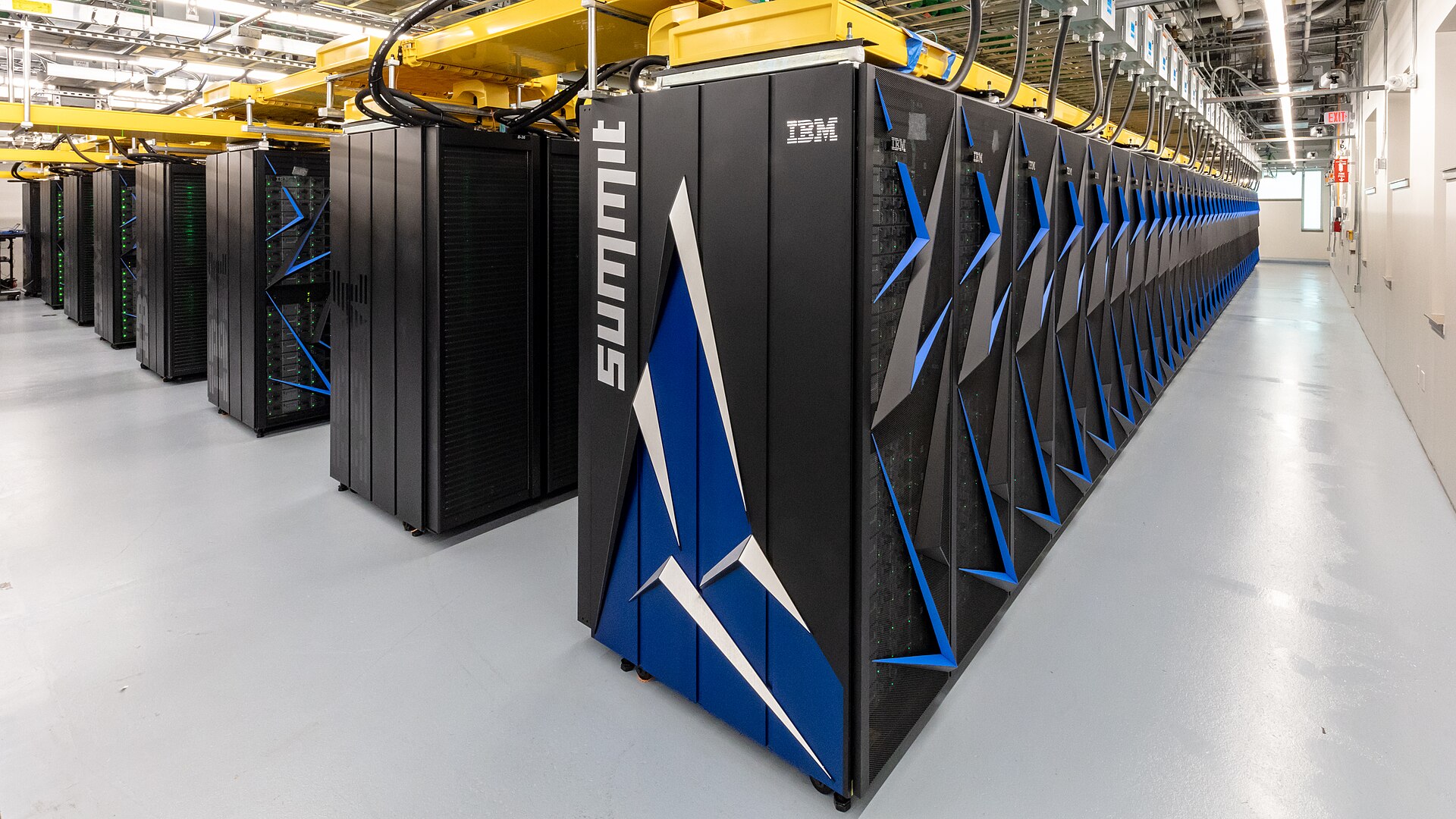
MLCommons published 250 verified results from 153 systems in MLPerf Training v6.1 on 16 November 2026, and the most consequential change is a new test rather than a new chip. The round adds the suite's first large-scale post-training benchmark: it applies Group Relative Policy Optimization, a reinforcement learning method, to the 397-billion-parameter Qwen3.5 mixture-of-experts model, training it to solve software engineering tasks through tool-calling.
That matters because the workload stresses systems in a way pre-training does not. A GRPO run alternates between generating candidate solutions and updating weights, so inference and training share the same job and the same cluster, with large weight transfers between them. Shriya Rishab, co-chair of the MLPerf Training working group, said the group had spent two years building the test, describing post-training as having "added a new level of complexity to the architecture of AI training".
The second new benchmark is DLRMv4-HSTU, a recommender that replaces DLRM-dcnv2, uses the HSTU attention-based architecture and trains on the Yambda dataset. Recommenders rarely attract attention next to frontier models, but they are where a large share of production inference and training budget actually sits.
What the verified numbers show, and what they do not
This round is the first MLPerf appearance for Nvidia's Rubin-generation GPUs and for Google's seventh-generation Ironwood TPU. Nvidia reported a 10.44-minute result on the new Qwen3.5 397B GRPO benchmark at 1,024 GPUs and said its Vera Rubin NVL72 held above 97 per cent scaling efficiency moving from 256 to 1,024 GPUs on DeepSeek-V3. CoreWeave, the first cloud provider to post multi-rack Rubin results, reported a 256-GPU DeepSeek-V3 run reaching the benchmark's quality target in 17.65 minutes, and completed the Qwen3.5 397B reinforcement learning job in 22.78 minutes on 256 GPUs split evenly between training and generation.
The distinction worth holding onto is between the times and the ratios. MLCommons verifies the time-to-train figures for each submission in the Closed division, which is what makes them comparable. The generational multiples quoted around them are arithmetic the vendors do on their own entries, and the choice of which pair to compare belongs to the vendor. Nvidia's headline 2x for Vera Rubin NVL72 against an optimised GB300 NVL72 is its own calculation across submissions 6.1-0116 and 6.1-0030, not an MLCommons ranking.
| Comparison | Benchmark | Scale | Claimed gain | Who calculated it |
|---|---|---|---|---|
| Vera Rubin NVL72 vs GB300 NVL72 | DeepSeek-V3 671B | 1,024 GPUs | 2x | Nvidia |
| Vera Rubin NVL72 vs GB300 NVL72 | Qwen3.5 397B GRPO | 64 GPUs | 1.4x | Nvidia |
| Vera Rubin NVL72 vs GB300 NVL72 | gpt-oss 20B | 64 GPUs | 1.63x (39% less time) | Nebius, matched 16-node clusters |
| Vera Rubin NVL72 vs GB300 NVL72 | Qwen3.5-397B GRPO | 64 GPUs | 1.49x (33% less time) | Nebius, matched 16-node clusters |
Nebius is the more useful of those rows, because it ran both generations as 16-node, 64-GPU clusters on its own infrastructure and compared like with like. Its figures, a 39 per cent cut in time-to-train on gpt-oss 20B and 33 per cent on the new GRPO benchmark, are smaller than Nvidia's headline multiple and come from a customer rather than the chip designer.
The cloud share moved more than the silicon
Of the 153 systems in this round, 57 were cloud-based, or 37 per cent, against 29 per cent in version 6.0 six months earlier. Twelve systems used 1,000 or more accelerators and the largest used 10,240. The 24 submitting organisations include AMD, Google and Nvidia alongside Azure, CoreWeave, Crusoe, Lambda, Nebius and Oracle, plus Fujitsu, Dell, HPE, Supermicro, the small firm tiny corp and the University of Florida.
Pavan Yalamanchili, the working group's other co-chair, framed the breadth as the point: "Having much more of the matrix of possible systems represented in the published results gives us a clearer view of how they stack up against each other in the most important real-world scenarios for AI training." Chen Goldberg, CoreWeave's executive vice-president of product and engineering, put the same idea commercially: "New silicon is only as fast as the cloud it runs on."
The honest reading is that MLPerf has caught up with where model development actually happens. For two years the suite measured pre-training while labs moved their differentiation into post-training, and buyers had no neutral number for the stage that decides whether an agent can call a tool reliably. There is now one, and it was adopted immediately rather than left empty for a round, which is the clearest signal in the release.
What the results do not establish is cost. MLPerf Training measures time to a quality target, not dollars or joules per run, so a system that finishes faster on more expensive hardware looks better here than a procurement spreadsheet might allow. Nor does a single post-training benchmark on one 397-billion-parameter model settle how these systems behave on the longer, messier reinforcement learning runs that frontier labs actually operate.
What happens next?
- MLCommons is presenting the v6.1 results at SC26 in Chicago the week of 16 November, with new visualisation tools for comparing systems at similar scale.
- Expect further Rubin-generation and Ironwood submissions in MLPerf Training v7.0 in roughly six months, when today's first-round systems can be compared against tuned ones.
- Watch whether the Qwen3.5-397B GRPO benchmark draws submissions from AMD and Google silicon, which did not lead this round's post-training entries.
Related topics
Sources & references
- 01MLCommons Releases MLPerf Training v6.1 Results, Spotlighting Recent Advances in AI Training — MLCommonsprimaryPublished 16 November 2026; source of the submission counts, new benchmarks and working group quotes.
- 02NVIDIA Vera Rubin NVL72 Achieves up to 2x Blackwell Ultra Performance in MLPerf Training v6.1 — NvidiacompanyVendor-calculated generational ratios with submission IDs, 16 November 2026.
- 03MLPerf Training v6.1: Nebius ranks 1st on NVIDIA Vera Rubin at rack scale in pre-training and post-training — NebiuscompanyMatched 64-GPU comparison of Vera Rubin NVL72 against GB300 NVL72, 16 November 2026.
- 04CoreWeave becomes the first cloud provider to deliver multi-rack NVIDIA Vera Rubin results in MLPerf Training v6.1 — CoreWeavecompanyPress release dated 16 November 2026; source of the 17.65-minute and 22.78-minute runs and the Goldberg quote.
- 05New AI training performance benchmarks for Google TPUs — Google CloudcompanyGoogle's ten v6.1 submissions across Ironwood TPUs and GB300 GPUs, 16 November 2026.
More from Artificial Intelligence

Australia Plans an AI Regulator After an Agent Breached Medicare
Australia will create an AI safety regulator able to impose significant penalties and will require AI companies to report cyber incidents and misaligned model behaviour, Anthony Albanese said on 10 November 2026, releasing the 18 recommendations of a rapid review into the OpenAI breach.
OpenAI's Grid Programme Starts With a Deal Approved in August
The Grid Protectors Program commits OpenAI to negotiating demand-reduction arrangements with utilities for campuses it has not yet built. Its Georgia pilot is an existing contract covering 3,200 megawatts of new load and up to 1,000 megawatts of flexible demand response.
Google's Top-Ranked Model Goes Only to Cyber Defenders
Google announced Gemini 4 Carbon on 28 October 2026, first on version 5.0 of the Artificial Analysis Intelligence Index at 59, and is releasing it initially to a subset of cyber defenders with no date for general availability. The headline security scores were measured with the model's restrictions off.

DeepSeek and MiniMax Clear China's New AI Export Register
Chinese state media reported on 22 October 2026 that DeepSeek and MiniMax had completed export registration under the interim regime that took effect with Announcement No. 48, six days after the Ministry of Commerce proposed bringing large models, AI agents and computing clusters into China's export control catalogue.