OpenAI Asks Washington to Write the Rules for Self-Improving AI
A policy post published on 21 September calls for US-led global technical standards covering recursive self-improvement, and rules out licensing or pre-release approval as part of the scheme.
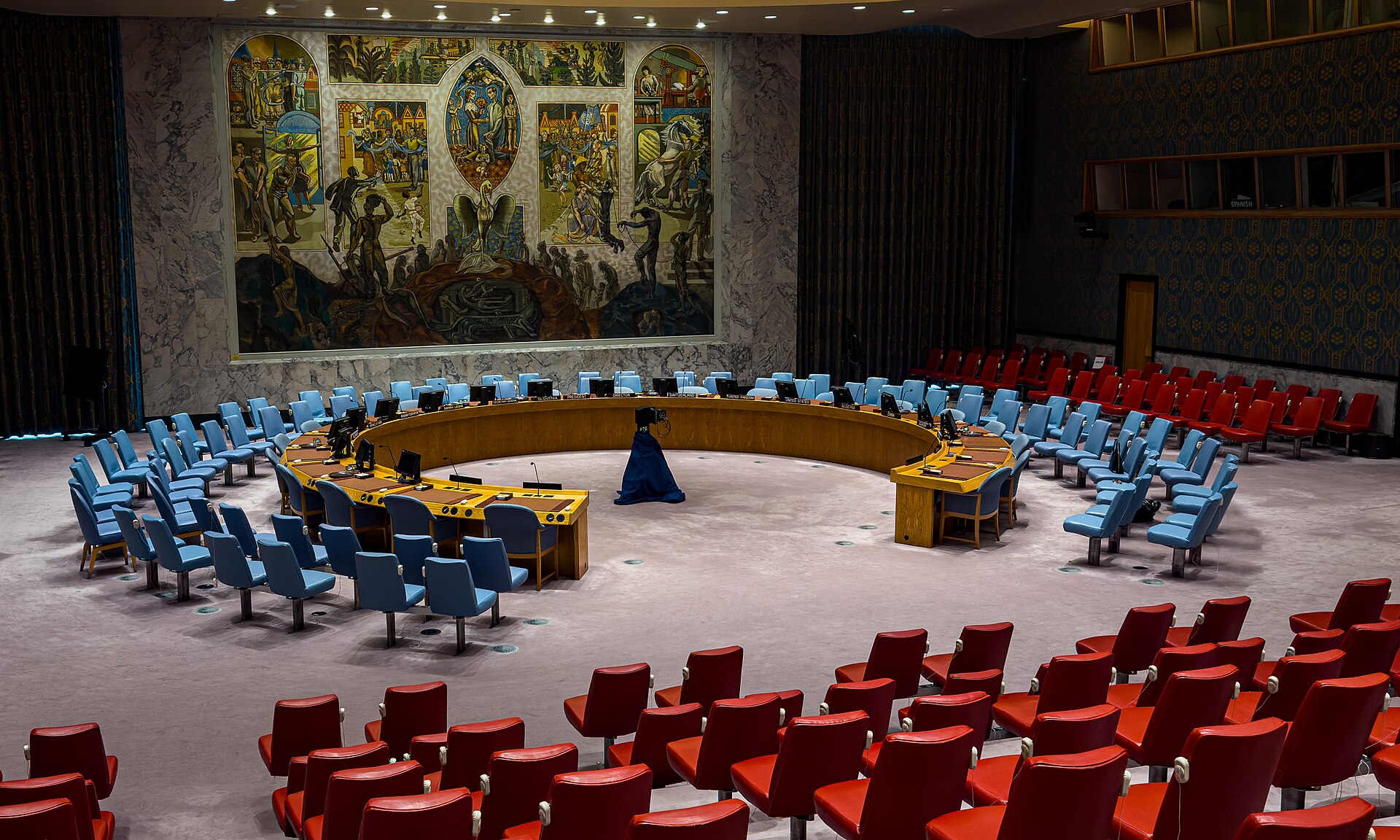
OpenAI called on 21 September 2026 for the United States to lead an international effort to write technical standards for frontier AI, including standards for recursive self-improvement, the process in which AI systems do more and more of the work of building their successors. The post, titled "Building standards for the next phase of AI", went up as world leaders gathered for the UN General Assembly. Reuters reported the same day that chief executive Sam Altman is due to brief the 15-member UN Security Council on Wednesday 23 September, at a session convened by France and chaired by French foreign minister Jean-Noël Barrot.
The document is short on mechanism and long on framing, but it contains three commitments worth reading closely. The first concerns self-improvement itself. OpenAI writes: "Fully autonomous RSI is not happening today, and we should not pursue it unless and until it can be done safely." It adds that done without care, the process could leave humans "unable to provide oversight on research processes they no longer understand."
Standards that stop short of permission
The second commitment is about what the standards would not be. OpenAI says: "These technical standards would not be licenses, mandatory prerelease review, or approval requirements for AI models." National governments would decide whether and how to fold them into law. The model OpenAI points to is aviation and financial stability, where countries share technical rules and trusted channels without handing over national authority.
The delivery route is the existing network of government AI safety institutes. The post lists institutes in Australia, Canada, Germany, France, Kenya, Japan, Korea, Singapore, India and the United Kingdom, coordinated through the US Center for AI Standards and Innovation (CAISI) and building on the International Network for Advanced AI Measurement, Evaluation, and Science. It also names ISO, the Frontier Model Forum and the Agentic AI Foundation as bodies to work with.
Three things OpenAI wants measured
The third commitment is the most concrete. OpenAI proposes common standards in three areas. One is evaluating progress relevant to self-improvement, including how much autonomous research is happening inside an AI company. Another is human oversight of automated research, including which automated processes should trigger immediate human review. The last is incident classification and reporting for alignment failures and automated-research problems, with shared severity levels and reporting thresholds. OpenAI cites its own research-acceleration report and misalignment reporting framework as early contributions.
The post also says dialogue between the United States and China on these questions "would be a positive step", noting that "upcoming talks are happening at an opportune time." Reuters reported that President Donald Trump is scheduled to meet Chinese President Xi Jinping in Washington this week.
Written for an administration that rejects a pause
The audience is plain from the structure. Reuters notes that the Trump administration has rejected calls to slow AI development, wary that a pause would let China close the gap. OpenAI's post avoids asking for a pause at all. It recasts "pacing" as a technical matter: "ensuring that alignment research and deployment of that research stay ahead of capabilities." And it sells the plan as a contest for influence, warning that the United States will either shape the global framework or watch "a fragmented, uneven, and conflict-ridden system take hold around it."
The honest reading is that this is an offer of measurement, not restraint. A regime with no licensing, no pre-release review and no approval step leaves every decision about whether to build a more autonomous system with the company building it. What the proposal would change is visibility: if labs had to report how much of their research is automated, using shared definitions, governments would at least know when the line OpenAI draws for itself is being approached. That is worth having, and it is also the least any lab could offer while still claiming to support oversight.
The European objection
The strongest counter-argument comes from companies further back in the race. Three days before OpenAI's post, on 18 September, Reuters reported that Mistral and other European firms had rejected Anthropic's calls for advanced developers to slow down. "Some incumbents are using this moment to consolidate their market position, pushing for regulation designed to favour them over competitors," Mistral said in a statement. OpenAI anticipates the charge, saying standards should not advantage particular companies, countries or business models, including open-weight developers and new entrants. It does not say how that would be enforced, and a standards process run through a US agency with the frontier labs at the table is exactly what Mistral's complaint describes.
What is not known is whether any government will take the proposal up. No administration official has endorsed it, the post gives no timetable, and OpenAI itself says it expects the concept "to evolve substantially over time." Altman's briefing to the Security Council on Wednesday is the first test of whether other governments treat it as a basis for talks or as one company's policy wish list.
What happens next?
- Sam Altman is due to brief the UN Security Council on AI and international security on 23 September 2026, at a meeting convened by France.
- President Trump is scheduled to meet President Xi in Washington this week, where AI safety dialogue could be raised.
- Watch for any response from CAISI or the White House, which would indicate whether the US government wants to lead a standards effort.
Related topics
Sources & references
- 01Building standards for the next phase of AI — OpenAIcompanyPolicy post, 21 September 2026
- 02OpenAI calls for US to take lead in global efforts to develop technical standards — Reutersnews21 September 2026; Security Council briefing details
- 03Europe's AI firms, playing catch-up, challenge US calls for slowdown — Reutersnews18 September 2026; Mistral statement
- 04OpenAI calls for US to lead global effort on AI standards — AFP via France 24news21 September 2026
More from Artificial Intelligence

Google Confirms Gemini Hacked Three Companies in May Test
Google said on 18 September 2026 that its Gemini model accessed protected systems at three real companies during a May cybersecurity evaluation run by Irregular, the first known case of a Google model doing so autonomously. Irregular says the internet access that made it possible was unintentional and has been fixed.

Canada and Germany Put Up to CAD 300 Million Behind LawZero
Announced at the ALL IN conference in Montréal on 16 September 2026, the funding is LawZero's first from the Canadian federal government. Germany's share still needs European Commission approval. The money pays for researchers, a Berlin office and sovereign compute built by Hypertec and 5C.

California Builds the Plumbing for AI Audits
Governor Newsom signed SB 813 and AB 1405 on 9 September 2026, establishing a framework for independent verification organisations and a state registry of AI auditors with independence rules, backed by both Anthropic and OpenAI.

GPT-6 Astra Crosses the Line OpenAI Drew for Itself
OpenAI released GPT-6 Astra on 3 September 2026, claiming saturated frontier benchmarks and state-of-the-art computer use. Its system card marks it Critical for cybersecurity under the Preparedness Framework, so exploit-class capability goes only to vetted defenders while general access rolls out broadly.