Tencent Lets Outside Labs Test Hy4 Before Opening Its Weights
Two genuinely external evaluators, Fangcun AI and Alice, ran cyber, content and prompt-injection tests on the 770-billion-parameter model before release. The biological risk section of the 82-page card is graded by Tencent alone.
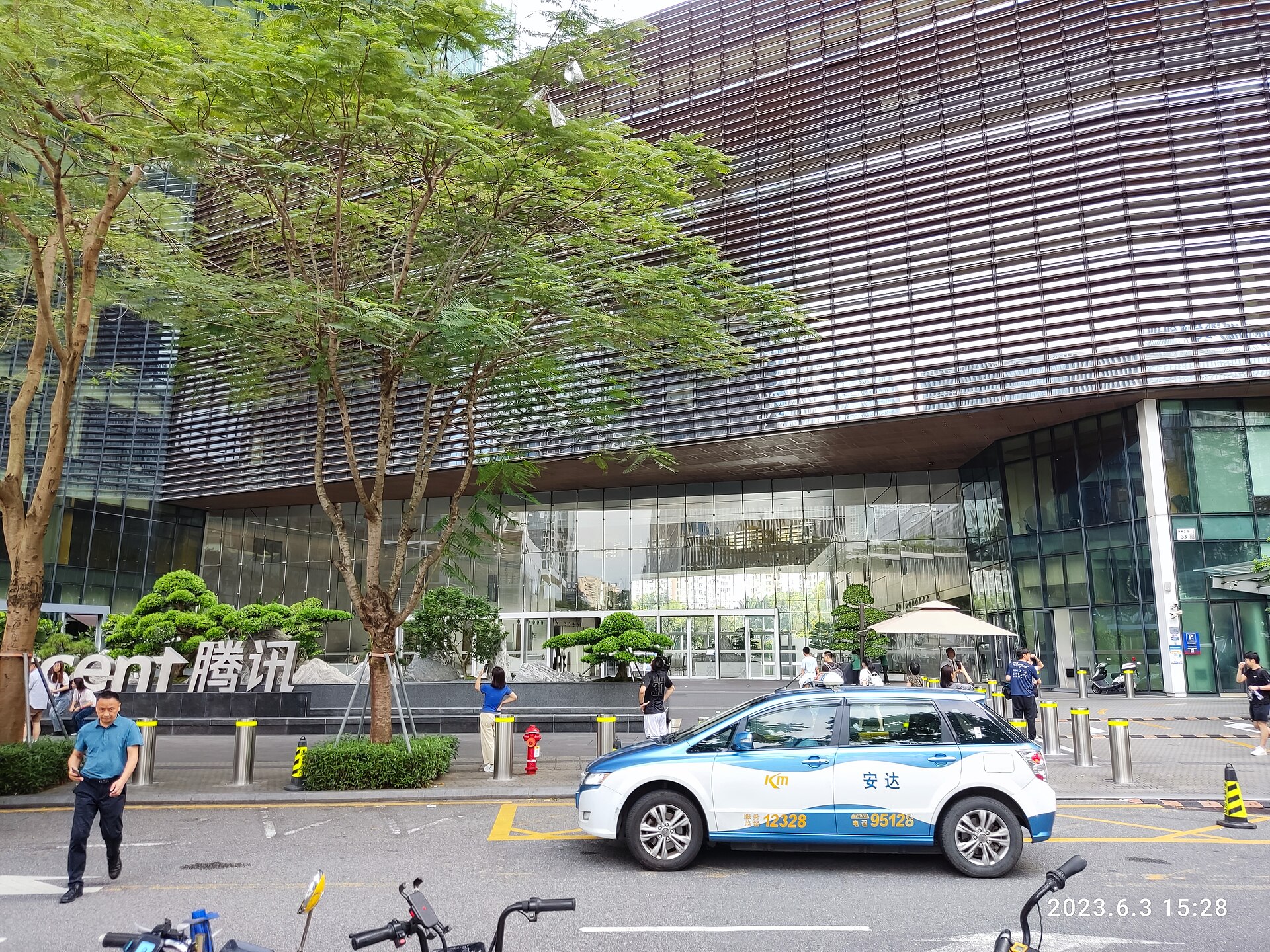
Tencent published the open weights for Hy4 on 20 November 2026 and shipped an 82-page system card with them. The model is a natively multimodal mixture-of-experts system with 770 billion total parameters, 49 billion active, and a one-million-token context window, according to the company's announcement. The weights went up on Hugging Face, ModelScope and GitCode, with an FP8 quantised build, the pre-trained base and a GGUF conversion.
The card is the more unusual artefact. It reports testing by Fangcun AI, a Chinese start-up, and by Alice, an Israeli-American firm, carried out before the weights were released. The South China Morning Post reported on 21 November that this is the first time a leading Chinese technology company has disclosed working with independent third-party evaluators on a new model ahead of release.
Our goal is to develop AI systems that are not only increasingly capable, but also reliable, safe, and trustworthy.
Count the validators carefully
Tencent's launch post names four organisations beside the two outside firms: its own Xuanwu, Zhuque and Keen labs. That reads as a long list of checks and is better understood as two. The internal labs are Tencent reviewing Tencent, which is normal practice and not what an open-weight safety card is for. The argument for publishing a card at all is that somebody outside the building looked at the model before the download link went live, and on that test the honest count is Fangcun and Alice.
What those two did is specific. Alice ran three evaluations: cyber safe-completion and refusal behaviour, general content safety, and robustness to prompt injection in agentic tool-calling scenarios. Its figures are reported with sample sizes, and the card marks the places where the samples are too small to support a conclusion, which is a better habit than most vendor documents display. Alice's finding was that Hy4's defensive cyber capability had improved markedly against the preview version while its offensive hacking capability stayed limited. Fangcun tested loss-of-control and harmful-manipulation risks and said on 20 November that the model showed overall safety improvements in both areas.
The section that marks its own work
Biology is where the disclosure thins out. Tencent says it restricted high-risk biological material in training and trained the model to refuse dangerous requests, including pathogen modification. The supporting numbers come from the company's own benchmarks rather than from Fangcun or Alice. On Hy-BioExperimentBench, which tests open-ended experiment design, Hy4 scored 30.4 out of 100, and the card describes that capability as significantly behind frontier models even as it reports a threefold improvement over the preview on a wet-lab design test.
That mix of a weak absolute score and a large relative gain is the finding, and it is the part no outside party has checked. The pattern is familiar from this month's other bio evaluation. As Parallax Nexus reported on 6 November, BioBasicsBench scored OpenAI's top model at 66.7 per cent on wet-lab tasks, but only OpenAI models were tested and OpenAI wrote the grading rubrics. A vendor-run bio benchmark reporting that a vendor's model is not yet dangerous is evidence, not verification.
A more open model on less open terms
The licence moved the other way from the safety reporting. Hy4 Preview, released in August, carried Apache 2.0 terms. The full release uses a custom Tencent Hy License under which individuals may use, modify and deploy the model commercially at no charge, while companies selling it as a hosted service must obtain separate written authorisation if their global revenue over the preceding twelve months exceeded $50 million. That puts Hy4 alongside GLM and Kimi, which also carry bespoke licences, and away from the permissive position Tencent held with the preview.
The judgment worth stating plainly is that disclosure of this kind is cheap for a lab that expects good results and still valuable, because the format commits the company to a comparison it cannot quietly withdraw next time. Against that, no independent benchmark of the full Hy4 existed when the weights went up, the two external evaluators were commissioned by Tencent rather than acting on their own authority, and nothing in the card addresses what happens after the weights are fine-tuned by somebody else, which is the specific risk an open release creates and a closed API does not.
What happens next?
- Independent evaluators including Artificial Analysis and public leaderboards will publish scores for the full Hy4, which can be compared against Tencent's own reported figures.
- Fine-tuned derivatives of the open weights will appear, and none of them will carry the safety training the card describes.
- Whether other Chinese labs commission and publish third-party pre-release evaluations for their next flagship releases is the test of whether this becomes a norm.
- Tencent has said it will also open the weights of the smaller Hy4 Flash model.
Related topics
Sources & references
- 01Tencent Hy announcement of Hy4 open weights and system card — Tencent HunyuancompanyPosted 20 November 2026; names the internal labs and the two independent testers.
- 02Tencent touts latest AI model Hy4's performance on independent safety assessments — South China Morning PostnewsReports the 82-page safety report published 20 November 2026 and the first-disclosure claim.
- 03Fangcun AI on the Hy4 system card — Fangcun AIcompany20 November 2026; states it tested loss-of-control and harmful-manipulation risks.
- 04Tencent Hy4 System Card: Cyber Scores Up, Refusals Worse — Orca RouterreportDetail on which organisations are internal to Tencent and on the structure of Alice's three evaluations.
- 05Tencent Hy4 Open Weights: 770B Multimodal MoE Model — i10XnewsQuotes the 20 November announcement and notes no independent benchmark results for the full Hy4 were available at release.
More from Artificial Intelligence

US Scraps AI Model Weight Controls, Licenses Rented Compute
An interim final rule published on 19 November 2026 requires a licence before advanced chips reach any data centre that gives Country Group D:5 or Macau companies more than 12 million aggregate TPP of compute. The same document rescinds the January 2025 AI Diffusion Rule and removes the export control on AI model weights.
MLPerf Adds an Agentic Post-Training Test as Rubin Debuts
MLPerf Training v6.1, published 16 November 2026, adds a post-training benchmark built on Qwen3.5-397B and GRPO reinforcement learning, the first of its kind in the suite. It carried 250 results from 153 systems and 24 organisations, with Nvidia Rubin and Google Ironwood silicon appearing for the first time.
OpenAI's Grid Programme Starts With a Deal Approved in August
The Grid Protectors Program commits OpenAI to negotiating demand-reduction arrangements with utilities for campuses it has not yet built. Its Georgia pilot is an existing contract covering 3,200 megawatts of new load and up to 1,000 megawatts of flexible demand response.
Google's Top-Ranked Model Goes Only to Cyber Defenders
Google announced Gemini 4 Carbon on 28 October 2026, first on version 5.0 of the Artificial Analysis Intelligence Index at 59, and is releasing it initially to a subset of cyber defenders with no date for general availability. The headline security scores were measured with the model's restrictions off.