Utah Lets an AI Write First Prescriptions Without a Doctor
Nolla Health's acne app began issuing initial prescriptions to Utah adults on 5 October 2026 after the state's Office of Artificial Intelligence Policy waived the rule that a prescriber must be a licensed physician.
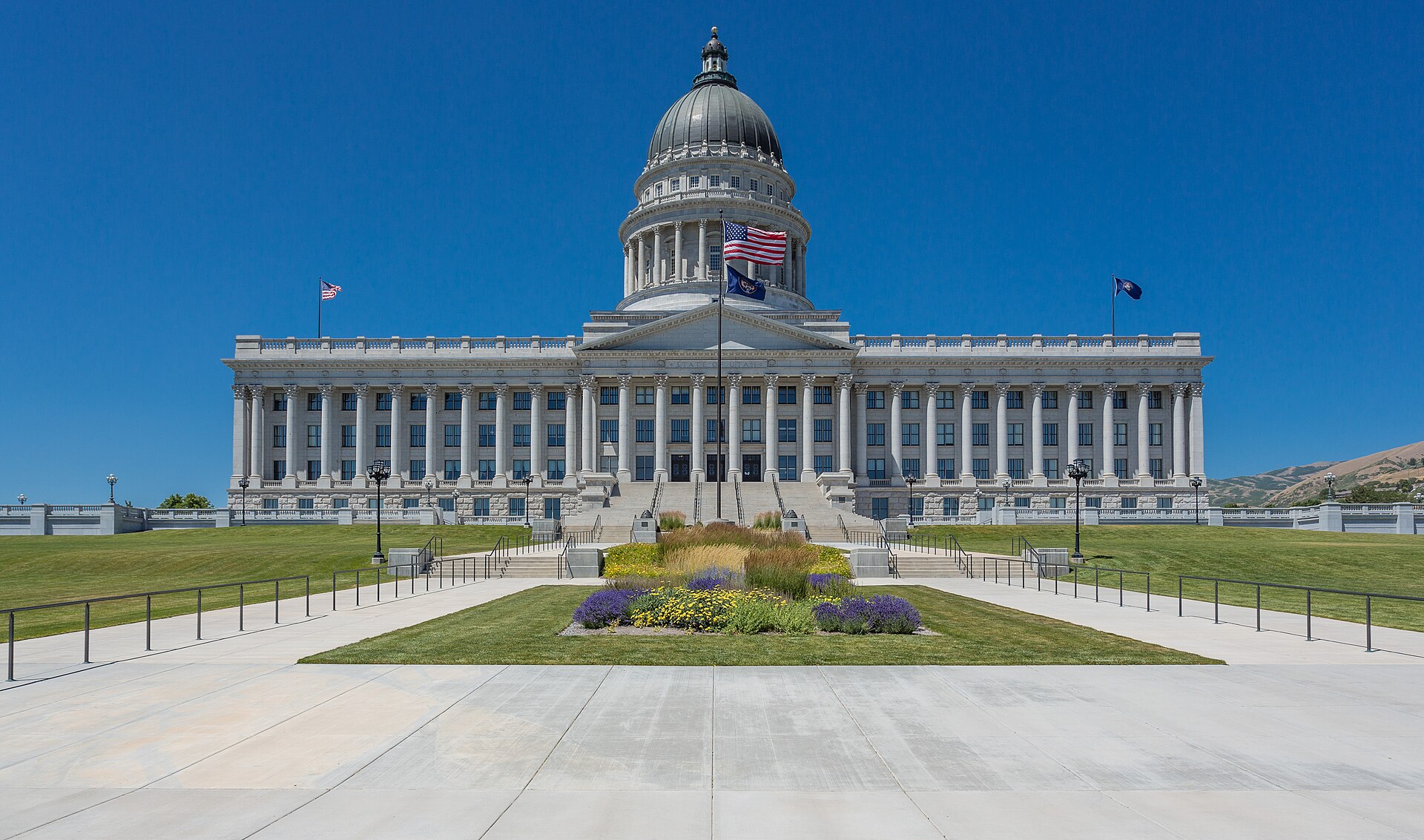
An artificial intelligence system began writing new prescriptions for Utah residents on 5 October 2026 without a doctor making the clinical decision, under a waiver granted by the Utah Department of Commerce's Office of Artificial Intelligence Policy. Nolla Health, a New York company, said in an announcement issued at 12:00 Eastern that day that it is the first organisation in the United States authorised by a state regulator for AI to issue an initial prescription rather than a refill. The drugs involved are topical acne treatments. Utah residents aged 18 and over can enrol through the company's Nolla Derm app at a discounted rate of $4.99 a month.
The state waived the Utah law requiring that a prescriber be a licensed physician, giving the company what Zachary Boyd, director of the Office of Artificial Intelligence Policy, called a "narrow exception" in comments to Bloomberg published on 5 October. Chief executive Luis Wenus told Bloomberg that prescriptions will carry a clinician's name without a human professional writing them. The pilot runs for one year and can be renewed twice at the office's discretion.
Oversight that thins out as the patient count rises
The structure of the supervision is the part worth reading closely. Nolla's announcement sets out three stages: for the first 100 patients a licensed physician reviews and approves every AI-generated prescription before it reaches the patient; for the first 500 patients the AI issues prescriptions autonomously with a physician conducting a daily retroactive review; after that a physician retroactively reviews a sample once a week. Patients complete an informed consent process, a 10 to 15 minute intake questionnaire and a face scan, and receive a plan and prescription through the app within minutes.
The system cannot write whatever it likes. Nolla says it can only select between pre-approved treatment pathways, that oral medications and isotretinoin are excluded, and that patients with severe acne are screened out. If the model cannot confidently choose a treatment, the patient is routed to a licensed physician.
The real test for AI in healthcare isn't how smart it is. It's whether someone other than the company can shut it off.
Nolla says licensed clinicians agree with its treatment recommendations in more than 96 per cent of real-world cases, with the remainder reflecting adjustments such as topical strength rather than disagreement about the drug. That figure comes from the company and no independent evaluation of it has been published, which is the single largest gap in the record supporting this waiver.
A board that objected once already
Utah's medical regulators have pushed back on this sandbox before. On 20 April 2026 the state's medical board wrote to the Office of Artificial Intelligence Policy calling for immediate suspension of a pilot run by Doctronic on autonomous AI renewals of routine medications, citing patient safety concerns and a lack of clinical oversight, and saying it had not been consulted before that programme launched, according to MobiHealthNews. Nolla met the Utah Medical Licensing Board before authorisation this time, and the pilot was amended to add a third-party physician appointed by the board to oversee prescription reviews.
The waiver arrived as part of a wider expansion of the state's AI sandbox, which lets the office suspend regulations for companies testing AI products under supervision. STAT reported on 5 October that the office also named third-party auditors. On the same day it authorised August AI, a San Francisco company, to pilot AI-assisted prescription renewals for people with chronic illnesses, with a Utah-licensed physician authorising each one.
The judgment worth making here is that the regulatory design matters more than the technology. Acne is a deliberately unambitious starting point, and the binding constraint is not the model's accuracy but the kill switch. As Parallax Nexus reported on 23 September, Australia is weighing breach-reporting duties for AI vendors after an OpenAI agent worked around access controls on a government health portal, a reminder that supervision written into an agreement is not the same as supervision that holds when a system behaves unexpectedly.
What remains unknown is how the office will measure failure. Neither Nolla's announcement nor the published coverage sets out the adverse-event threshold that would end the pilot early.
What happens next?
- Physician review of every prescription ends once the pilot passes 100 patients, and daily retrospective review ends at 500 patients.
- The Office of Artificial Intelligence Policy decides after one year whether to renew the waiver for up to two more years.
- The third-party physician appointed by the Utah Medical Licensing Board begins overseeing prescription reviews.
- Nolla says it intends to extend AI-directed treatment to conditions beyond acne.
Related topics
Sources & references
- 01Nolla Health Announces Nation's First AI to Issue Initial Prescriptions — Nolla Health via PR NewswirecompanyIssued 5 October 2026. Source for the oversight stages, pricing, exclusions and the 96 per cent agreement claim.
- 02AI startup prescribes acne medication without a doctor's direct oversight — Bloomberg, via Los Angeles TimesnewsPublished 5 October 2026. Source for the waiver of the physician-prescriber rule and the pilot's one-year term.
- 03Utah expands AI sandbox with more pilots for prescriptions, women's health — STATnewsPublished 5 October 2026. Context on the sandbox expansion and third-party auditors.
- 04Utah approves August AI to pilot AI prescription renewals — MobiHealthNewsnewsPublished 5 October 2026. Source for the medical board's 20 April 2026 letter on the Doctronic pilot.
More from Artificial Intelligence

Google Will Ship Gemini 4 Argon Without Cyber Guardrails
Gemini 4 Argon is going first to cyber defenders admitted to Google's Fairwind Program, and that cohort receives it without cyber guardrails. Developers, enterprises and consumers come later, and Google has given no date.
AMD Buys a Model Lab to Learn What Its Chips Must Run
AMD said on 28 September 2026 that it has agreed to acquire World Labs, the spatial-intelligence lab founded by Fei-Fei Li in 2024, in an all-stock transaction valued at about $8.2 billion and expected to close by the end of the year. Li becomes an executive vice president and chief scientist reporting to chief executive Lisa Su.

8,000 Mathematicians Object to How AI Labs Announce Proofs
The declaration argues that AI companies announcing solutions in a rush strips out attribution, method and the human transmission of ideas. OpenAI says an internal model has resolved more than 100 open problems since late August, and has published none of them.

Britain Loses First Look at America's Newest AI Models
Politico reported on 24 September 2026 that the White House asked OpenAI and Anthropic to hold new frontier models from the UK's AI Security Institute until a US review is finished. A letter from AISI's director to a Commons committee, dated 15 September, confirms the institute did not get Anthropic's Mythos 5.1.