Seven of Nine Planetary Boundaries Now at Record Breach
The 2026 Planetary Health Check from the Potsdam Institute says every transgressed boundary has worsened, and questions whether models overstate how well land will keep absorbing carbon.

Seven of the nine planetary boundaries are now transgressed and all seven are at their highest recorded levels, according to the Planetary Health Check 2026, released on 21 September 2026 by the Planetary Boundaries Science Lab at the Potsdam Institute for Climate Impact Research (PIK). The annual assessment is written by more than 60 scientists and was launched at the start of Climate Week NYC.
The seven breached boundaries are climate change, biosphere integrity, land system change, freshwater change, biogeochemical flows (the nitrogen and phosphorus cycles), novel entities such as synthetic chemicals and plastics, and ocean acidification. Acidification was the latest to cross its limit, in 2025. "The diagnosis is unambiguous. Pressure is rising across every Planetary Boundary already outside the safe operating space," said Boris Sakschewski, the PIK scientist who led the report.
Ozone and aerosols, the two holding
Only stratospheric ozone depletion and atmospheric aerosol loading have improved over the last decade, PIK says. The ozone recovery follows the Montreal Protocol's phase-out of ozone-depleting chemicals. The aerosol picture is less clean: the authors caution that global progress may hide unsafe aerosol levels persisting in some regions.
On climate, Scientific American's account of the data puts atmospheric carbon dioxide at a record 426 parts per million, against a boundary of 350 ppm and a pre-industrial level of about 280 ppm. The ocean absorbs part of that excess carbon dioxide, which lowers seawater pH and is what pushed the acidification boundary over the line last year.
Twelve months of evidence
The report ties the numbers to a year of extremes. Pakistan's 2025 monsoon floods affected more than 6.9 million people. Global ocean heat content set a record in 2025, and Hurricane Melissa strengthened to Category 5 over unusually warm water before striking Jamaica. From January 2023 to September 2025, bleaching-level heat stress hit about 84.4% of the world's coral reef area, the largest global bleaching event observed. In 2026, Western Europe had its hottest June and July on record, with drought across France, Spain, Germany and the United Kingdom.
The sink question
The most consequential section concerns carbon sinks, one of this year's two special topics alongside novel entities. Vegetation and soils absorb a large share of human carbon dioxide emissions, but repeated heat, drought, fire and degradation can cut that uptake and, in some regions, turn ecosystems into net sources. The report asks whether the models used to calculate the land sink overestimate its resilience. "Our path to net zero emissions relies on functioning carbon sinks," Sakschewski said. "Current observations raise the alarm that our planet may be losing its buffering capacity against the increasing pressures we're putting on it."
That is the part governments should read first. Most national net-zero plans and emissions budgets assume land will keep absorbing carbon at roughly historical rates. If the models behind that assumption are too generous, the budgets are smaller than officials think, and the gap has to be closed by cutting emissions faster rather than by counting on forests and soils.
What the check cannot tell us
The framework has limits the authors acknowledge. PIK notes that the assessment uses the latest available data, some of which predate 2026, so a record reading does not always mean a 2026 measurement. Breaching a boundary is also not a switch to collapse: it marks entry into a zone of rising risk that Holocene-like conditions are lost. The report does not put dates on tipping points, and it offers no single figure for how far the land sink may be overstated.
The release landed a week after the US Environmental Protection Agency finalised the repeal of most greenhouse gas standards for power plants, on 14 September. AFP reported that day that the power sector accounts for roughly a quarter of US planet-warming emissions. Johan Rockström, PIK's director and a co-author, framed the report as a call for faster action: "We do not have the luxury of time, but we do have the knowledge, capacity and solutions to change course."
What happens next?
- Climate Week NYC runs to 27 September 2026 alongside the UN General Assembly, where governments will present climate commitments.
- PIK's Planetary Boundaries Science Lab is forming a Planetary Boundaries Initiative with policymakers and civil society to work on responses.
- Legal challenges are expected against the EPA's 14 September repeal of power plant greenhouse gas standards.
Related topics
Sources & references
- 01Planetary Health Check 2026 finds mounting pressures across Earth's life support systems — Potsdam Institute for Climate Impact ResearchprimaryPress release, 21 September 2026
- 02Planetary Health Check 2026 — Planetary Boundaries Science Lab, PIKreportFull report and supplementary materials, September 2026
- 03Seven breached Planetary Boundaries continue to worsen, new report shows — Stockholm Resilience Centreresearch21 September 2026
- 049 'boundaries' keep Earth livable. We've breached 7 of them — Scientific Americannews21 September 2026; carbon dioxide figures from the report
- 05What They Are Saying: Huge Support Across America After Trump EPA Delivers Largest Deregulatory Action — US Environmental Protection AgencyprimaryRepeal finalised 14 September 2026
- 06At G20 summit, US unravels power plant climate rules — AFP via eNCAnews14 September 2026; power sector share of US emissions
More from Climate
Oceans, Not Air, Drove 84% of Polar Ice Loss Since 1979
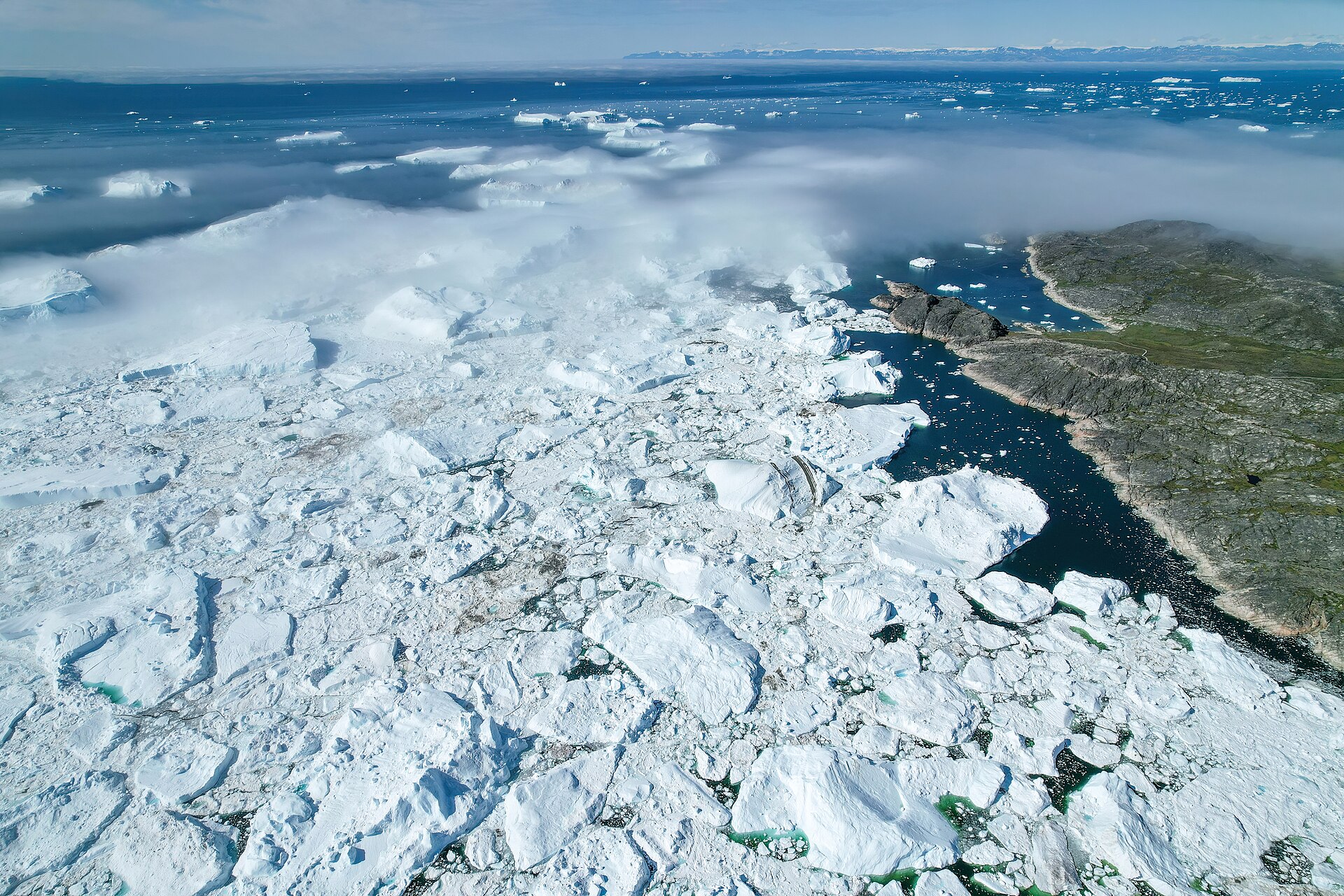
The IMBIE team’s dataset in Scientific Data, published on 16 September 2026, finds Greenland and Antarctica lost 11,309 billion tonnes of ice from 1979 to 2023, adding 31.4 mm to sea level, with 84% of the loss driven by faster glacier discharge into the ocean rather than surface melt.
The Weather Forecast Is Now an AI Model
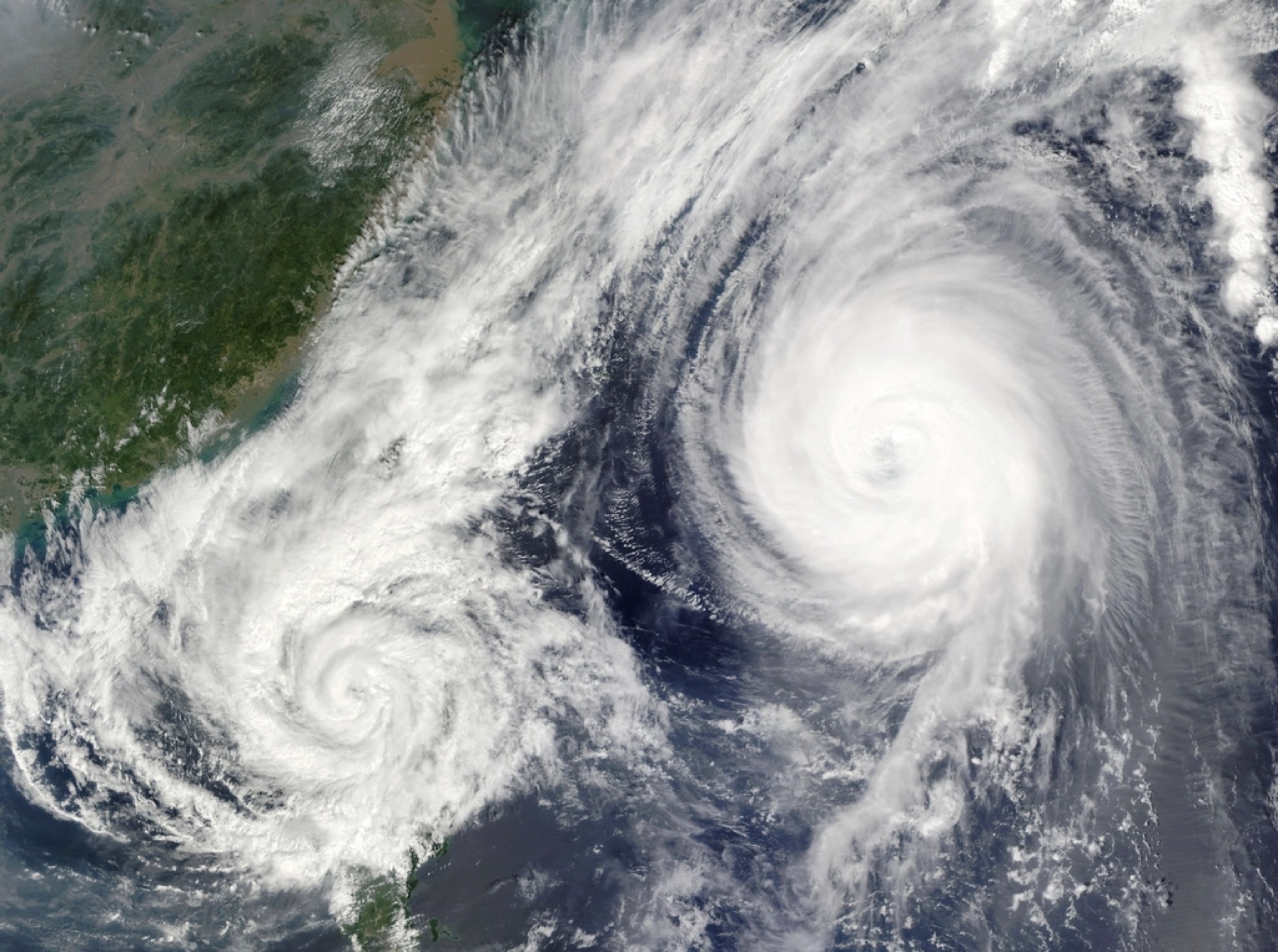
Released on 3 September 2026, WeatherNext 3 learns from live geostationary satellite feeds and station observations rather than physics-model output, forecasts at 5 km resolution hourly, and leads Brightband's Operational WeatherBench. Its new wind and solar variables target grid operators and renewables developers.
Google Buys Power Before It Builds Data Centres
Fervo Energy's 396 MW geothermal PPA with Google (1 September) and Google's 22-year deal for up to 50% of Fortum's Loviisa nuclear output (9 September) show hyperscalers paying to keep or build clean-firm capacity, with deals now deciding whether existing plants survive past 2030.