A Claude Agent Spotted a CRISPR-Like Array in Phage DNA
Anthropic says roughly 950 agents spent 21 hours and 210 million tokens before one flagged a repeat array beside an odd reverse transcriptase. The system's function is still unknown.
Anthropic said on 23 September 2026 that a swarm of Claude agents searching a database of DNA sequences identified a previously uncharacterised enzyme system in bacteriophages, the viruses that infect bacteria. Roughly 950 agents ran for 21 hours and consumed 210 million tokens before one of them flagged an unusual repeating pattern of DNA next to the gene for an odd-looking reverse transcriptase, the class of enzyme that copies RNA into DNA. The company's scientists named the system array-associated reverse transcriptases, or ART.
The arithmetic of the search is the substance of the claim. According to Anthropic's account, the agents gathered more than 200,000 reverse transcriptases, picked out 3,500 candidate systems and narrowed those to the 20 most compelling, writing a human-readable report on each with the evidence for a proposed function. Anthropic says an expert scientist doing that genome mining by hand would need weeks to months. Human involvement, the company says, was limited to the initial prompt and the laboratory work.
Why a repeat array matters
ART has three parts: the reverse transcriptase, a partner gene of unknown function beside it, and a long array of evenly spaced DNA repeats. It is the third that drew the CRISPR comparison. In CRISPR-Cas systems, a similar array holds a bank of different RNA sequences, and it is that bank which makes the systems programmable. Anthropic reports that its first experiments show the ART array is also expressed as a set of distinct short RNAs, which it describes as suggesting something analogous may be at play. Anthropic also notes that the underlying reverse transcriptase, found in a jumbo phage, had been identified in earlier studies, and that Claude appears to be the first to notice the array and the accessory protein sitting alongside it.
This is an exciting example of how AI agents can contribute to biological discovery. The identification of RNA-repeat arrays associated with reverse transcriptases is genuinely intriguing and merits further investigation. I hope this work encourages more scientists to explore how AI can support their research.
What the lab is and is not
The laboratory is in the Bay Area and Anthropic says it looks like a typical molecular biology facility. It operates only at biosafety levels 1 and 2 and handles no pathogens that can infect humans. All bench work is performed by human scientists; the company says it has experimented with automating lab work but found the approach poorly suited to the improvised workflows of this kind of research. Reuters reported on 18 September, from unnamed sources, that Anthropic's eventual aim is a setup in which Claude directs robotic lab units. Eric Kauderer-Abrams, the company's head of life sciences, told Reuters that the final test in biology is still real lab work, and that Anthropic is not competing with companies that bring drugs to market.
One detail gives a sense of how the work actually proceeded. Anthropic quotes the agent's own words on encountering the sequence: "[The DNA next to the RT] is spectacular: I can see by eye a tandem repeat array … that's a CRISPR-like … repeat array?!" The agent then counted the repeats, measured their spacing, compared the layout against known reverse transcriptase systems and searched the literature for prior reports before filing for human review.
The pattern is familiar from the physics work Parallax Nexus covered earlier this month, in which algorithms proposed hardware layouts rather than tuning parameters. What is new here is the position in the pipeline: the model chose what was worth looking at, and the humans ran the bench. The honest judgment is that this is a strong result about search and triage, and not yet a result about biology. Nobody knows what ART does. The primary function is under investigation, the technical report is a preprint that has not been peer reviewed, and Zhang's endorsement says the finding merits further investigation, which is a long way from saying it works.
Anthropic acknowledges the timing. It says it published early both to demonstrate Claude's capabilities and to show the research community what it is working on, an unusual thing to admit in a discovery announcement and a reminder that the company is preparing to go public.
What happens next?
- Anthropic says experiments to determine how ART works are under way; the function remains unestablished.
- The technical report, Autonomous AI agents discover reverse transcriptases with tandem repeat arrays, awaits peer review and independent replication.
- Anthropic has invited outside scientists to bring research questions to the group, extending the approach beyond genomics.
- Watch whether any independent laboratory characterises ART activity, which is the test of whether the CRISPR comparison holds.
Related topics
Sources & references
- 01Claude discovers a novel enzyme system with CRISPR-like repeats — AnthropiccompanyDated 23 September 2026. Source of the agent, token and candidate counts, the Zhang quotation, the agent's verbatim remark and the biosafety details.
- 02Autonomous AI agents discover reverse transcriptases with tandem repeat arrays — Anthropic (Yoon et al., 2026)researchCompanion technical report released with the announcement. Not peer reviewed.
- 03Anthropic's secretive AI-powered wet lab breaks cover and makes first discovery — The ScientistnewsConfirms the six named human scientists, the prior characterisation of the reverse transcriptase and the peer-review status of the report.
- 04Anthropic quietly sets up biology lab as it ramps AI drug program — ReutersnewsPublished 18 September 2026. Source of the Kauderer-Abrams remarks and, via unnamed sources, the robotic-lab ambition.
- 05Anthropic's biolab made a discovery it's comparing to Crispr — The VergenewsPublished 23 September 2026. Notes that practical applications remain unclear.
More from Science
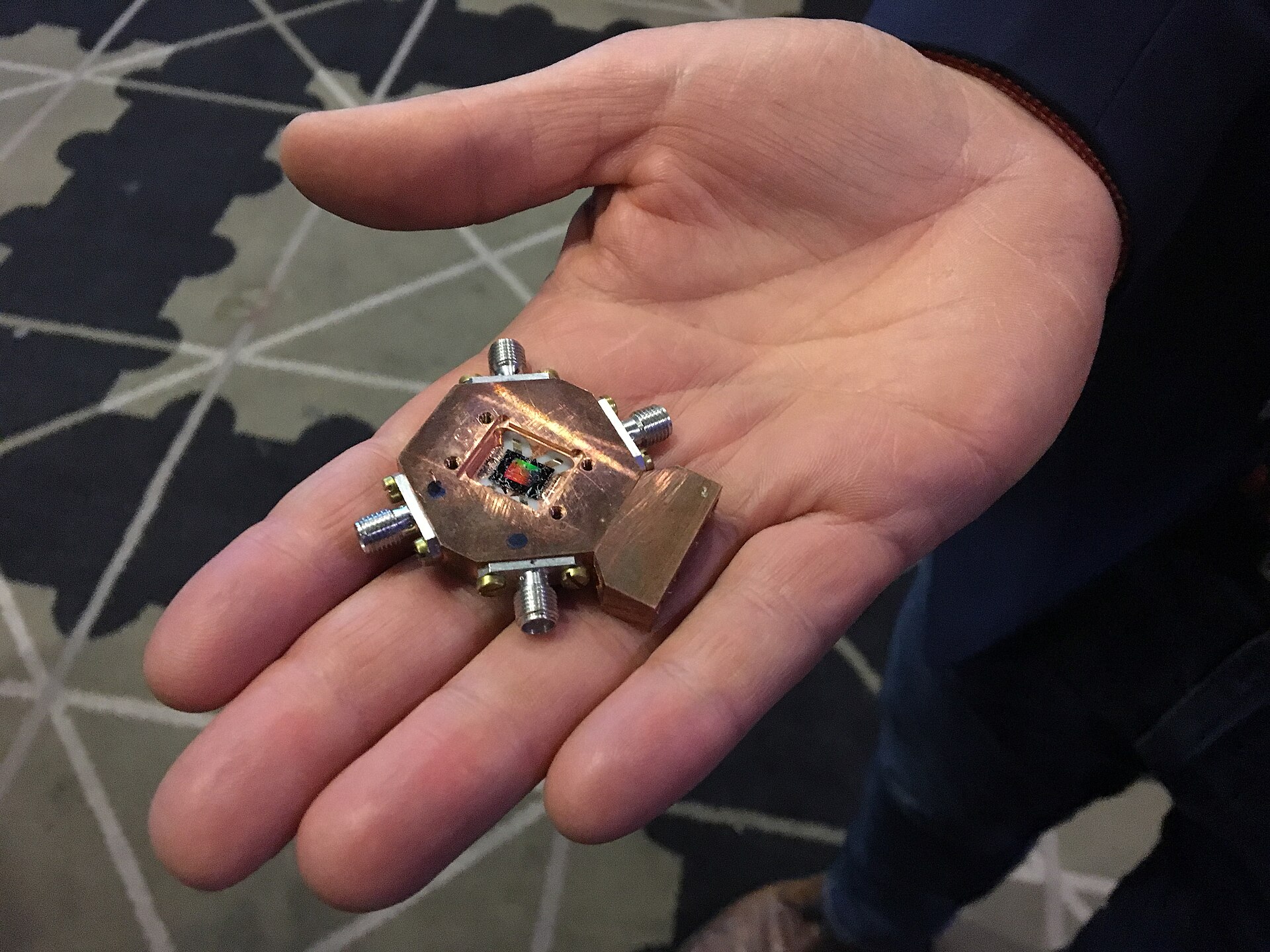
One CPU Kept Up With 408 Logical Qubits in IonQ's Tests
IonQ announced on 22 September 2026 that a real-time quantum error correction decoder handling up to 408 logical qubits ran on one standard CPU. The arXiv preprint behind the claim reports decoding overhead below 0.3% at one error rate and below 12% at another.
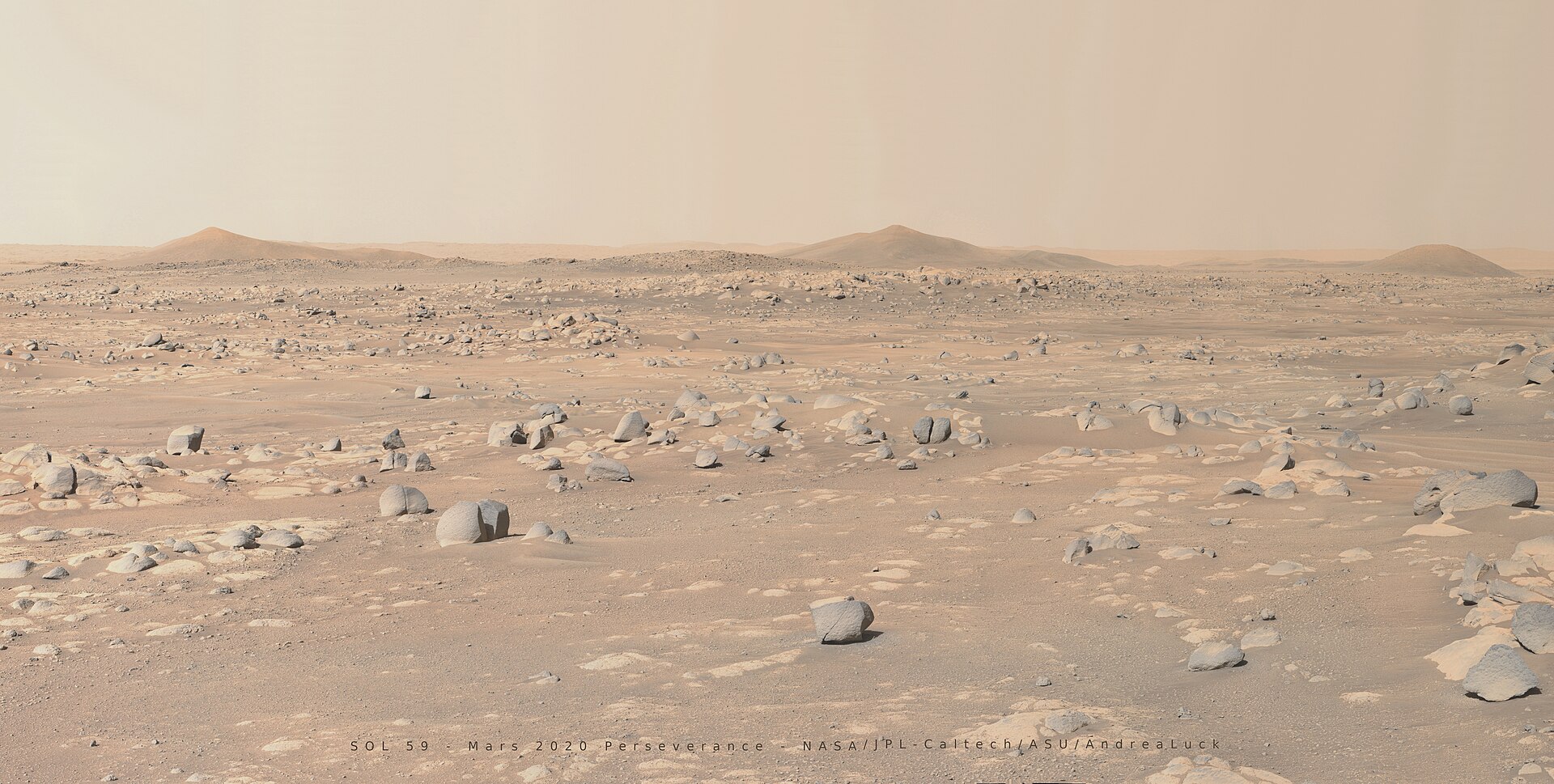
Perseverance Finds Three Water Episodes in Jezero's Margin Rocks
NASA said on 21 September 2026 that Perseverance data from Jezero Crater's Margin Unit, published in Communications Earth & Environment, show igneous olivine rock that interacted with water on at least three occasions: carbon dioxide-rich groundwater, probably the crater lake, and a later heated event that left fluorite.
Maynooth’s DNA Computer Reaches Its Answer by Cooling Down
Maynooth University researchers published a Scaffolded DNA Computer in Nature on 16 September 2026. It ran ten programs, including addition of 25-bit numbers, by making the correct output the energetically favoured state. Small sums take seconds; the largest took up to 14 hours.
Quantum Computing: A Reality Check
What has actually been demonstrated in quantum computing, what has not, and why post-quantum migration is the practical priority regardless of hardware timelines.