AI Is Now Designing the Experiments, Not Just Analysing Them
A Nature review from Tübingen, Max Planck, TU Wien, Caltech and others documents AI proposing entire experimental layouts, from quantum optics to gravitational-wave detectors, that beat human designs.
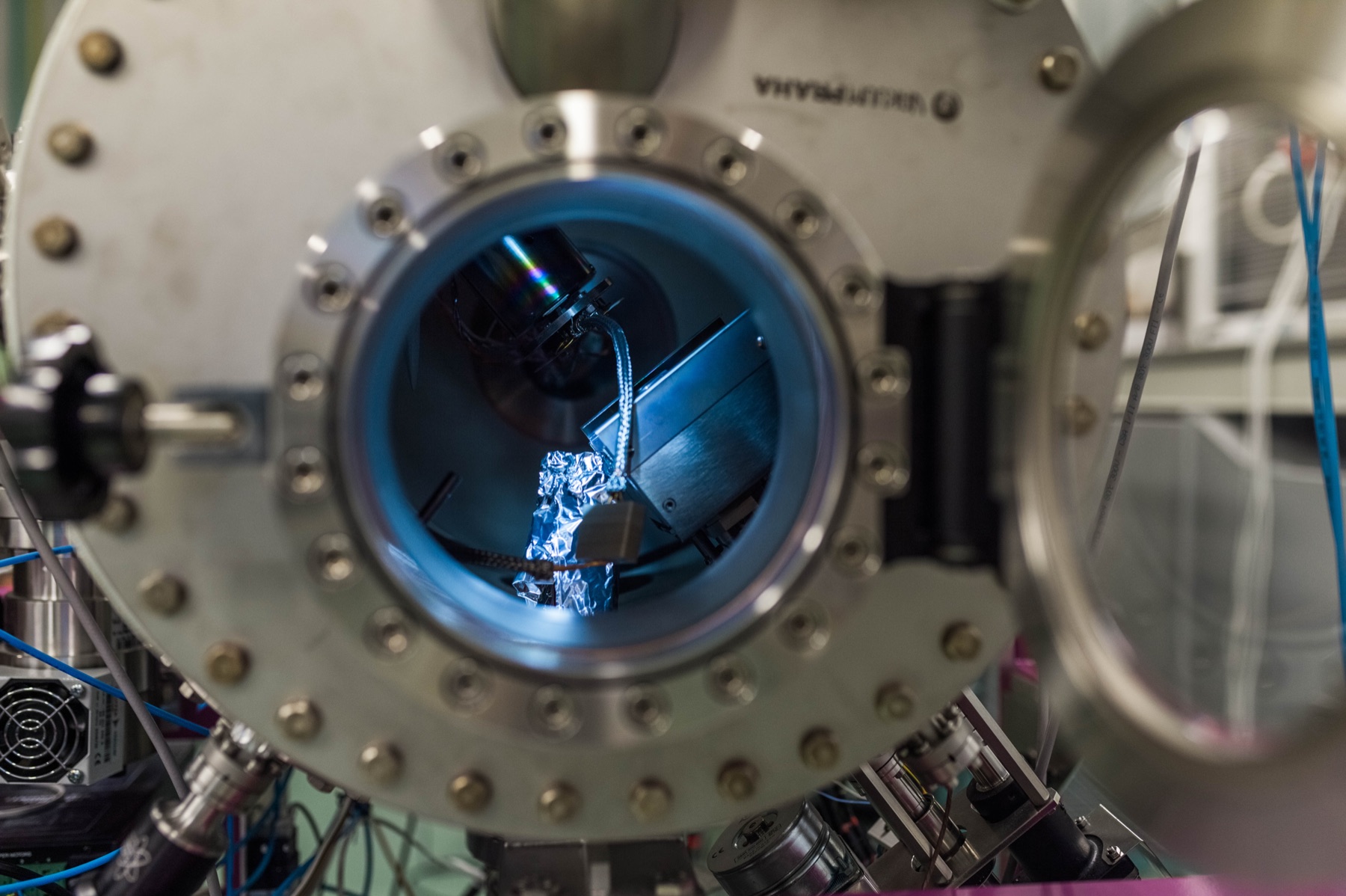
For a decade the story of AI in physics has been about data: models that sift collider events or classify galaxies faster than people can. A review published in Nature on 2 September 2026 describes a different job. In fields from quantum optics to gravitational-wave astronomy, algorithms are now proposing the layouts of experiments themselves, and in several documented cases the proposals outperform designs that humans produced.
What the review says
'Designing physics experiments with artificial intelligence', by Jan Klimesch, Sören Arlt, Carlos Ruiz-Gonzalez, Mario Krenn and co-authors, appears in Nature volume 657 under the journal's reviews heading. Nature's own summary line describes the approach: AI in experimental design 'is explored on the basis of searching for optima over a vast space of hardware configurations and proposing entirely new experimental layouts, rather than tuning a handful of parameters'. The author list spans the University of Tübingen, the Max Planck Institute for the Science of Light, TU Wien, Caltech, the University of Vienna, SLAC, Tel Aviv University and the Technical University of Munich.
Krenn, professor of machine learning in science at Tübingen, framed the problem in TU Wien's release: 'It is an enormous optimisation problem. There is an overwhelmingly large space of possible experiments that can be built from the available components. The computer has to search this space systematically in order to find the best possible solution.' TU Wien states that the method has already been used to improve fusion reactors, develop ideas for particle detectors and generate proposals for making gravitational-wave detector systems more sensitive. Tübingen's AI Center adds electron microscopy to the list and recounts an early quantum experiment in which an algorithm found a setup 'that the researchers themselves had been unable to devise'.
The evidence behind it
The review is a consolidation, not a single new result, and the strongest evidence in its lineage is already peer reviewed. In April 2025 Krenn, Yehonathan Drori and Rana Adhikari, working with Caltech's LIGO laboratory, published 'Digital Discovery of Interferometric Gravitational Wave Detectors' in Physical Review X. Their algorithm, named Urania, found many new detector designs that outperform even the most advanced planned detectors, potentially increasing sensitivity by more than tenfold, as the paper states. Fifty of the designs were published as a detector zoo for other physicists to examine. The lineage goes back further, to Krenn's doctoral work in Anton Zeilinger's Vienna group automating quantum-optics experiment design; Markus Arndt, a co-author on the new review, referenced it in the University of Vienna's release.
TU Wien's Philipp Haslinger, who runs its electron-microscopy centre, described the practical effect: AI 'can identify microscope designs that a human would probably never have come up with, but which can produce significantly better images or offer entirely new measurement possibilities'. The caveat the institutions repeat is that defining the goal and the constraints remains a human task. The algorithm searches; the physicist decides what counts as better.
What changes
- Instrument design becomes a search problem with a budget, which favours groups with compute and good simulators over groups with only intuition.
- Large facilities, from detectors to fusion machines, can be re-optimised against existing hardware rather than redesigned from scratch.
- The interpretability question moves into physics: a design that works but that nobody understands is a new kind of result.
- Simulator quality becomes the limiting factor, since the search is only as good as the model of the apparatus.
Who benefits, who is at risk
Beneficiaries: experimental groups in quantum optics, gravitational-wave detection, electron microscopy and fusion that adopt design search early; simulation and optimisation software vendors. At risk: nobody in the near term, though the role of the experimental physicist shifts from drawing the apparatus to specifying its objective.
What happens next?
- Gravitational-wave collaborations evaluate algorithm-found designs for next-generation detectors.
- Fusion and particle-physics facilities publish results from AI-proposed configurations.
- Funding agencies begin asking for design-search methods in instrument proposals.
- Interpretability of machine-designed apparatus becomes a research field of its own.
Related topics
Sources & references
- 01Designing physics experiments with artificial intelligence — Nature 657, 47–58 (2026)research
- 02Artificial intelligence proposes new physics experiments — TU Wienprimary
- 03AI could help scientists design experiments humans would never think of — Tübingen AI Centerprimary
- 04Artificial intelligence suggests new physics experiments — University of Vienna, Faculty of Physicsprimary
- 05Digital Discovery of Interferometric Gravitational Wave Detectors — Physical Review X 15, 021012research