MMX Is on Its Way to Phobos With a 10-Gram Target
JAXA launched the Martian Moons eXploration spacecraft on an H3 rocket at 04:41:03 JST on 20 October 2026 and confirmed the next day that its solar paddles, attitude control and antenna release had all worked.
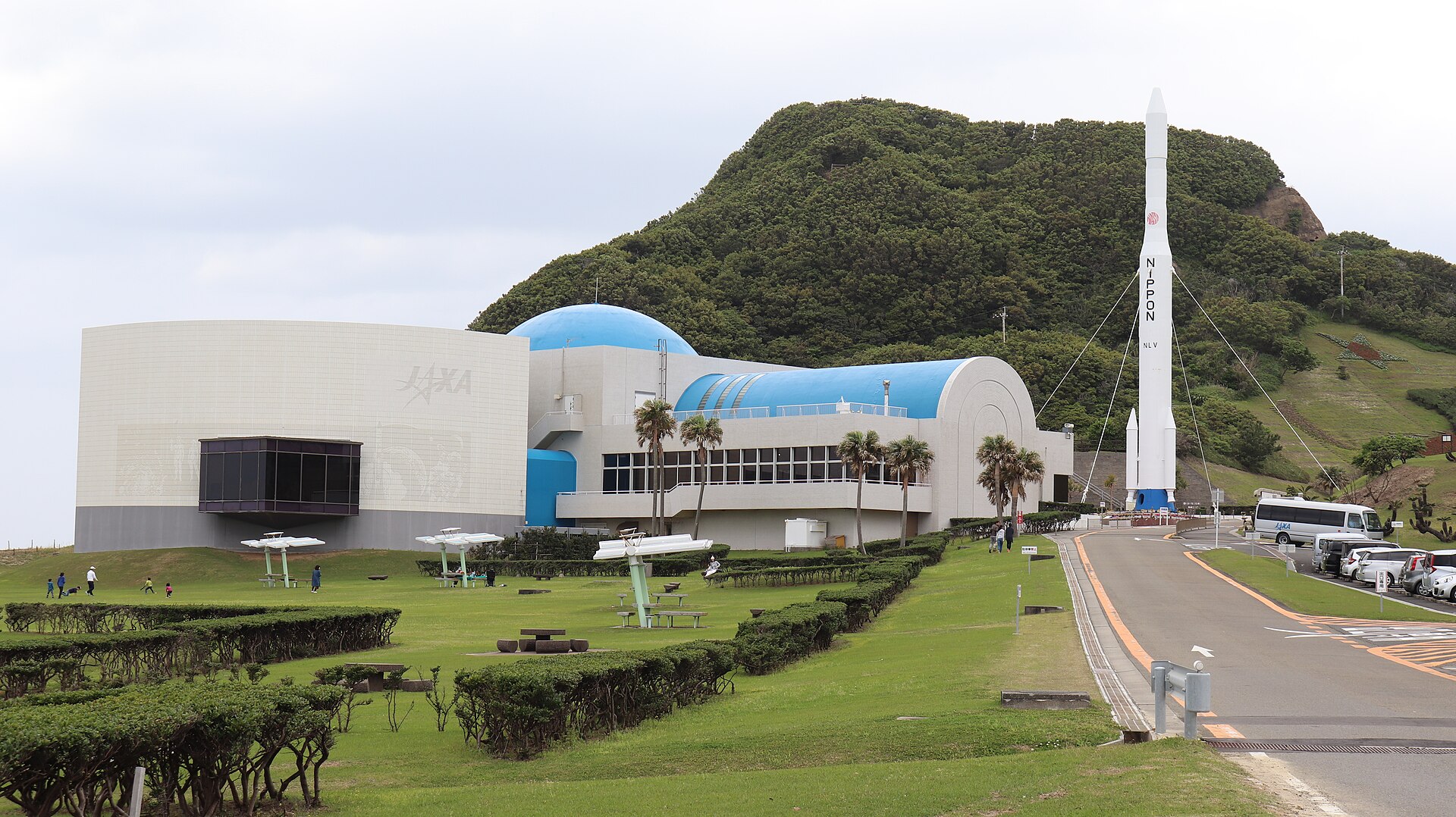
Japan's first attempt to bring material home from the Martian system left the ground at 04:41:03 Japan Standard Time on 20 October 2026. JAXA launched the Martian Moons eXploration spacecraft, MMX, aboard H3 launch vehicle flight No.10 from the Tanegashima Space Center, and said the rocket flew as planned and that separation was confirmed approximately 71 minutes and 13 seconds after liftoff, with the spacecraft injected into the predetermined orbit.
The following day JAXA reported that the initial critical operations phase was complete and the spacecraft healthy. That phase covers the sequence that decides whether a mission exists at all: deployment of the solar array paddles, establishment of three-axis attitude control, and release of the hold-down mechanism on the medium-gain antenna. Initial functional checks of the onboard equipment come next, before the outbound cruise toward Mars.
Why Phobos rather than Mars
Mars itself has too much gravity for a sample return within reach of current Japanese hardware. Phobos, discovered by Asaph Hall in 1877, is up to 27 kilometres across and orbits about 6,000 kilometres above the Martian surface, with surface gravity around one seventeen-hundredth of Earth's, which puts it within the envelope JAXA built for Hayabusa and Hayabusa2. It is also a useful collector: the MMX team estimates Phobos holds more than 100 times the Mars-derived material that the outer moon Deimos does, so grains scooped from it should carry pieces of Mars as a bonus.
The scientific prize is older than Mars exploration. Two hypotheses compete for the origin of the Martian moons: a giant impact that threw debris into orbit, or the capture of asteroids from the outer Solar System. Remote observation has not settled the argument since Hall's discovery. Laboratory analysis of returned grains should.
The Martian moon Phobos remains an unexplored frontier for humankind.
The plan runs about a year of cruise, arrival in the Martian system in 2027, then a quasi-satellite orbit from which MMX surveys the global shape of Phobos and dozens of candidate landing sites. Two landings follow. The rover goes down first to measure what the surface regolith is actually like, which reduces the risk to the second landing, when the spacecraft itself touches down and collects more than 10 grams. A Deimos flyby comes in the final phase, departure from Mars in 2030, and separation of the sample capsule for atmospheric entry and recovery in Australia in 2031.
Who built what is on board
Thirteen mission instruments fly. MEGANE, a gamma-ray and neutron spectrometer that measures which elements make up the Phobos surface, was developed in partnership with NASA by a team including David J. Lawrence of the Johns Hopkins University Applied Physics Laboratory. MIRS, a near-infrared spectrometer working between 0.9 and 3.6 microns to map hydrated minerals and organic matter, was built at the LESIA laboratory of the Paris Observatory with four other French laboratories and the French space agency CNES. The rover, IDEFIX, was developed jointly by CNES and the German Aerospace Center.
What is not yet demonstrated is everything that matters. Round-trip communication with the spacecraft will lag by up to 44 minutes, so the landings cannot be flown from the ground in real time and have to be autonomous. Sampling in gravity that weak has been done on asteroids, never on a moon of another planet, and the sampler has to work twice in sequence with a rover already on the surface. The launch was the least uncertain part of the next five years.
MMX flies as three stacked modules. The propulsion module is discarded at Mars orbit insertion and the exploration module is left behind before the journey home. Only the return module comes back.
What happens next?
- JAXA will run initial functional checks on the spacecraft's onboard equipment before the outbound cruise phase begins.
- MMX is scheduled to reach the Martian system about a year after launch and enter a quasi-satellite orbit around Phobos.
- Landing sites will be chosen from survey data gathered in that orbit by the cameras, laser altimeter and spectrometers.
- The sample capsule is scheduled to separate for atmospheric entry and recovery in Australia in 2031.
Related topics
Sources & references
- 01Launch result of the Martian Moons eXploration (MMX) spacecraft aboard H3 Launch Vehicle flight No.10 — JAXAprimaryPublished 20 October 2026 JST, with launch time and separation timing.
- 02Completion of the Initial Critical Operations Phase of the Martian Moons eXploration (MMX) Spacecraft — JAXAprimaryPublished 21 October 2026 JST.
- 03MMX mission overview and mission profile — JAXA, Martian Moons eXploration projectprimarySample mass, mission schedule, spacecraft modules and communication lag.
- 04MMX science: Phobos, scientific objectives and the 13 mission instruments — JAXA, Martian Moons eXploration projectprimaryPhobos parameters, instrument descriptions and partner agencies.
- 05Martian Moons eXploration (MMX) — Institute of Space and Astronautical Science, JAXAprimaryLaunch date, launch site and launch vehicle record.
More from Science
OpenAI Says Its Models Disproved the Exponential Time Hypothesis
OpenAI announced on 26 October 2026 that its internal models produced a disproof of the Exponential Time Hypothesis, a proof of the local smoothing conjecture in every dimension, and an existence proof for quantum chromodynamics. It is handing verification to unpaid external groups rather than to journals.
mRNA Melanoma Vaccine Cuts Recurrence Risk by 42%
Merck and Moderna reported a hazard ratio of 0.58 for recurrence-free survival in more than 1,100 patients with completely resected stage IIB to IV melanoma, the first phase 3 evidence that a vaccine built from each patient's own tumour mutations adds to a checkpoint inhibitor.
Sheltering From Heat Adds 46 Radon Deaths per 10,000
Researchers at the University of California, Irvine and Italy's National Institute of Health modelled four patterns of behavioural adaptation to heat and found the combined case added 46 lung cancer deaths per 10,000 people in the United States and 42 in a pooled French, German and Italian population, published on 17 October 2026.

Antarctic Ice Cliffs Calve Faster Than Models, Then Stop
A study in Science on 15 October 2026 maps more than 15,000 Antarctic ice cliffs and finds the tall ones collapse faster than models assumed, then restabilise instead of eroding the ice sheet behind them. The authors argue Thwaites Glacier would not retreat immediately even if its shelf failed.