OpenAI Says Its Models Disproved the Exponential Time Hypothesis
OpenAI published three claimed results on 26 October 2026, including a refutation of a conjecture that hundreds of complexity papers assume to be true. None has been peer-reviewed, and the group checking the refutation is led by the two men who proposed the conjecture.
OpenAI said on 26 October 2026 that its internal models had produced a disproof of the Exponential Time Hypothesis, a conjecture about the difficulty of Boolean formula satisfiability that complexity theorists have largely assumed to be true since Russell Impagliazzo and Ramamohan Paturi proposed it with Francis Zane. The company published both the natural-language output and a Lean formalisation of the result to its public GitHub repository.
The other two claims in the same announcement are at least as large. OpenAI says its models proved the local smoothing conjecture, which Sogge proposed in 1991, in every dimension, and that the proof therefore also resolves the Kakeya conjecture and Stein's restriction conjecture in all dimensions. Guth, Wang and Zhang proved local smoothing in two spatial dimensions in 2019; Wang and Zahl proved Kakeya in three dimensions in 2025. The third result is a claimed mathematically rigorous existence proof for interacting quantum field theories containing gauge fields and fermions in four dimensions, including quantum chromodynamics and a unified completion of the Standard Model, and it includes as a subproblem the existence of pure Yang-Mills theory, which is the subject of a Clay Mathematics Institute Millennium Prize problem.
The dates are tight. OpenAI says the natural-language disproof of the hypothesis arrived on 16 October 2026 and was formalised in Lean the following day. The local smoothing output came on 18 October and was formalised on 19 October. The physics work is older: a Yang-Mills existence proof on 9 September, a proof for quantum chromodynamics on 18 September, and a completed Lean formalisation of Yang-Mills existence on 16 October. The two manuscripts released to GitHub carry 25 October dates.
The checking has gone to the people who built the conjecture
OpenAI is not submitting any of this to a journal. It approached outside experts to act as what it calls shepherds and to organise groups that will work out what the results mean. The complexity group is led by Impagliazzo and Paturi of the University of California, San Diego and by Ryan Williams of MIT, who has himself refuted strong versions of the hypothesis. The physics group is led by David Gross, who shared the 2004 Nobel Prize in Physics for work on asymptotic freedom, with Michael Douglas, Arthur Jaffe, Igor Klebanov and Nikita Nekrasov. Participation is voluntary and unpaid, nobody signs a non-disclosure agreement, and OpenAI has agreed to publish all raw data for the complexity result and to fund a conference on what it means for the field.
We do not seek academic credit for the discoveries produced by our internal models.
The three groups chose three different release strategies, which is the most revealing part of the announcement. The mathematics output went out with no group attached to it. The complexity group asked for immediate publication of both the proof and the formalisation. The physics group asked OpenAI to hold back the machine-produced artifacts entirely and to let its own members write the result up first. OpenAI concedes the cost of the arrangement, noting that choosing the initial shepherds necessarily shapes who gets involved first and creates an asymmetry of information.
The company ties the collaborations to the $5m it is contributing to a Simons Foundation programme for evaluating AI-assisted mathematics. The foundation announced that effort on 15 October 2026 as a $15m commitment with OpenAI and Anthropic, as Parallax Nexus reported at the time.
A Lean proof is not an independent verification
Lean checks that a chain of inference runs from stated premises to a stated conclusion. It does not check that the stated conclusion is the conjecture the field cares about, and that gap is where a claimed refutation of a long-standing hypothesis will live or die. None of the three results has been peer-reviewed, no external group has yet published a verdict, and the physics artifacts are not public at all. OpenAI's own framing is unusually restrained: it describes the manuscripts as a form of raw research data rather than as papers.
If the complexity result holds, the consequences are wide and oddly indirect. OpenAI says the hypothesis has been used in hundreds of papers to derive conditional hardness results across graph theory, computational biology, databases and computational geometry, so refuting it reopens all of those questions without by itself producing a faster algorithm for any of them. The company says that finding such algorithms and turning them into practical improvements will require significant further research, which is a quieter claim than the headline.
The honest reading is that this is a governance experiment as much as a scientific one, and that OpenAI has arranged to be judged on how the checking goes rather than on the announcement itself. What is not known is which models produced the proofs, how much compute they consumed, how long the manuscripts run, and whether the Lean statement of the Exponential Time Hypothesis is the formulation complexity theorists actually use. Those four answers will decide whether 26 October 2026 counts as a result or as a press release.
What happens next?
- The group led by Impagliazzo, Paturi and Williams will examine the Lean formalisation and the natural-language manuscript and publish its own conclusions.
- OpenAI has committed to funding a conference on what a refuted Exponential Time Hypothesis would mean for complexity theory.
- The physics group led by David Gross intends to write up the quantum chromodynamics and Yang-Mills results itself before any artifacts are released.
- OpenAI says it will hand over all materials and artifacts relating to the three results to the external collaborations.
Related topics
Sources & references
- 01Working with academic communities to build scientific understanding — OpenAIcompanyPublished 26 October 2026; the source of all three claims, the release strategies and the shepherd groups
- 02The Exponential Time Hypothesis is False — OpenAI, GitHubresearchManuscript dated 25 October 2026; machine-generated natural-language output, not peer-reviewed
- 03Local smoothing for the Euclidean wave equation — OpenAI, GitHubresearchManuscript dated 25 October 2026; machine-generated natural-language output, not peer-reviewed
- 04OpenAI Says Its Models Produced Three Proofs in Math, CS, and Physics — Unite.AInews26 October 2026; independent account of the announcement and the repository commit dates
More from Science
mRNA Melanoma Vaccine Cuts Recurrence Risk by 42%
Merck and Moderna reported a hazard ratio of 0.58 for recurrence-free survival in more than 1,100 patients with completely resected stage IIB to IV melanoma, the first phase 3 evidence that a vaccine built from each patient's own tumour mutations adds to a checkpoint inhibitor.
MMX Is on Its Way to Phobos With a 10-Gram Target
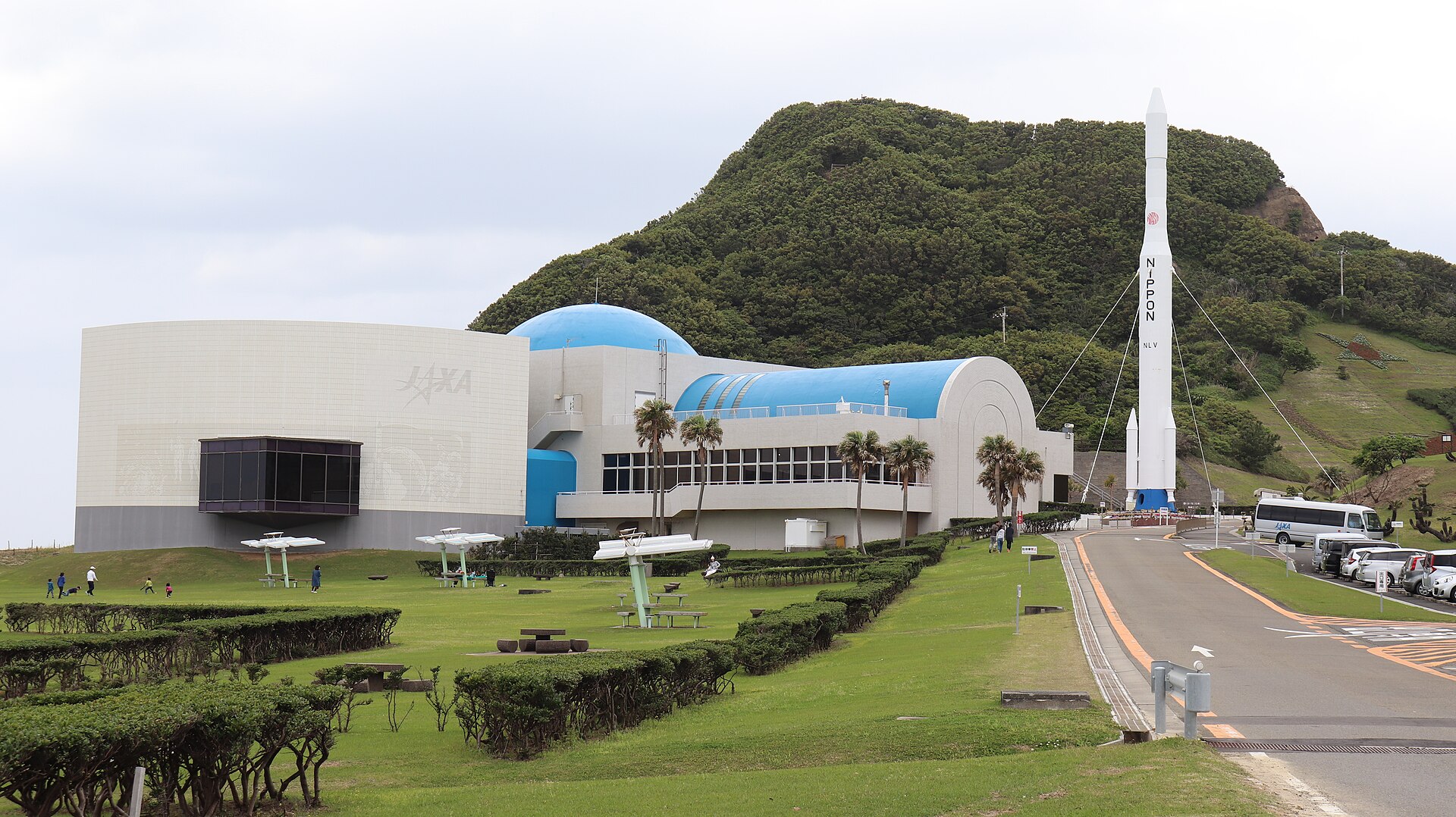
MMX separated from H3 flight No.10 about 71 minutes after liftoff from Tanegashima. If the five-year plan holds, it will collect at least 10 grams of regolith from the Martian moon Phobos and drop a capsule in Australia in 2031.

Sheltering From Heat Adds 46 Radon Deaths per 10,000
Researchers at the University of California, Irvine and Italy's National Institute of Health modelled four patterns of behavioural adaptation to heat and found the combined case added 46 lung cancer deaths per 10,000 people in the United States and 42 in a pooled French, German and Italian population, published on 17 October 2026.
Antarctic Ice Cliffs Calve Faster Than Models, Then Stop
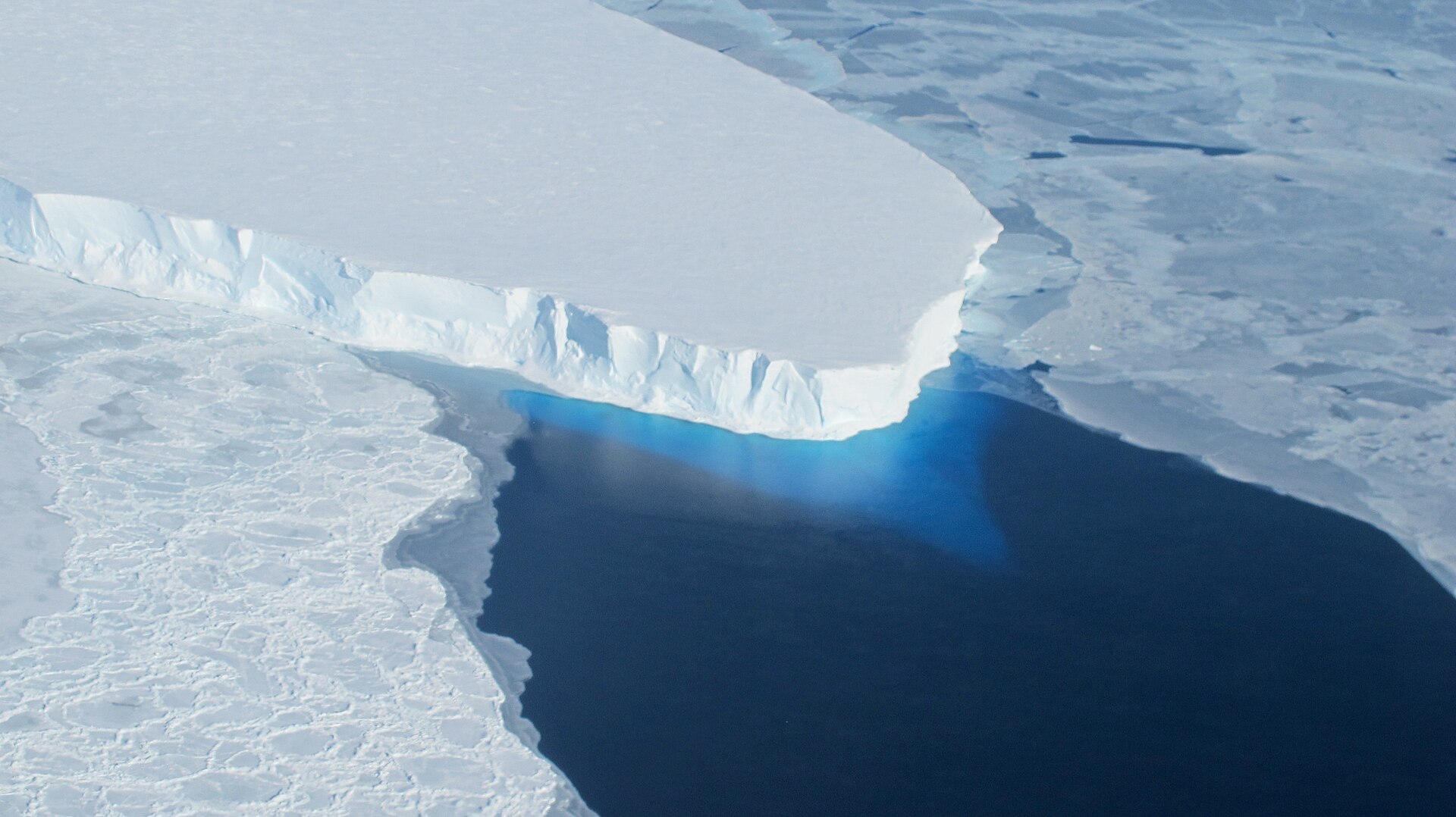
A study in Science on 15 October 2026 maps more than 15,000 Antarctic ice cliffs and finds the tall ones collapse faster than models assumed, then restabilise instead of eroding the ice sheet behind them. The authors argue Thwaites Glacier would not retreat immediately even if its shelf failed.