mRNA Melanoma Vaccine Cuts Recurrence Risk by 42%
Full phase 3 results for intismeran autogene plus Keytruda were presented at ESMO in Madrid on 24 October, two days after partial figures leaked onto social media and the sponsors' shares fell.
Adding the individualised mRNA therapy intismeran autogene to Merck's checkpoint inhibitor Keytruda reduced the risk of recurrence or death by 42 per cent in patients whose melanoma had been surgically removed, according to full phase 3 results presented at the European Society for Medical Oncology congress in Madrid on 24 October 2026. The hazard ratio for recurrence-free survival was 0.58, with a 95 per cent confidence interval of 0.45 to 0.75 and a two-sided p-value below 0.001.
Merck and Moderna, which are developing the therapy jointly, released the detailed data on 22 October, two days before the scheduled presentation, after partial figures were posted on social media and then removed. Reuters reported the same day that the trial, INTerpath-001, enrolled more than 1,100 patients with completely resected stage IIB to IV melanoma, and that the combination also cut the risk of the disease spreading to distant sites by 38 per cent. The analysis covers the first two years after treatment.
A vaccine built per patient, against 34 targets
Intismeran, previously known as V940 and mRNA-4157, is manufactured individually. Each patient's tumour is sequenced, and the therapy codes for 34 proteins found on that person's cancer cells but not on healthy tissue. The messenger RNA for those proteins is encased in a lipid particle, the same delivery method Moderna used for its Covid vaccine. Once cells begin producing the proteins, the immune system treats them as foreign and learns to attack cells carrying them.
Keytruda works by releasing a brake on the immune system; the vaccine aims to point it at a specific target. This is the first phase 3 trial to show the pair working together.
The size of the effect depended on when the clock started. In a pre-specified sensitivity analysis, benefit was larger after the first six months, once the immunisation regimen had been completed, with a piecewise hazard ratio of 0.42 and a confidence interval of 0.30 to 0.58. That is consistent with a therapy that needs time to generate a response, though it is a secondary analysis rather than the trial's primary result.
Why 42 per cent disappointed the market
The clinical reception and the market reception diverged sharply. Analysts had set 40 per cent as the level they were looking for, and the result cleared it, yet shares in both companies fell. The reason is the comparison with the earlier phase 2 trial, which had produced a roughly 49 per cent reduction. Trung Huynh, an analyst at RBC Capital Markets, wrote in a note that the phase 3 results were clinically meaningful and likely to support regulatory approval, but that the primary efficacy result landed at the low end of investor expectations.
David Berman, chief development officer at Moderna, told Time that he was "surprised by the fact that the results replicated the Phase 2 [study] so closely", noting that the phase 3 trial enrolled a much broader population than the earlier one.
The honest reading is that a hazard ratio of 0.58 in 1,100 patients is a more reliable number than the phase 2 figure, and less exciting for exactly that reason. A larger trial in a wider population producing a smaller effect is the ordinary shape of drug development, not a failure.
What two years cannot show
The trial reports recurrence-free and distant metastasis-free survival. It does not yet report overall survival, so there is no published evidence that patients given the combination live longer, only that their cancer returns later. For melanoma that distinction matters less than it does for some cancers, because recurrence after surgery is both common, most often within the first two years, and much harder to treat once the disease has reached the lung, liver or brain. More than half of patients who recur develop at least one distant metastasis. Merck's announcement notes more than 8,500 melanoma deaths in the United States in 2026.
Manufacturing is the other unresolved question. A therapy sequenced and built for one person is not a product that scales the way a pill does, and neither company has published the turnaround time or the cost per patient that a regulatory filing will eventually have to account for.
What happens next?
- Merck and Moderna have said they plan to take the data to the US Food and Drug Administration, and have not published a submission date.
- Overall survival data from INTerpath-001 has not been reported and will determine whether delayed recurrence translates into longer life.
- Trials of the same approach in other tumour types continue, and the melanoma result is the first phase 3 read on whether the platform works at all.
Sources & references
- 01Merck and Moderna Will Present Results From Landmark Phase 3 INTerpath-001 Trial for Intismeran Autogene Plus KEYTRUDA (pembrolizumab) at ESMO 2026 Presidential Symposium — Merckcompany22 October 2026; source of the hazard ratios, confidence intervals and p-value
- 02Merck/Moderna cancer vaccine cuts risk of death or recurrence from melanoma by over 40% — Reutersnews22 October 2026; trial size of more than 1,100 patients and the 38 per cent distant metastasis figure
- 03Detailed data confirm Moderna and Merck cancer vaccine met key endpoints in melanoma trial — STATnewsFiled from Madrid, 22 October 2026
- 04Moderna, Merck's cancer vaccine data a major advancement, doctors say — CNBCnews23 October 2026; source of the RBC Capital Markets note and the data leak account
- 05A Personalized Cancer Vaccine Lowers Melanoma Recurrence by 42% — Timenews22 October 2026; the 34 neoantigen target count and the Berman quote
More from Science
OpenAI Says Its Models Disproved the Exponential Time Hypothesis
OpenAI announced on 26 October 2026 that its internal models produced a disproof of the Exponential Time Hypothesis, a proof of the local smoothing conjecture in every dimension, and an existence proof for quantum chromodynamics. It is handing verification to unpaid external groups rather than to journals.
MMX Is on Its Way to Phobos With a 10-Gram Target
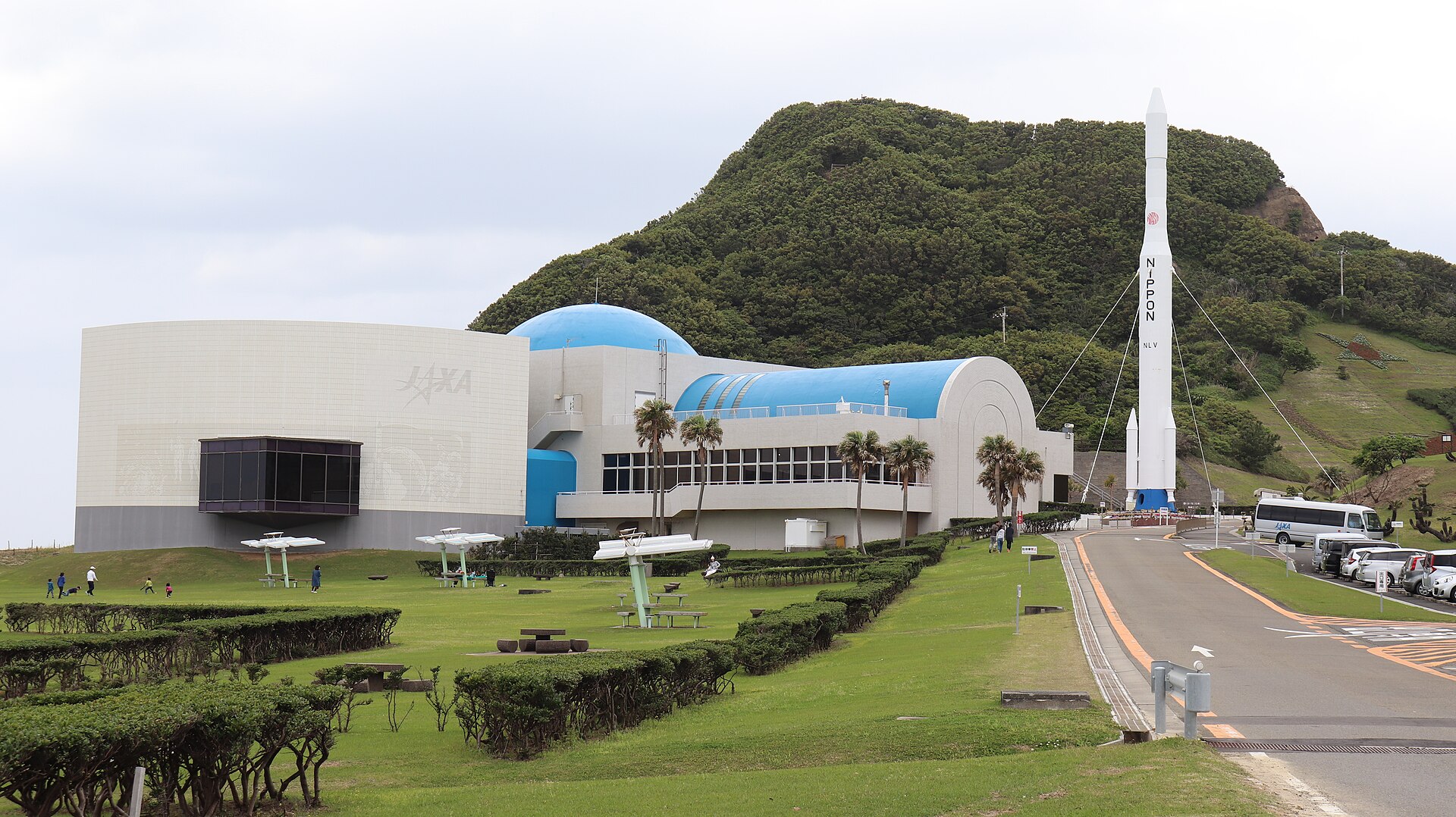
MMX separated from H3 flight No.10 about 71 minutes after liftoff from Tanegashima. If the five-year plan holds, it will collect at least 10 grams of regolith from the Martian moon Phobos and drop a capsule in Australia in 2031.

Antarctic Ice Cliffs Calve Faster Than Models, Then Stop
A study in Science on 15 October 2026 maps more than 15,000 Antarctic ice cliffs and finds the tall ones collapse faster than models assumed, then restabilise instead of eroding the ice sheet behind them. The authors argue Thwaites Glacier would not retreat immediately even if its shelf failed.
Nearly 5,000 Resets Steered 100 Qubits Out of Chaos
Writing in Nature Physics on 12 October 2026, the group reports nearly 5,000 two-qubit operations alongside nearly 5,000 mid-circuit measurements and resets on a chain of up to 100 qubits. The transition from chaos to control sharpened as the system grew, matching a theory that began with a bet at a birthday party.