Nearly 5,000 Resets Steered 100 Qubits Out of Chaos
A Rutgers and IBM team measured and reset qubits mid-calculation on a 156-qubit Heron processor, and found a sharp tipping point where control beats scrambling. It is a prerequisite for error correction rather than error correction itself.

Researchers running an IBM quantum processor measured and reset individual qubits nearly 5,000 times during a single computation, pulling a chain of up to 100 qubits out of chaotic behaviour and into a state they had chosen in advance. The experiment, published in Nature Physics on 12 October 2026, is among the largest demonstrations of real-time quantum feedback control reported so far, according to the authors.
The team, led from Rutgers University and IBM, used a 156-qubit IBM Quantum Heron processor and selected a connected chain of as many as 100 qubits. The circuit alternated two competing operations. One was a scrambler that mixed information among neighbouring qubits, in the way that repeated shuffling destroys the order of a deck of cards. The other read an individual qubit mid-circuit and reset it when needed. Across the run the group performed nearly 5,000 operations linking pairs of qubits and nearly 5,000 checks and resets.
A sharp line between chaos and control
Which operation ran more often decided the outcome. When scrambling happened more than half the time, the system stayed chaotic. When measurement and reset happened more often, the researchers could drive the qubits towards the orderly state they wanted. At roughly 50-50, a small shift in the balance flipped the whole system at once, a phase transition of the kind that separates water from ice. The paper reports that the transition became more sharply defined as the system grew, which is what the group's theory predicted.
Size is the point. Classical simulation of this kind of circuit runs out at roughly two dozen qubits, so the 100-qubit chain took the theory into territory where it could not otherwise be checked. The hardware had to keep working while being interrupted.
The challenge was not simply to measure a qubit, but to do it repeatedly while the rest of the processor continued to operate. This experiment shows that present-day hardware can coordinate quantum operations, measurements and resets thousands of times across a large system.
What the result is not
It is not error correction. The group demonstrated the machinery error correction needs, repeated mid-circuit measurement with action taken on the result, but the state they steered to was one they picked rather than a protected logical qubit, and the paper does not claim a longer-lived one. No fault-tolerant quantum computer exists. Jedediah Pixley of Rutgers, a senior author and director of its Center for Materials Theory, set out the size of the remaining gap.
To build a fault-tolerant quantum computer, we have to make these checks and corrections not just once or twice, but a huge number of times during a calculation.
The honest reading is that this is a physics finding in engineering clothes, and the two halves will be useful to different people. Hardware engineers will take the operational claim: that measurement and reset can be coordinated thousands of times across 100 qubits while the processor keeps computing. Physicists get the confirmation that a chaos-to-control transition known in ordinary physics survives in quantum systems, which Justin Wilson of Louisiana State University, a co-author, said was not obvious beforehand.
The theory behind it started with a bet at a birthday party in Highland Park, New Jersey, in 2021, where Pixley's longtime collaborator Sriram Ganeshan wagered that a puzzling quantum effect had a counterpart in ordinary physics. Pixley lost and paid in two scoops of blueberry ice cream. Beyond Rutgers and IBM, the author list runs to the City College of New York, the CUNY Graduate Center, Iowa State University, Ames National Laboratory, Pennsylvania State University and Louisiana State University.
What happens next?
- The group's theory now needs testing on processors larger than 156 qubits to see whether the transition stays sharp.
- IBM has not said whether real-time feedback at this scale will feature in its next processor generation.
- Other groups will try to reproduce the chaos-to-control transition on hardware that is not superconducting.
- Turning repeated measurement and reset into a demonstrated gain in logical qubit lifetime remains the unfinished step.
Related topics
Sources & references
- 01Order from chaos with adaptive circuits on quantum hardware — Nature PhysicsresearchBibek Pokharel et al., published 12 October 2026, DOI 10.1038/s41567-026-03470-6
- 02One step closer to quantum computers that can correct their own mistakes — Rutgers University via Phys.orgnewsUniversity release of 12 October 2026, source of the quoted remarks from Takita, Pixley, Wilson and Pan
- 03IBM debuts next-gen quantum processor and quantum software — Tech XplorenewsBackground on the IBM Quantum Heron processor family, December 2023
More from Science
OpenAI Says Its Models Disproved the Exponential Time Hypothesis
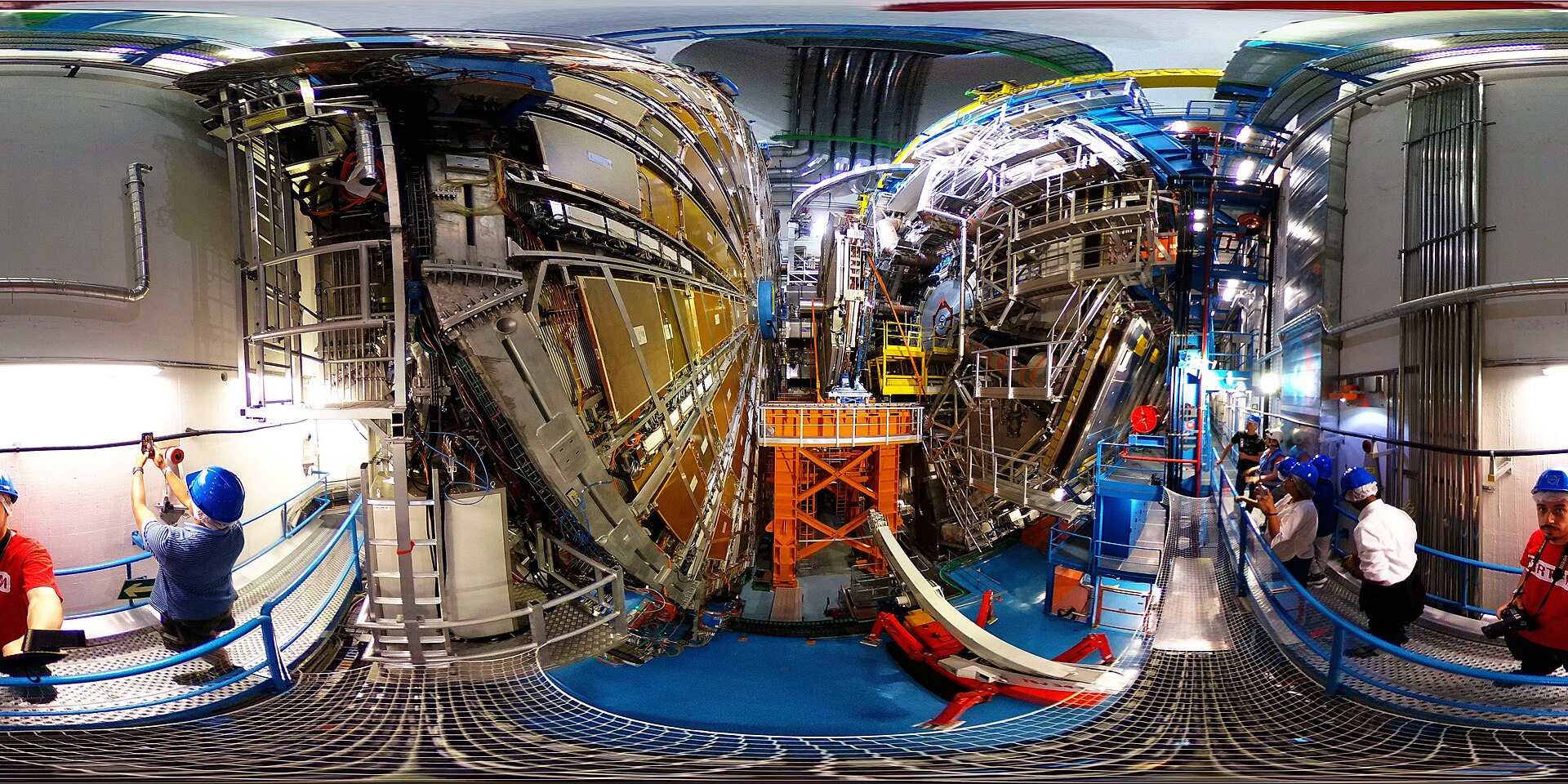
OpenAI announced on 26 October 2026 that its internal models produced a disproof of the Exponential Time Hypothesis, a proof of the local smoothing conjecture in every dimension, and an existence proof for quantum chromodynamics. It is handing verification to unpaid external groups rather than to journals.
mRNA Melanoma Vaccine Cuts Recurrence Risk by 42%
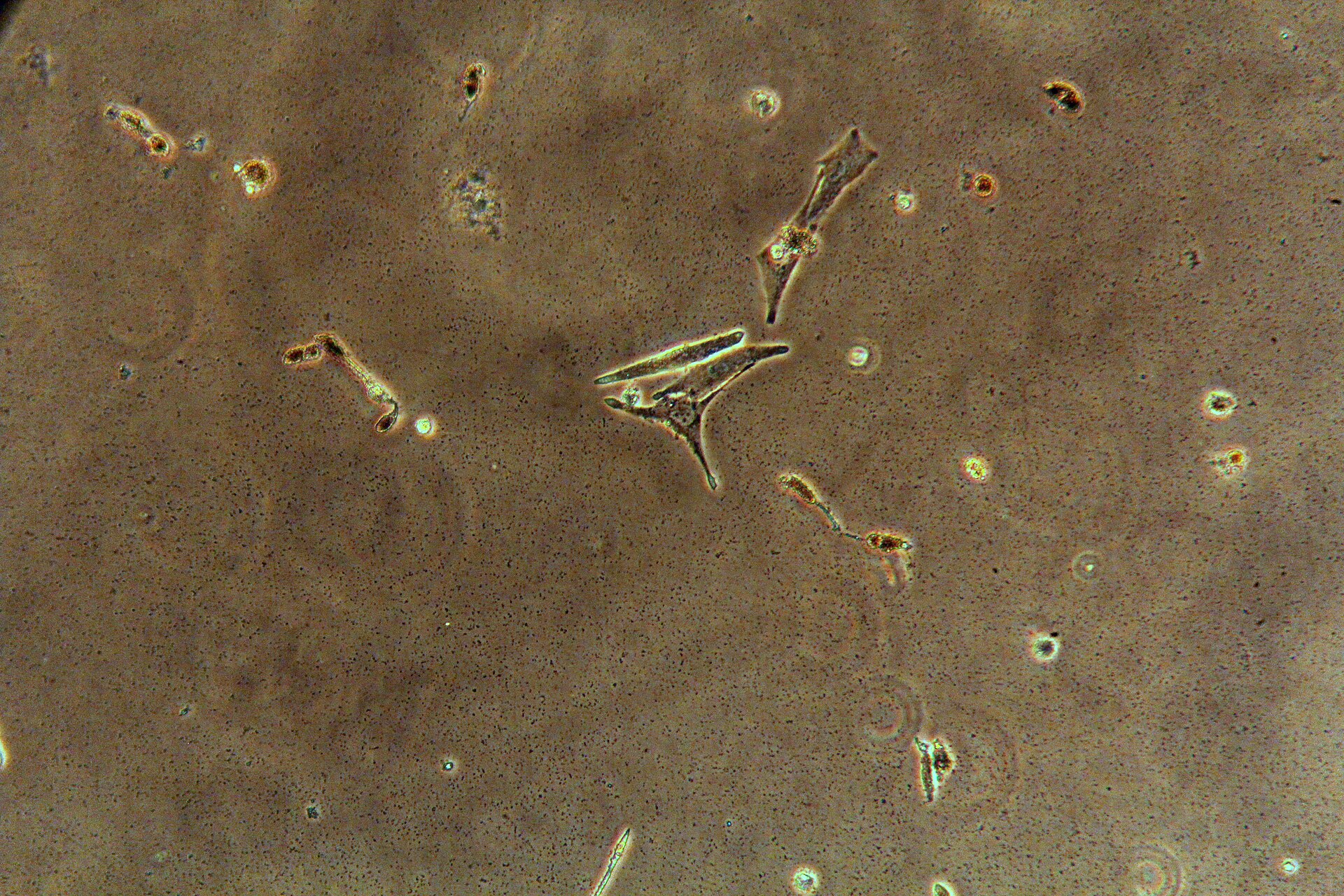
Merck and Moderna reported a hazard ratio of 0.58 for recurrence-free survival in more than 1,100 patients with completely resected stage IIB to IV melanoma, the first phase 3 evidence that a vaccine built from each patient's own tumour mutations adds to a checkpoint inhibitor.

MMX Is on Its Way to Phobos With a 10-Gram Target
MMX separated from H3 flight No.10 about 71 minutes after liftoff from Tanegashima. If the five-year plan holds, it will collect at least 10 grams of regolith from the Martian moon Phobos and drop a capsule in Australia in 2031.
Sheltering From Heat Adds 46 Radon Deaths per 10,000
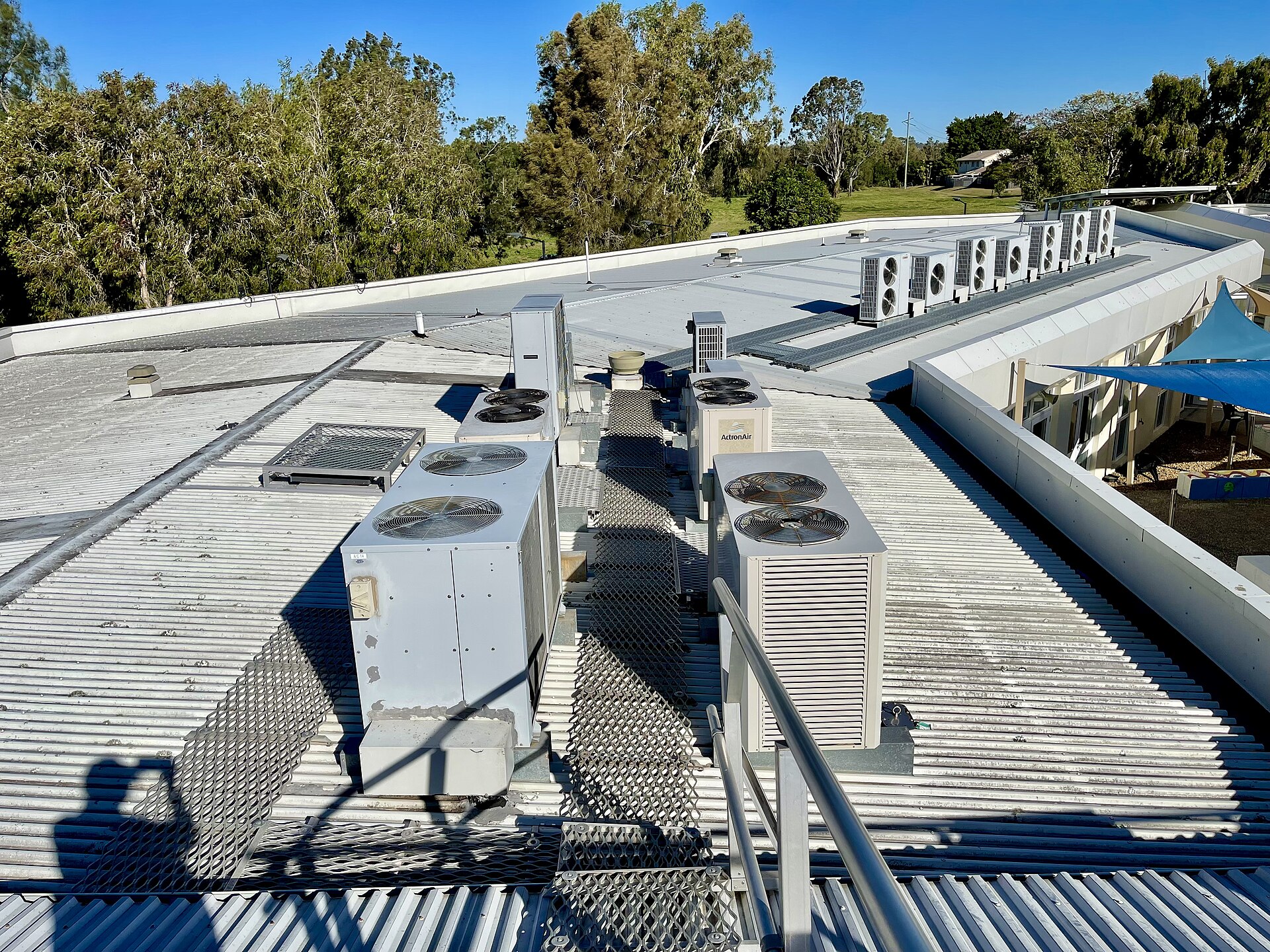
Researchers at the University of California, Irvine and Italy's National Institute of Health modelled four patterns of behavioural adaptation to heat and found the combined case added 46 lung cancer deaths per 10,000 people in the United States and 42 in a pooled French, German and Italian population, published on 17 October 2026.