Oak Ridge Cut a Quantum Circuit From 2 Million Gates to 91,000
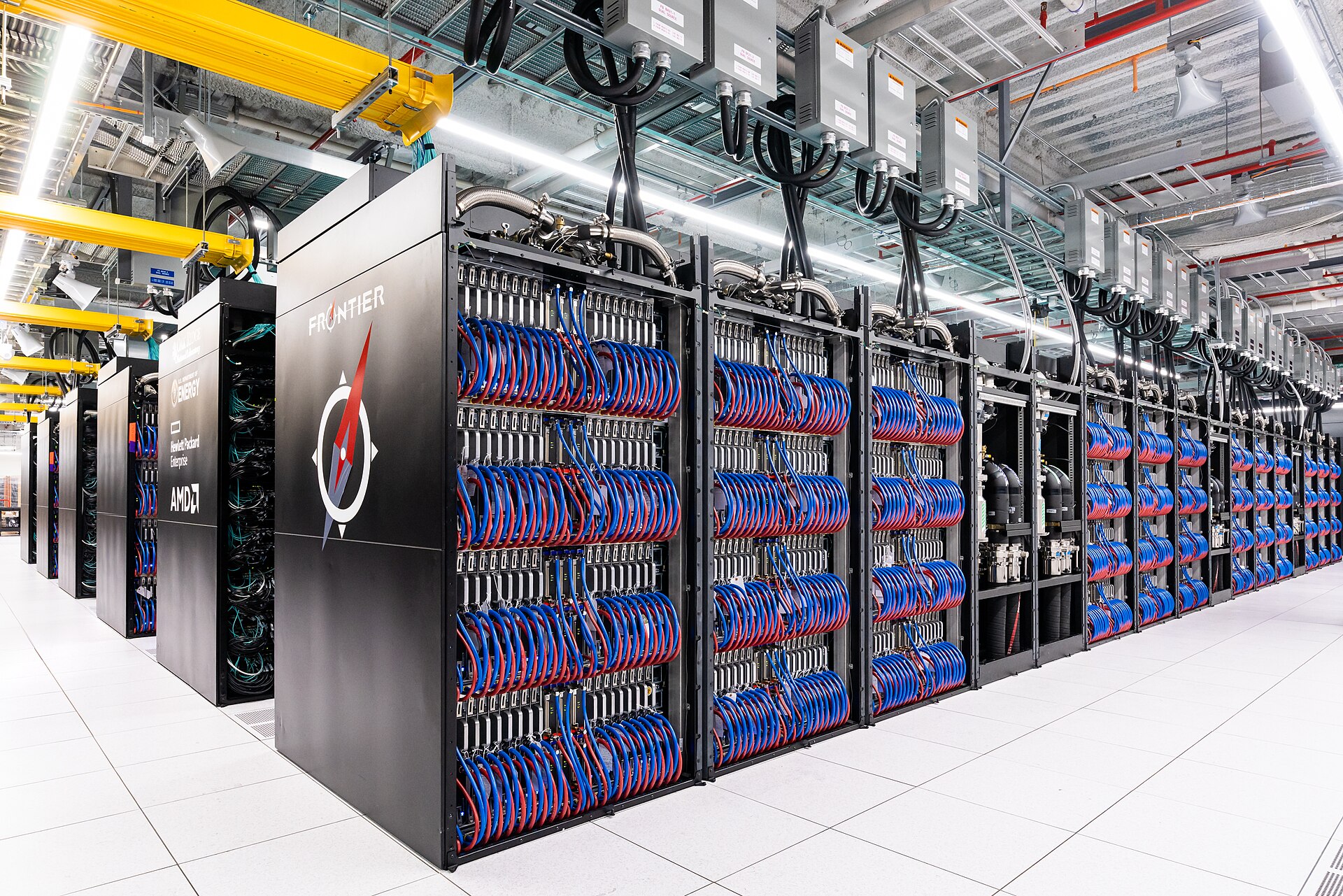
The LuGo algorithm pushes more of the work onto classical machines before anything is encoded as a quantum circuit. Validating it took one of Frontier's nearly 10,000 nodes.
Researchers at Oak Ridge National Laboratory cut the number of quantum logic gates required for a fluid-dynamics calculation from 2 million to 91,000, a reduction of more than 95 per cent, according to an account the laboratory's leadership computing facility published on 29 September 2026. The work behind it appeared in Future Generation Computer Systems, volume 178, article 108270, with a print issue dated May 2026.
The target was the Hele-Shaw flow equation, which describes liquid or gas moving between two flat plates held very close together. An earlier ORNL study had attacked the same equation using the Harrow-Hassidim-Lloyd algorithm, a quantum method for solving sets of linear equations. That attempt ran into a wall that had nothing to do with the physics.
The conversion step was eating the budget
Turning the equation into a form a quantum processor can handle is done by quantum phase estimation. ORNL says that step alone consumed more than 90 per cent of the computational effort, and that the cost sat in the number of logic gates the circuit needed.
We needed 2 million gates to perform the necessary calculations. These gates are like switches between functions or like intersections on a busy highway. Just as more intersections mean more traffic, more gates mean more potential for error, or noise.
Gate count matters on current machines because qubits decay. The present generation, described in the literature as noisy intermediate-scale quantum hardware, runs small problems on limited qubit counts, and every additional operation is another chance for the state to degrade before the answer arrives.
Keeping the work classical for longer
LuGo delays the handover. It performs more of the initial calculation, the preprocessing, on conventional hardware before any data is encoded into a quantum circuit. The team validated the design by simulating the resulting circuits classically, using allocations on Frontier, which the facility describes as a 1.4-exaflop machine, and on Perlmutter, the 113-petaflop system at the National Energy Research Scientific Computing Center. The reduced circuit needed just one of Frontier's nearly 10,000 nodes.
Through the Department of Energy's Quantum Computing User Program, the team also obtained time on Quantinuum's H-1, which uses trapped ions, and on IBM's Marrakesh and Sherbrooke and IQM's Garnet and Sirius, which use superconducting qubits. Running the same circuit family across both encoding technologies is a sensible hedge at a point when the industry has not settled on either an error-correction protocol or a qubit medium.
That ambiguity is the backdrop to several recent results Parallax Nexus has covered, including IonQ's report on 22 September 2026 that a decoder for up to 408 logical qubits ran on a single standard CPU, and DARPA's on-site evaluation of Microsoft's topological qubits in Maryland. The common thread is classical computing quietly absorbing work that was assumed to need quantum hardware.
What the 95 per cent does not prove
The honest reading is that this is a compiler-level win rather than a quantum advantage result. ORNL reports a circuit-size reduction confirmed by classically simulating the circuits, not a quantum machine beating a classical fluid solver, and the account gives no runtime or accuracy comparison against conventional computational fluid dynamics. Gate count is also only one error channel: coherence time, gate fidelity and readout error set their own ceilings, and cutting gates by 95 per cent does not touch those.
What is not known is how the saving scales. The published result covers one equation on one geometry, and the lab's stated ambitions for the method, microfluidics, groundwater flow and porous media flow, all involve larger systems than the one tested. ORNL says the algorithm received a 2026 R&D 100 Award from R&D World, one of 22 the laboratory reports for the year, which is recognition of the engineering rather than independent replication of the figure.
Kalyan Gottiparthi, an ORNL computational scientist and co-author, framed the point this way in the laboratory's account: "As quantum computing grows as a field and as we move toward a fault-tolerant generation of quantum computers, we expect we'll find more of these kinds of approaches that allow us to leverage established classical solutions in new ways adapted for a quantum advantage." The claim being made is about the path, not the arrival.
What happens next?
- ORNL says it wants to test what acceleration LuGo enables for applications beyond the Hele-Shaw equation, including microfluidics, groundwater flow and porous media flow.
- Independent groups will need to reproduce the gate-count reduction on other linear systems before it can be treated as a general property of the method rather than a result for one geometry.
- Running the reduced circuits end to end on quantum hardware, rather than validating them by classical simulation, is the test that would show whether the saving survives real noise.
Related topics
Sources & references
- 01Breaking a quantum computing bottleneck — Oak Ridge Leadership Computing FacilityprimaryPublished 29 September 2026; source of the 2 million to 91,000 gate figures and of all quotes used
- 02LuGo: An enhanced quantum phase estimation implementation — Future Generation Computer SystemsresearchVolume 178, article 108270; print issue dated May 2026; authors Chao Lu, Muralikrishnan Gopalakrishnan Meena and Kalyana C. Gottiparthi per the Crossref record
- 03OLCF Study Advances Quantum Fluid Dynamics with Help from Frontier — HPCwirenewsDated 30 September 2026; carries the Oak Ridge announcement
- 04ORNL Quantum Algorithm Tackles Bottleneck In Fluid Dynamics Modeling — Quantum ZeitgeistnewsTrade coverage confirming the gate-count reduction and the R&D 100 Award
More from Science
A Frontier Physics Calculation Now Costs About $1,000
A calculation that nobody in the scattering amplitudes field had finished was completed by a model running largely unsupervised, for roughly one to two thousand dollars. The physicist who set the challenge says the lesson is not that machines are superhuman but that the limit was lower than experts believed.
A Claude Agent Spotted a CRISPR-Like Array in Phage DNA
Anthropic disclosed on 23 September 2026 that Claude agents identified a previously uncharacterised enzyme system in bacteriophages, which its scientists named array-associated reverse transcriptases, in the first result from a molecular biology lab it formed in spring 2026.
Perseverance Finds Three Water Episodes in Jezero's Margin Rocks
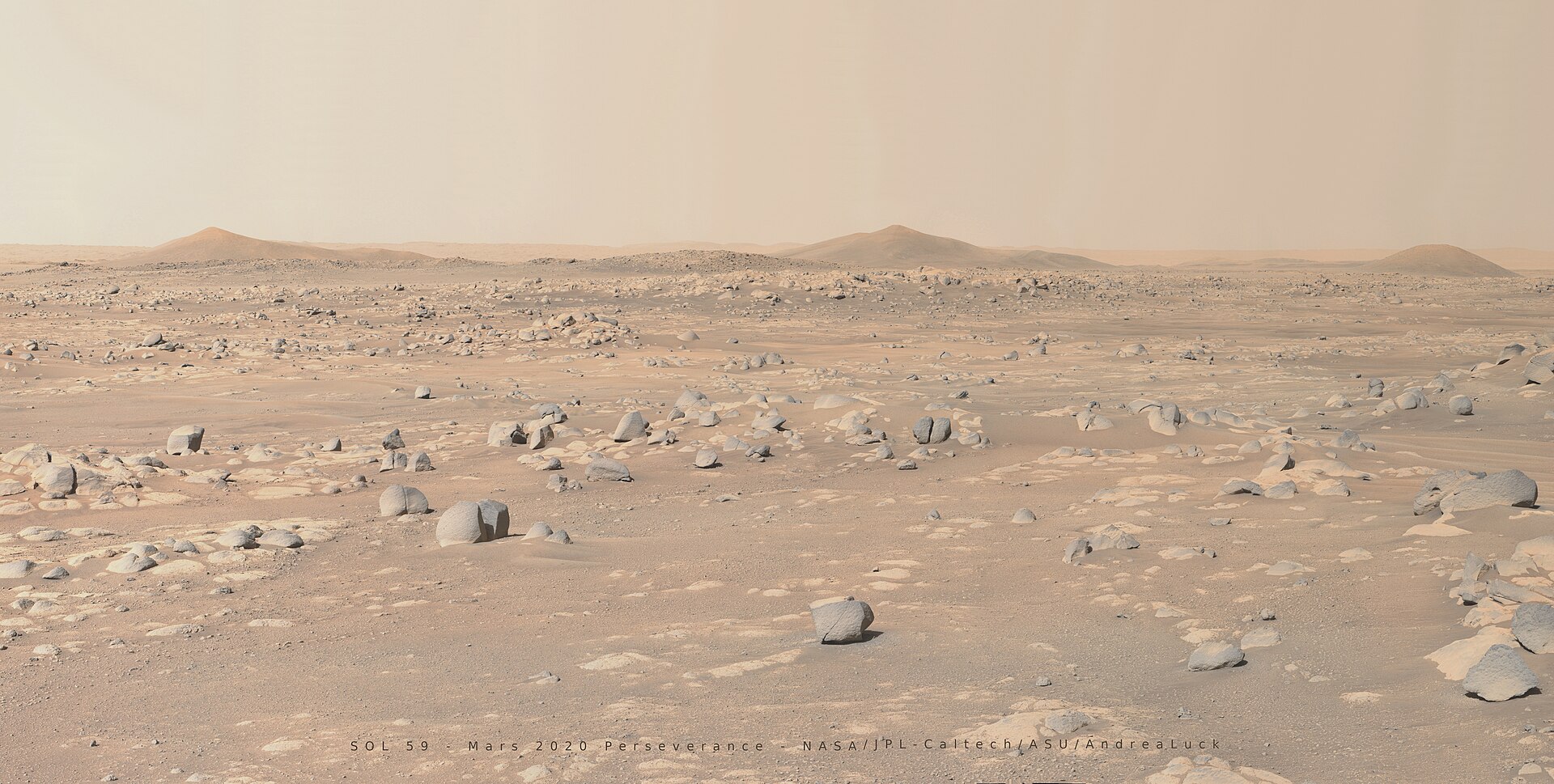
NASA said on 21 September 2026 that Perseverance data from Jezero Crater's Margin Unit, published in Communications Earth & Environment, show igneous olivine rock that interacted with water on at least three occasions: carbon dioxide-rich groundwater, probably the crater lake, and a later heated event that left fluorite.
Maynooth’s DNA Computer Reaches Its Answer by Cooling Down
Maynooth University researchers published a Scaffolded DNA Computer in Nature on 16 September 2026. It ran ten programs, including addition of 25-bit numbers, by making the correct output the energetically favoured state. Small sums take seconds; the largest took up to 14 hours.