A Frontier Physics Calculation Now Costs About $1,000
Anthropic says Claude computed the nine-loop six-particle amplitude in planar N=4 super Yang-Mills after a single prompt and repeated instructions to keep going. Lance Dixon of SLAC checked it, and a Beijing group reached most of the same answer within two weeks.
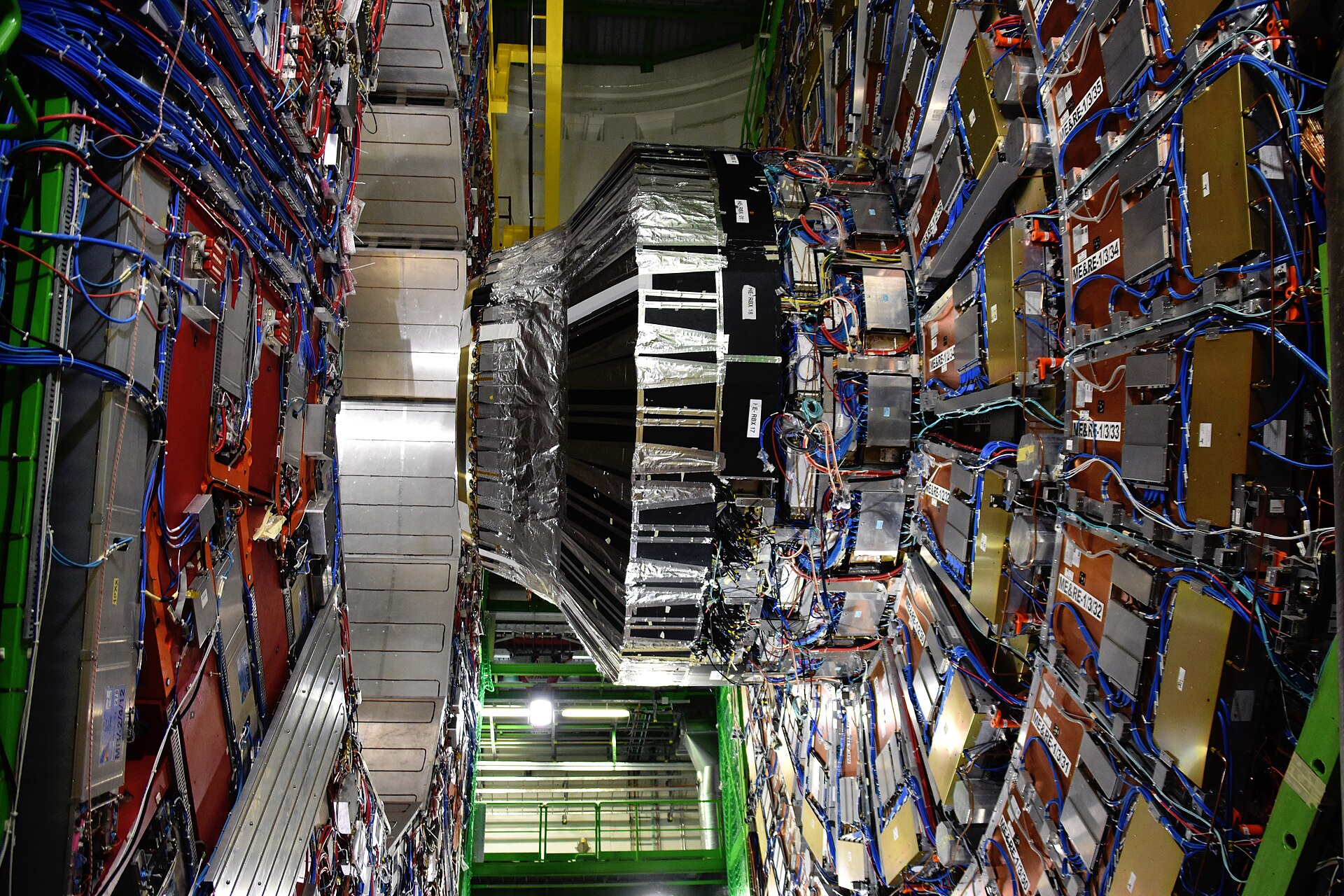
Anthropic said on 25 September 2026 that Claude had computed the nine-loop six-particle amplitude in planar N=4 super Yang-Mills theory, a calculation nobody in the field had finished, for roughly one to two thousand dollars of model usage. Lance Dixon, professor of particle physics and astrophysics at SLAC National Accelerator Laboratory and Stanford University, validated the result. He had held the previous mark at eight loops, in a paper submitted to arXiv with Yu-Ting Liu on 16 August 2023.
The account comes from Matt von Hippel, a former theoretical physicist who now writes about the field at 4gravitons.com, in a guest post that Anthropic commissioned and paid him for. He had set the target himself in August, asking AI companies to take the computing budget an academic actually has and clear one of the outstanding problems in his old subfield: N=8 supergravity to seven loops, or N=4 super Yang-Mills to nine.
What a loop costs
Scattering amplitudes are the formulas that turn the momenta and energies of subatomic particles into the odds of a given reaction, which is how predictions get compared against results from machines like the Large Hadron Collider. They are computed to a cut-off called a number of loops, a measure of how complicated the interactions are allowed to get, and every extra loop is harder than the one before it. Most amplitudes have only been taken to two loops, a few to three, and the most precise prediction in particle physics used five, according to von Hippel's account.
N=4 super Yang-Mills is not a description of the real world. It is a toy model, deliberately unrealistic, in which each particle has four supersymmetric partners, and amplitudeologists use it because the surplus of particles cancels enough terms to make the arithmetic tractable. That is where the nine-loop target sat.
Two Anthropic physicists, Liam Fitzpatrick and Siddharth Mishra-Sharma, contacted von Hippel at the end of August. They ran Fable 5.1 inside Claude Science, a paid platform that wraps the model in structured rules and prompts, and opened with one line: "The problem is to compute the Six-particle (hexagon) amplitude in planar N=4 SYM at nine loops." After that they mostly told it to continue, at one point writing that they were going to sleep and wanted updates every four to six hours. Claude did the calculation twice, by the original bootstrap method and by an indirect form-factor route. The bootstrap run used about $100 of the budget, which von Hippel puts at 96 CPUs running for a week.
Dixon's failed-souffle test
Dixon wrote that the moment landed for him on 1 September, when Fitzpatrick and Mishra-Sharma asked him to validate the nine-loop result. What impressed him was not the size of the computation but its fragility, and the fact that Claude had to write all the undocumented scaffolding itself.
if you make any mistake at all in the computational recipe, it all crashes down like a failed souffle, and you are left to wonder why (and debug)
He spent two weeks checking it, mostly by working back to the nine-loop form factor his own team had been pursuing for a couple of years. His consolation is pointed: Claude solved the problem using the methods he and his collaborators built, and presented the answer in the format they had already set up.
So while I'm validating Claude's result, Claude is validating all of our previous work.
Humans arrived two weeks later
The deflating detail is that the answer was not out of human reach at all. Song He, an amplitudeologist at the Chinese Academy of Sciences in Beijing, told Dixon that his group had also computed the piece of the nine-loop amplitude known as the symbol. They used GPT-6 to help with some of the constraints, but not for the overall framework. Anthropic's post links to that concurrent result, deposited by Song He, Jirong Jing and Xiang Li. As Dixon put it, he had been scooped by a machine and by humans plus a machine inside a fortnight.
The limit was lower than anyone had checked
Von Hippel had hoped to watch a model break a computational barrier in some unfamiliar way. It did not. Claude used established techniques with more compute than anyone had bothered to point at the problem, possibly helped by writing Python with SymPy rather than the Maple or Mathematica that the humans favour.
My biggest takeaway is that there is more low-hanging fruit out there than you'd expect. Even when a goal is simple and well-defined, sometimes it's going to look much less achievable to experts than it actually is.
The honest reading is that this is a story about expert pessimism rather than machine genius. A well-defined calculation with known methods and a cheap verification path is close to the easiest possible test of an autonomous research system, and the field had left it undone because everyone assumed it was too expensive. What Claude removed was not a conceptual obstacle but the willingness to spend a week of cluster time on a maybe.
Several things are still unknown. Neither the Claude result nor Song He's has been through peer review, nobody has said how many internal errors Claude made on the way, and the finding sits in a toy model rather than in the real-world amplitudes that feed collider predictions. Dixon himself draws the line clearly, saying the harder moment arrives when models start producing new physical principles ahead of humans rather than executing recipes people already wrote.
What happens next?
- Dixon's group and Song He's group will publish the nine-loop results with the explanation and analysis that a raw answer does not carry.
- Groups working on real-world collider amplitudes rather than toy models will test whether the same one-shot approach clears their own frontier.
- Neither nine-loop result has been peer reviewed, so verification by the amplitudes community is still running.
Related topics
Sources & references
- 01Yes, Claude can do Nine Loops — AnthropiccompanyGuest post by Matt von Hippel with an addendum by Lance Dixon, published 25 September 2026. Anthropic paid von Hippel for the post and gave Dixon Claude usage credits.
- 02An Eight Loop Amplitude via Antipodal Duality — arXivresearchLance J. Dixon and Yu-Ting Liu, submitted 16 August 2023, SLAC-PUB-17693, the previous eight-loop record.
- 03The full nine-loop result — Siddharth Mishra-SharmaprimaryData release in the format used for earlier loop orders, linked from Anthropic's post.
- 04Concurrent nine-loop result — ZenodoresearchDeposit credited by Anthropic to Song He, Jirong Jing and Xiang Li.
More from Science
A Claude Agent Spotted a CRISPR-Like Array in Phage DNA
Anthropic disclosed on 23 September 2026 that Claude agents identified a previously uncharacterised enzyme system in bacteriophages, which its scientists named array-associated reverse transcriptases, in the first result from a molecular biology lab it formed in spring 2026.
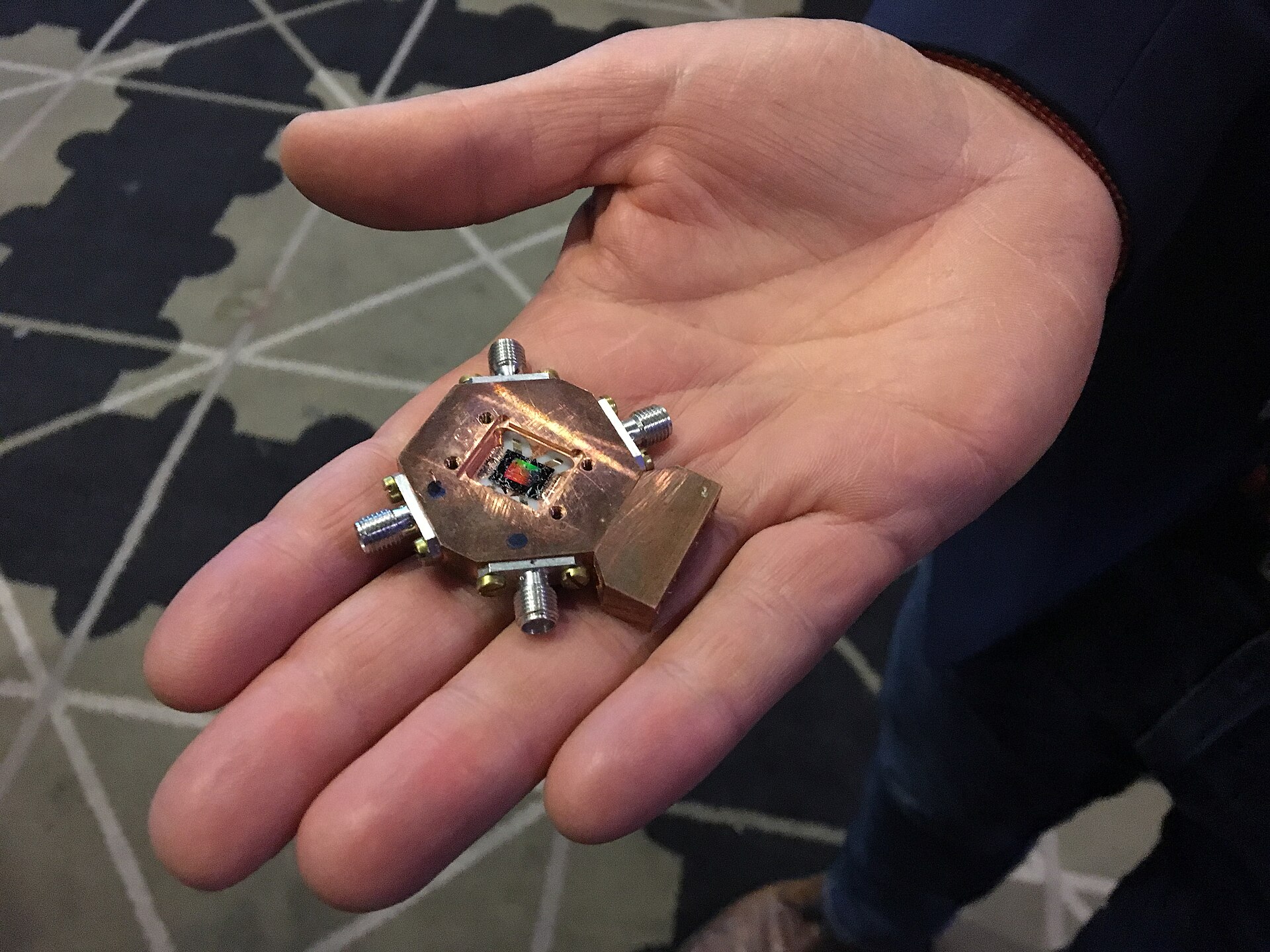
One CPU Kept Up With 408 Logical Qubits in IonQ's Tests
IonQ announced on 22 September 2026 that a real-time quantum error correction decoder handling up to 408 logical qubits ran on one standard CPU. The arXiv preprint behind the claim reports decoding overhead below 0.3% at one error rate and below 12% at another.

Perseverance Finds Three Water Episodes in Jezero's Margin Rocks
NASA said on 21 September 2026 that Perseverance data from Jezero Crater's Margin Unit, published in Communications Earth & Environment, show igneous olivine rock that interacted with water on at least three occasions: carbon dioxide-rich groundwater, probably the crater lake, and a later heated event that left fluorite.

Maynooth’s DNA Computer Reaches Its Answer by Cooling Down
Maynooth University researchers published a Scaffolded DNA Computer in Nature on 16 September 2026. It ran ten programs, including addition of 25-bit numbers, by making the correct output the energetically favoured state. Small sums take seconds; the largest took up to 14 hours.