48 New Alzheimer's Risk Loci Found in 2.8 Million People
The Psychiatric Genomics Consortium pooled data from 30 research groups and 183,620 people with a diagnosis or a family history of one. It also put common-variant heritability at 16 per cent, roughly three times the previous figure.
A genome-wide association study of nearly 2.8 million people, published in Nature on 29 October 2026, identified 127 regions of the genome associated with Alzheimer's disease, 48 of which had not previously been linked to it. Two recent studies had found roughly 80 between them.
The analysis drew on 109,479 people with a diagnosis, 74,141 proxy cases, 2,131,799 controls and 499,708 proxy controls, from diverse ancestries. Proxy cases are people whose family history stands in for a diagnosis they do not have. Of the loci, 118 came from the multi-ancestry analysis and nine more from analyses within single ancestry groups.
| Group | People |
|---|---|
| Diagnosed cases | 109,479 |
| Proxy cases | 74,141 |
| Controls | 2,131,799 |
| Proxy controls | 499,708 |
The heritability figure and the method behind it
The result the authors press hardest is not the count of loci. They estimate that common genetic variants explain about 16 per cent of the variation in Alzheimer's risk between people, against previous estimates of around 5 per cent. Twin studies have long put total heritability at 60 to 80 per cent, and the distance between that and the 5 per cent figure had been read as evidence that this kind of study had little left to find.
The increase comes mainly from a statistical method that better accounts for APOE, the one gene with an unusually large effect on Alzheimer's risk, rather than from biology the study newly uncovered. That is the most important qualification in the paper, and the authors state it rather than bury it.
This shows that large genetic studies still have more to find than some assumed. But it is a population-level figure. It does not mean that 16 percent of any one person's Alzheimer's is caused by their genes, and it does not mean a genetic test can determine whether someone will develop the disease.
Microglia, and now particular neurons
Genes upregulated in microglia and downregulated in neurons in people with the disease, compared with controls, were enriched for Alzheimer's genetic risk. Microglia, the brain's resident immune cells, were already the headline cell type from earlier work, and the study adds genetic evidence for their activation, the recruitment of immune cells and the clearance of material in the brain. The newer element sits on the neuronal side, where the authors identify specific neuron types carrying genetic signal.
We already knew that immune processes play an important role in Alzheimer's disease. What makes this study particularly valuable is that we can now connect new genetic risk factors to more specific biological processes, while also uncovering evidence pointing to the involvement of other brain cell types.
The honest reading is that this is a map rather than a mechanism, and the paper says so: the associations are a starting point, not proof that interfering with any of these genes would help a patient. The distance from a molecular target to a treatment that works is the hard part, and the clearest recent demonstration that it can be covered, a phase 3 melanoma vaccine readout reported by Parallax Nexus in October, rested on a decade of prior work.
What the study cannot say is which of the 127 regions are causal. Current disease-modifying drugs target amyloid-beta aggregates and have shown limited benefit, which is part of the argument for looking elsewhere, but an enriched genetic signal in a cell type is not a drug.
The work was done under the Psychiatric Genomics Consortium, whose Alzheimer's working group is co-led from the University of Oslo and the Vrije Universiteit Amsterdam, and it pooled 30 research groups to reach this scale. Non-European samples remain a minority of the total, and whether they grow fast enough for polygenic scores to work outside the populations that dominate the data is the question the authors themselves put next.
What happens next?
- The summary statistics are being released to other research groups, who can test the 127 loci against their own data.
- Follow-up work has to establish which associations are causal before any becomes a drug target.
- The authors call for more non-European samples, without which polygenic scores will keep underperforming outside European-ancestry populations.
- Whether the 16 per cent heritability estimate holds depends on other groups reproducing the APOE handling that produced it.
Sources & references
- 01Alzheimer's disease genetics converges on microglial and neuronal dysregulation — NatureresearchUffelmann, E. et al., published 29 October 2026, DOI 10.1038/s41586-026-11206-y. Source of all sample sizes, loci counts and the 16 per cent heritability estimate.
- 02Largest genetic study on Alzheimer's identifies 48 new risk loci — Vrije Universiteit AmsterdamprimaryInstitutional announcement from the co-leading university.
- 03Large genetic study uncovers new risk factors for Alzheimer's — News-MedicalnewsCarries the quotes from Ole Andreassen and Alexey Shadrin and the 30-group collaboration detail.
More from Science

OpenAI Says Its Models Disproved the Exponential Time Hypothesis
OpenAI announced on 26 October 2026 that its internal models produced a disproof of the Exponential Time Hypothesis, a proof of the local smoothing conjecture in every dimension, and an existence proof for quantum chromodynamics. It is handing verification to unpaid external groups rather than to journals.

MMX Is on Its Way to Phobos With a 10-Gram Target
MMX separated from H3 flight No.10 about 71 minutes after liftoff from Tanegashima. If the five-year plan holds, it will collect at least 10 grams of regolith from the Martian moon Phobos and drop a capsule in Australia in 2031.

Sheltering From Heat Adds 46 Radon Deaths per 10,000
Researchers at the University of California, Irvine and Italy's National Institute of Health modelled four patterns of behavioural adaptation to heat and found the combined case added 46 lung cancer deaths per 10,000 people in the United States and 42 in a pooled French, German and Italian population, published on 17 October 2026.
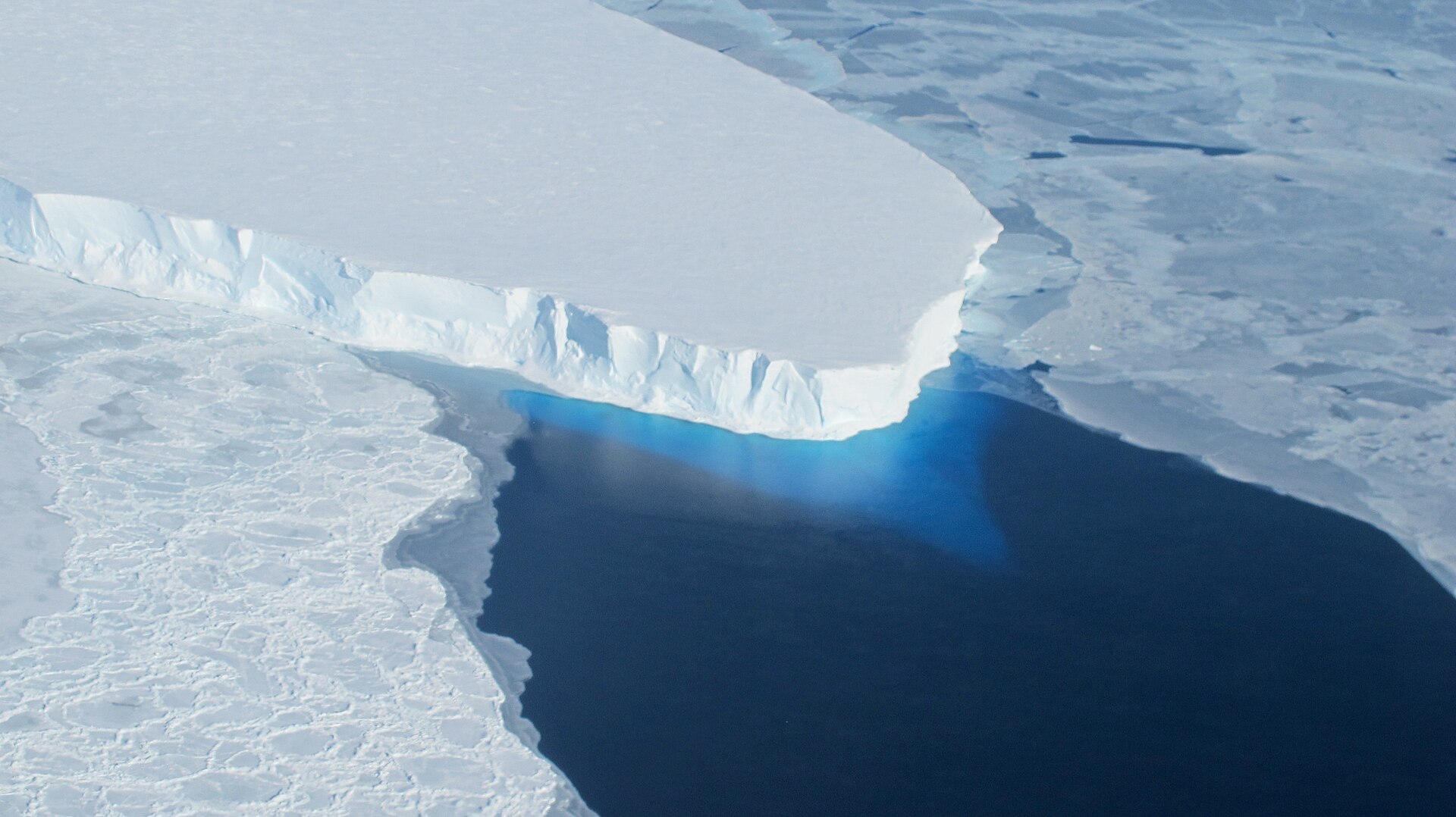
Antarctic Ice Cliffs Calve Faster Than Models, Then Stop
A study in Science on 15 October 2026 maps more than 15,000 Antarctic ice cliffs and finds the tall ones collapse faster than models assumed, then restabilise instead of eroding the ice sheet behind them. The authors argue Thwaites Glacier would not retreat immediately even if its shelf failed.