Francis Halzen Wins the Physics Nobel for Neutrino Astronomy
The Royal Swedish Academy of Sciences named a single laureate for the IceCube observatory, a cubic kilometre of South Pole ice that Halzen proposed turning into a particle detector in 1988.
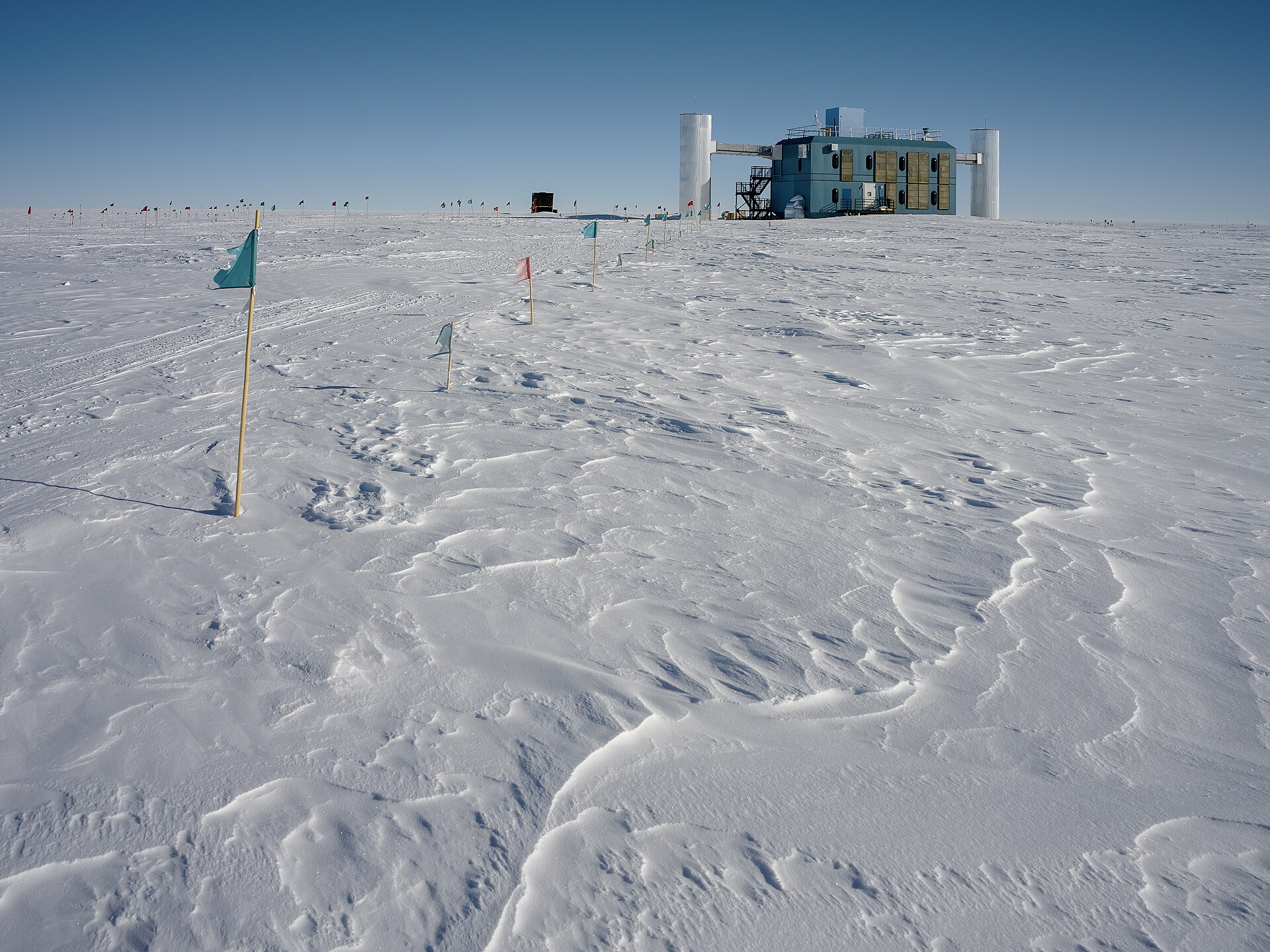
The Royal Swedish Academy of Sciences awarded the 2026 Nobel Prize in Physics on 6 October to Francis Halzen of the University of Wisconsin-Madison, for "decisive contributions to the IceCube Neutrino Observatory and the discovery of high-energy neutrinos of astrophysical origin". He is the only laureate, and takes the full prize of 12 million Swedish kronor.
Halzen, 82, was born in Tienen, Belgium, in 1944 and took his doctorate at KU Leuven in 1969. He first presented the idea in 1988: that the ice beneath the South Pole could be turned into a neutrino detector. IceCube, a cubic kilometre of Antarctic ice threaded with light sensors, was finished in 2011. Thirty-eight years separate the proposal from the prize.
Why the ice
Neutrinos pass through the Earth and through human bodies without leaving a trace, and interact with matter only very rarely. On the rare occasion that one strikes an atomic nucleus in clear glacial ice, it produces a flash of light that sensors can track. The Academy's press release sets out why the South Pole suits the work: the ice is free of various kinds of interference, and the area is geologically stable, with no earthquakes. Because the highest-energy cosmic neutrinos are so rare, an enormous volume of ice is needed to catch enough collisions to count.
What makes them worth catching is that they arrive unaltered. The cosmos contains natural particle accelerators that fire out particles at energies up to a million times beyond anything achievable in laboratories on Earth, according to the Academy. Other particles are deflected and lose energy on the way. Neutrinos are not, so they carry information about the processes inside those sources that nothing else supplies.
Francis Halzen has led an international team of researchers and engineers who have provided us with a fantastic instrument. His tenacity and scientific vision has paved the way for a new kind of astronomy.
One name on an instrument built by hundreds
The citation credits Halzen's leadership of an international team, and the award went to him alone. IceCube is run by a collaboration spanning dozens of institutions, and the prize has no mechanism for recognising that. Halzen himself pointed at the infrastructure rather than the insight. "This is a celebration of a very unusual project," he said in a statement released by the University of Wisconsin-Madison, in which he credited the engineers at its Physical Sciences Laboratory.
Halzen becomes the sixth physicist connected to the university to win a Nobel, and its 23rd laureate across all fields, the university said. The last of its faculty to win was Howard Temin in 1975, for the discovery of reverse transcriptase.
What IceCube has not done yet
The discovery being honoured is that high-energy neutrinos arriving at the detector originate far outside the solar system. Working out which objects produce them is a separate problem, and on the Academy's own account it is only starting. Its press release says the search for the universe's neutrino sources "could begin in earnest" once that discovery was published, and describes the interactions it continues to collect as something that may yet reveal unknown cosmic phenomena. The prize marks a new instrument, not a finished map.
The messengers bring information from the cosmos. They open the door to distant galaxies and tell us about the processes of exploding stars.
The honest reading is that this award is about patience with hardware. Nothing about the underlying physics changed in 1988. What changed is that one person spent decades persuading funders and engineers to freeze sensors into a glacier. That is a different kind of scientific labour from the frontier scattering-amplitudes calculation Parallax Nexus reported on, which a model completed largely unsupervised for roughly one to two thousand dollars. Both are results. Only one of them can be bought.
This year's announcements began on 5 October with the medicine prize, shared by Karl Deisseroth, Peter Hegemann and Georg Nagel for the optogenetics methods that let researchers control individual nerve cells with light. Last year's physics prize went to John Clarke, Michel Devoret and John Martinis for experiments on quantum tunnelling. The medals are presented in Stockholm on 10 December.
What happens next?
- The chemistry prize is announced on 7 October, literature on 8 October, peace on 9 October and economic sciences on 12 October.
- IceCube keeps collecting neutrino interactions that the Academy says could identify specific cosmic sources and reveal unknown phenomena.
- The medal and the 12 million kronor are presented at the Stockholm ceremony on 10 December, the anniversary of Alfred Nobel's death.
Sources & references
- 01Press release: The Nobel Prize in Physics 2026 — Royal Swedish Academy of SciencesprimaryPublished 6 October 2026; source of the citation, the 1988 proposal, the 2011 completion, the prize amount and Mark Pearce's quote
- 02Francis Halzen wins Nobel Physics Prize for Antarctic 'ghost particle' hunt — ReutersnewsPublished 6 October 2026; source of Halzen's age and Eva Olsson's remarks at the press conference
- 03University of Wisconsin-Madison Professor Francis Halzen Named 2026 Nobel Laureate in Physics — University of Wisconsin-MadisonprimarySource of Halzen's own statement and the university's laureate counts
- 04Nobel Prize in Physics awarded to Francis Halzen for ice research — France 24newsPublished 6 October 2026; source of the announcement schedule and the medicine prize laureates
More from Science

Mongolian Microfossils Push Animal Origins Back 200 Million Years
Oxford-led researchers surveyed phosphatised microfossils from the Kheseen Biota in northern Mongolia, deposited at a time when animals are known to have existed elsewhere, and found none that can be identified as an animal. That undermines the use of a 590-million-year-old Chinese deposit as a maximum age for animal origins, and shifts molecular clock estimates back into the late Tonian.
Oak Ridge Cut a Quantum Circuit From 2 Million Gates to 91,000
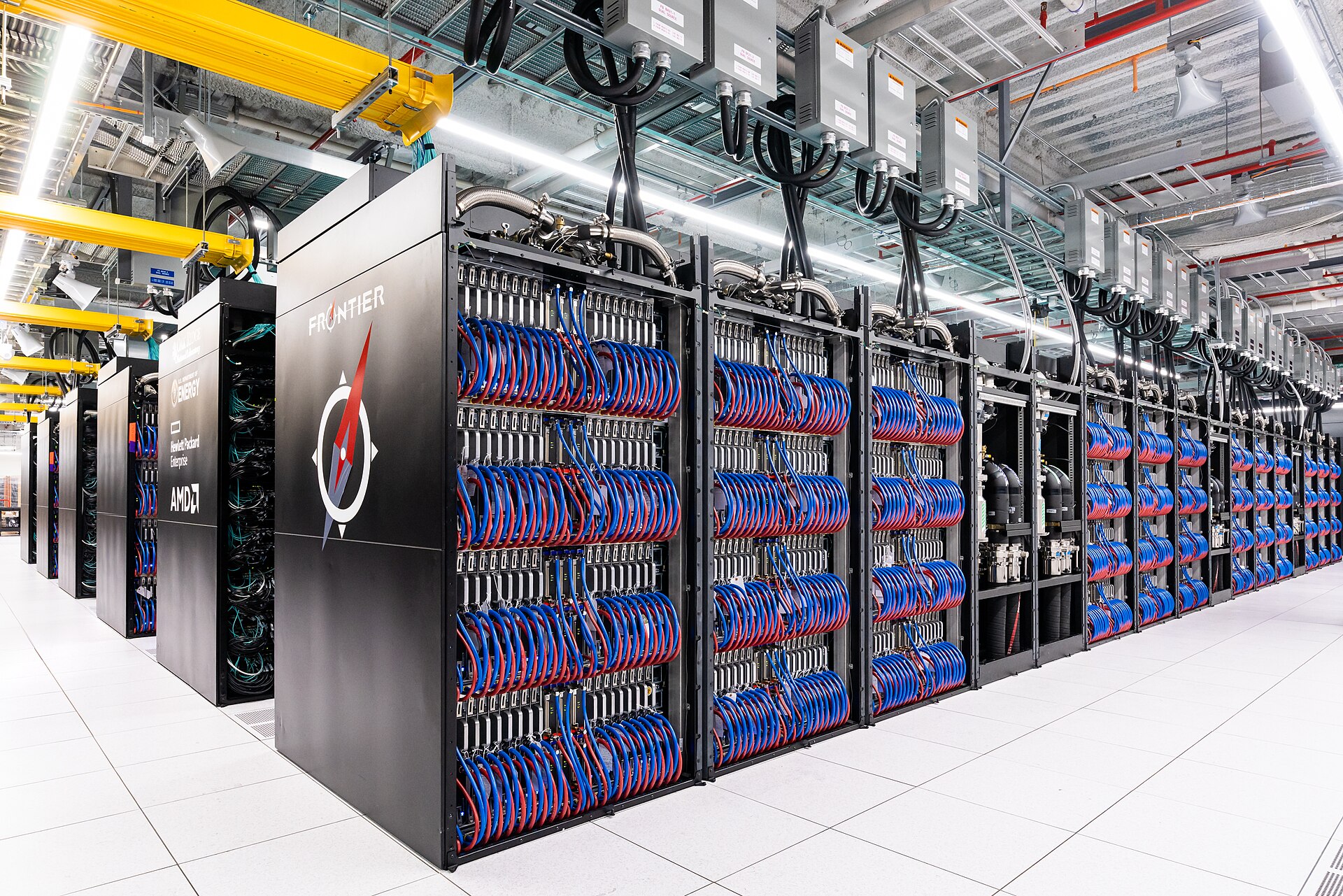
Oak Ridge National Laboratory says a reworked quantum phase estimation routine cut the gate count for a fluid-dynamics calculation from 2 million to 91,000, a reduction of more than 95 per cent. The result is a circuit-size saving verified by classical simulation, not a demonstration of quantum advantage.
A Claude Agent Spotted a CRISPR-Like Array in Phage DNA
Anthropic disclosed on 23 September 2026 that Claude agents identified a previously uncharacterised enzyme system in bacteriophages, which its scientists named array-associated reverse transcriptases, in the first result from a molecular biology lab it formed in spring 2026.
One CPU Kept Up With 408 Logical Qubits in IonQ's Tests
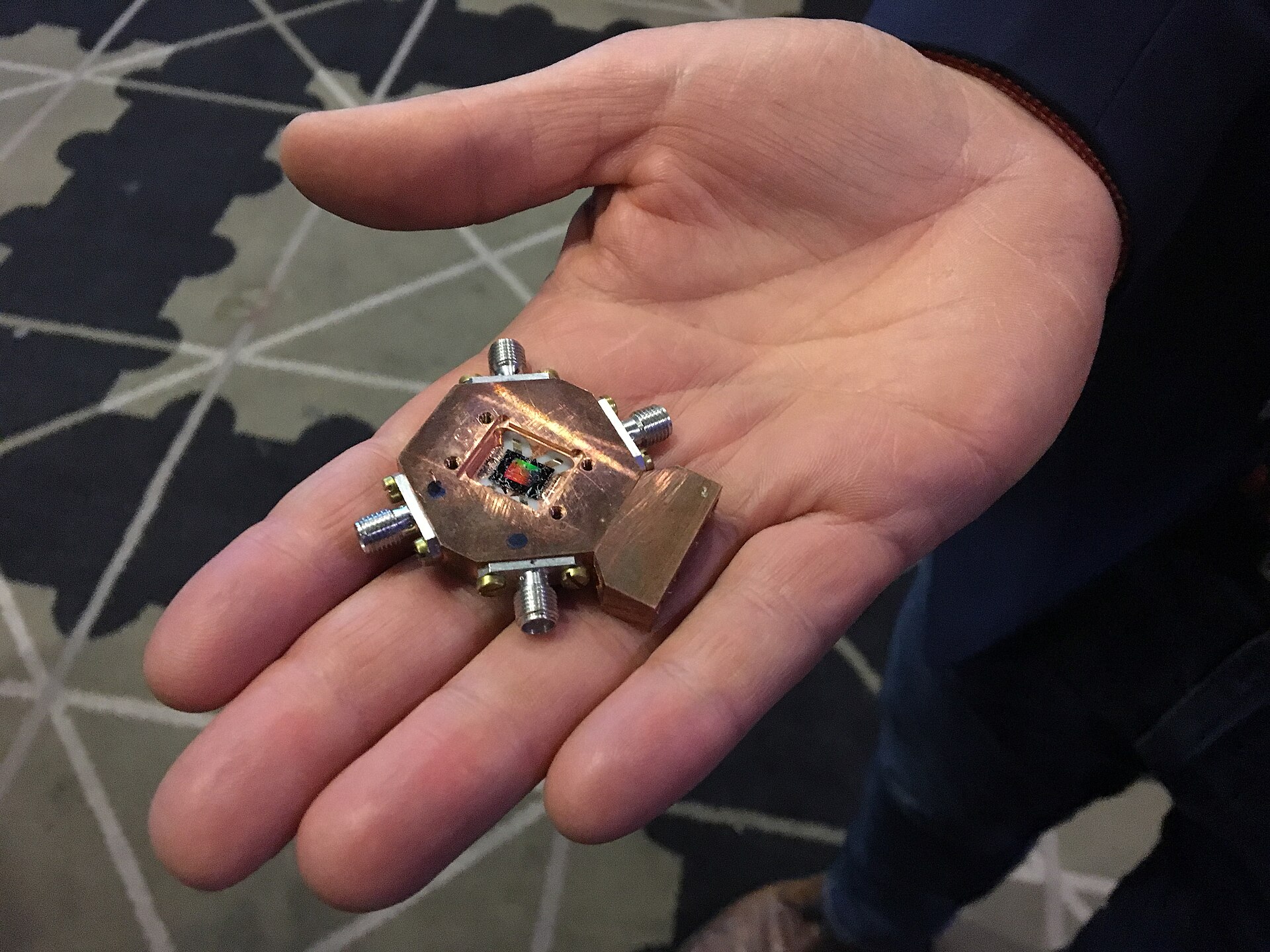
IonQ announced on 22 September 2026 that a real-time quantum error correction decoder handling up to 408 logical qubits ran on one standard CPU. The arXiv preprint behind the claim reports decoding overhead below 0.3% at one error rate and below 12% at another.