OpenAI Says GPT-6 Designed Proteins That Bound in the Lab
Of 322 small proteins designed by GPT-6.2 and made by the partner lab Onava, 35 bound their intended target, OpenAI reported on 24 November 2026. The same models remain far behind specialist software at predicting a protein's structure.
OpenAI tested 322 small proteins designed by GPT-6.2 against five targets, and 35 of them bound, a rate of 10.9 per cent. The company published the result on 24 November 2026 alongside a preprint titled GPT-6 as a Universal Foundation Model for Protein Biology: Beyond Specialized Models. The proteins were made and tested by Onava, OpenAI's research partner. The hits were unevenly spread: 18 against IL-17A, 8 against VEGF-A, 5 against PD-L1, 3 against IL-7Rα and 1 against TrkA.
The claim being made is narrower than the headline figure suggests, and OpenAI is explicit about it. The model generated three-dimensional designs by writing and running code rather than by calling a specialist protein generator such as RFdiffusion. But a specialist model, SolubleMPNN, supplied the amino acid sequences, and three more, Boltz-2, OpenDDE and ESMFold2, filtered which candidates went to the bench. OpenAI writes that its results "do not yet establish that our models can generate de novo minibinders end-to-end in a zero-shot setting without help from specialized models".
Redesign beats design from scratch
The strongest numbers came from editing proteins that already work. Asked to design new binding loops for six small antibodies that attach to IL-4Rα, GPT-6.2 produced 182 designs of which 128 bound, 70 per cent. Given five therapeutic antibodies and told to change about half the amino acids in each of three loops, it produced 272 fragments of which 179 bound the original target, 66 per cent. Redesigning sequences for existing minibinder shapes ranged from 85 per cent for MDM2 (75 of 88) to 14 per cent for PD-1 (8 of 59).
One test addresses the memorisation objection directly. OpenAI asked the model to write fresh sequences for three minibinder shapes it had generated earlier and never published. Of 107 proteins made from those sequences, 14 bound. For one PD-L1 shape the model produced two sequences that differed from the original at 52 and 58 of 90 positions, and from each other at 44 positions, and both showed binding. That is harder to explain by recall of training data than the benchmark scores are.
The gap that has not closed
Folding a protein from its sequence alone is still the thing these models cannot do. On OpenAI's own test the mean TM-score rose from 0.16 for GPT-5.6 to 0.26 for GPT-6.2 and 0.38 for an unreleased internal model. Scores above 0.5 are generally taken to mean the overall fold has been captured. ESMFold2, a specialist, averaged 0.93.
Whole-structure prediction remains the weak point. Mean TM-score: GPT-5.6 0.16mean TM-score, GPT-6.2 0.26mean TM-score, Latest internal model 0.38mean TM-score, ESMFold2 (specialist) 0.93mean TM-score.
Where the models did beat specialists was in smaller, more constrained jobs. On the PoseBusters docking set, GPT-6.2 matched the observed position and orientation of a small molecule in 93 per cent of scored predictions against 50 per cent for the specialist model DiffDock-L. On the Scarpino set of 179 structures it reached 92 per cent against DiffDock's 60 per cent. Ranking 50 mutant versions of a protein by stability, rank correlation improved across generations from 0.41 for GPT-5.6 to 0.57 for GPT-6.2, ahead of the specialist ESM2-650M.
What outsiders have found
The OpenAI numbers are all vendor-reported, which is the same limitation Parallax Nexus noted on 6 November when OpenAI graded its own models on BioBasicsBench. Independent work has run in the same direction, though. Xinming Tu, a researcher at the AI biology company Phylo in South San Francisco, asked models from OpenAI, Anthropic and Google to predict the sequences of obscure bacterial proteins and found the latest Claude models beat both the other large language models and specialist protein language models, as Tu and Leo Chen of Harvard Medical School reported in a 16 November blogpost. Nature covered the episode on 24 November.
In most cases, a specialist will always perform better than a generalist for a given task.
OpenAI's own researchers put it the other way. Joy Jiao, who leads life-sciences research at the company, told Nature the aim is "a world where a scientist can just describe in natural language what they want a ChatGPT model to do", and her colleague Masatoshi Uehara said he believes a large language model "can technically beat every specialized model in even each capability".
The honest reading is that the interesting result is not the 10.9 per cent, which OpenAI concedes is below the rates the original RFdiffusion study reported and which depends heavily on how designs are filtered first. It is that a model trained to write text and code reached a comparable range at two specific stages of a pipeline it was never built for, while failing badly at the one task the field considers solved. What is not known is whether any of these proteins do anything: binding is one property, and specificity, stability and biological activity were not tested, nor was the preprint peer reviewed.
What happens next?
- The preprint has not been peer reviewed, and independent groups will test whether the binding rates replicate on targets OpenAI did not choose.
- OpenAI says it wants to design for effects after binding, such as killing a cancer cell, and to extend the work to RNA, small molecules and PROTACs.
- Researchers including Xinming Tu and Leo Chen are probing how much of the models' protein ability reflects training-data recall rather than learned biology.
- Whether specialist structure predictors keep their lead on folding from sequence alone is the measurable test of the generalist case.
Related topics
Sources & references
- 01GPT-6 models demonstrate intrinsic protein-design capabilities — OpenAIcompanyAnnouncement of 24 November 2026; all lab counts, benchmark scores and the stated limitations are vendor-reported from this page
- 02GPT-6 as a Universal Foundation Model for Protein Biology: Beyond Specialized Models — OpenAIresearchAccompanying preprint, not peer reviewed
- 03Watch out, AlphaFold: Claude and ChatGPT's new biology skills wow scientists — NaturenewsNews report of 24 November 2026 by Ewen Callaway; source of the Pačesa, Jiao and Uehara quotes and the Tu and Chen findings
- 04De novo design of protein structure and function with RFdiffusion — NatureresearchThe RFdiffusion study OpenAI cites as having reported higher hit rates than its own
More from Science

CDC Counts 5,838 Measles Cases, 2.5 Times All of 2025
The Centers for Disease Control and Prevention recorded 5,838 confirmed US measles cases for 2026 as of 19 November 2026, up 426 in a week and about 2.5 times the 2,289 confirmed in all of 2025. Its hospitalisation and death tables lag the case count.

TOP500 Adds Just 27 New Systems, the Fewest on Record
New entries to the ranking of the world's most powerful supercomputers fell to 27, the lowest turnover in the list's 33-year history, while combined performance still rose to 19.70 exaflops. The organisers say the slowdown reflects a shift of new hardware towards AI data centres.
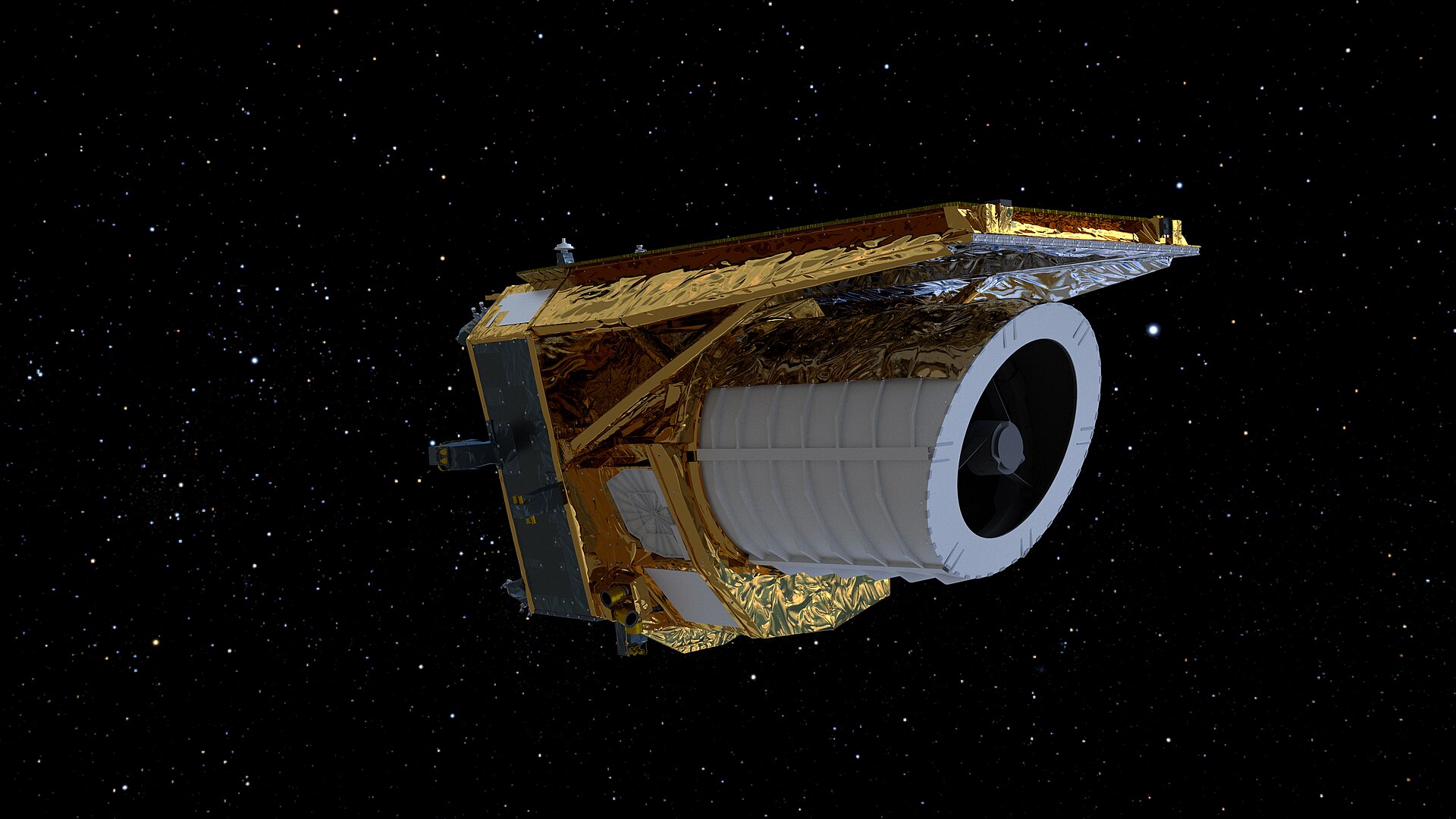
Euclid Publishes 900 Million Galaxies From 13 Months of Sky
ESA released the first major batch of Euclid data on 12 November 2026: about 1.7 petabytes drawn from 13 months of observations, with more than 900 million galaxies, around 15,000 strong lensing candidates and spectra from more than 160 million sources. The weak lensing and clustering products that carry the cosmology are not in it.

Rubin Finds Two Milky Way Satellites in 7% of the Sky
The Vera C. Rubin Observatory's Early Data Preview 2 covered roughly 7 per cent of the night sky and yielded two previously unknown companions of the Milky Way, described in a research note and a peer-reviewed letter published in late October 2026.