Europe's First Exascale Machine Gets Its European Chip
SiPearl has delivered the first Rhea1 samples to Bull for JUPITER's CPU cluster at Jülich. The 80-core, 61-billion-transistor processor is the first European-designed server CPU to go into a European-built supercomputer.
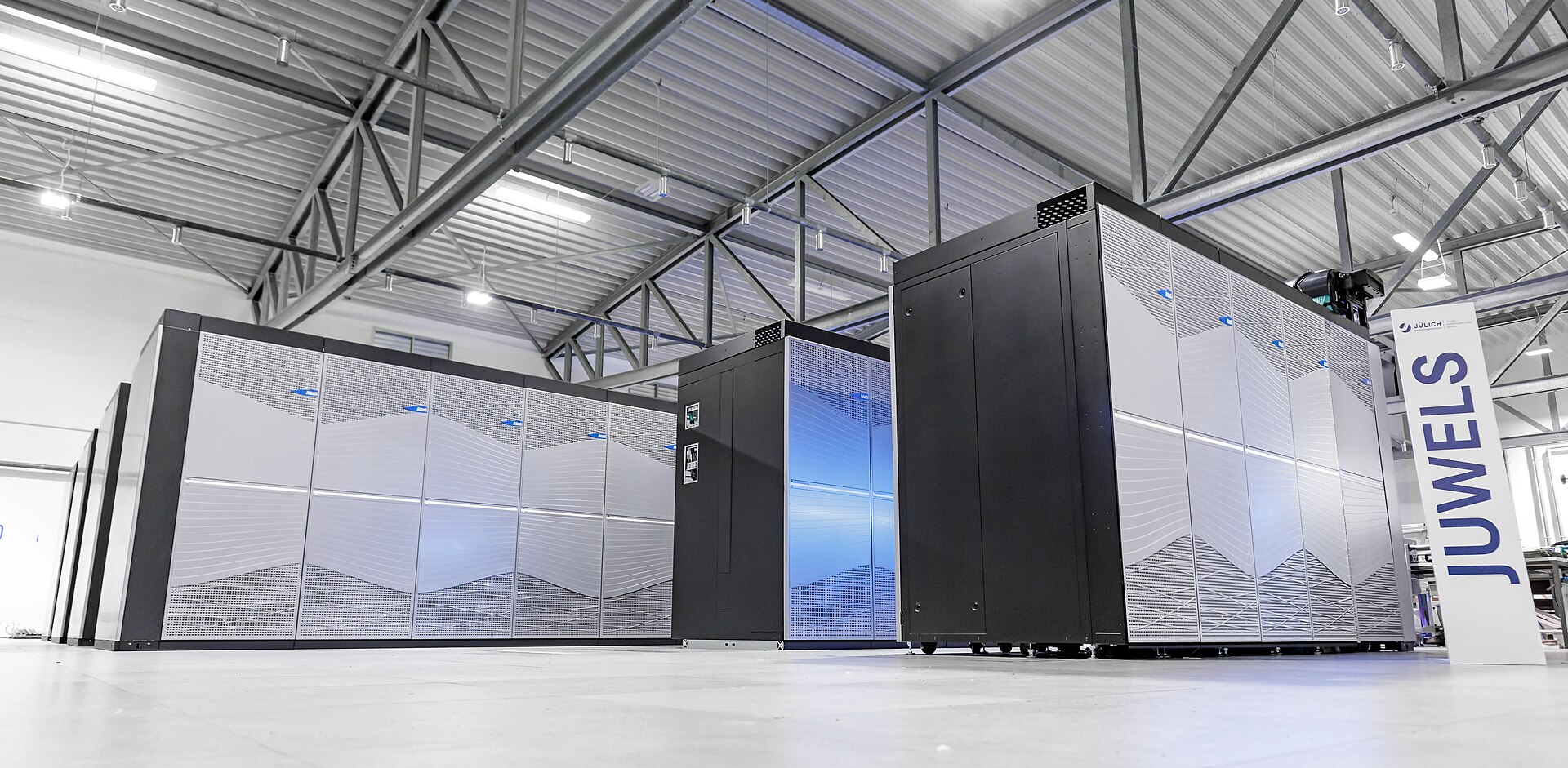
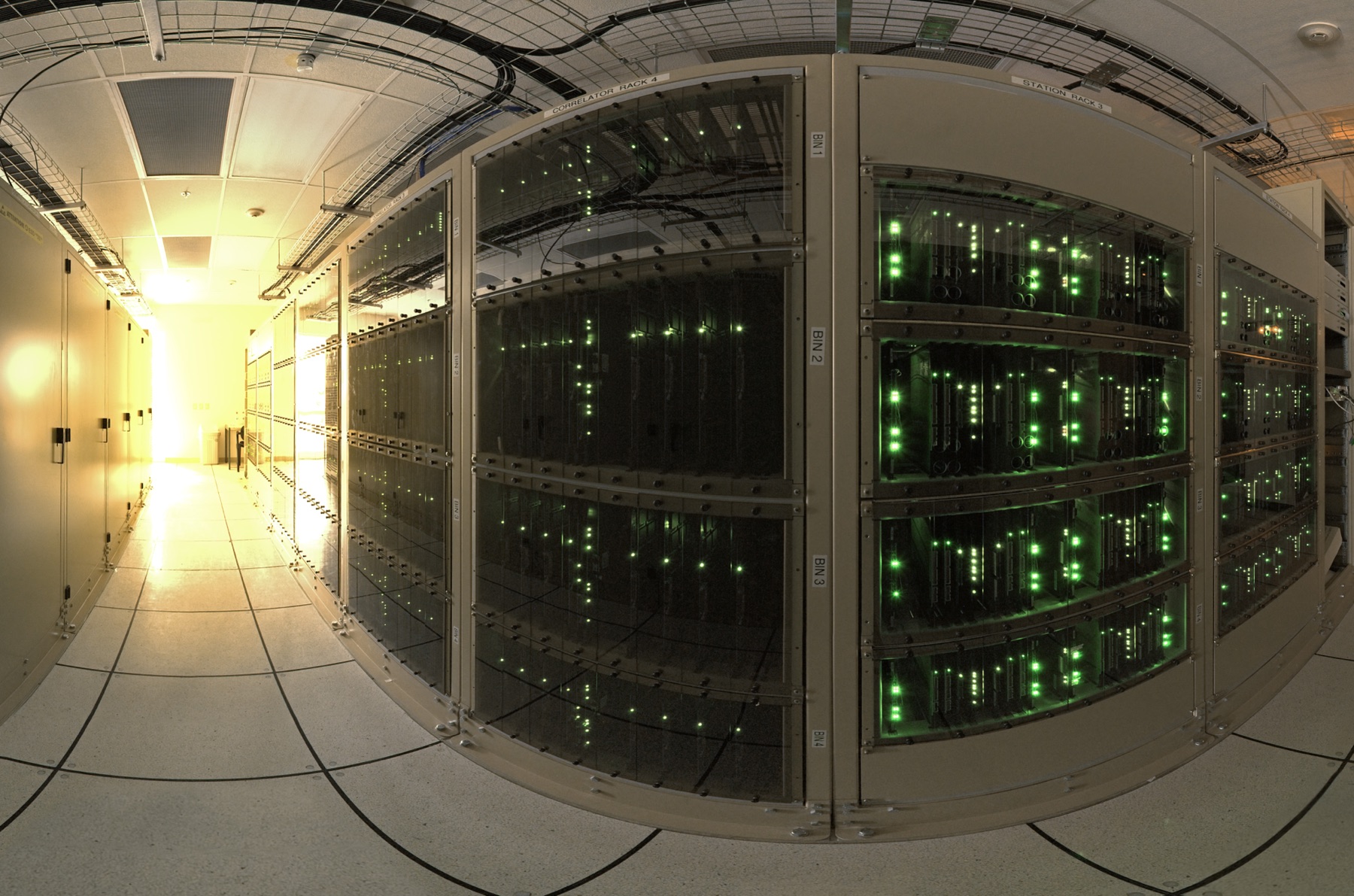
SiPearl delivered the first samples of its Rhea1 processor to Bull on 22 September 2026, and Bull has started fitting them onto the BullSequana XH3000 platform that will form JUPITER's CPU cluster, the two companies said in a joint statement issued that day. It is the first time a European-designed server processor will run inside a European-built supercomputer.
The chip is a large one by any measure. Rhea1 carries 80 Arm Neoverse V1 cores in a single package, each with two 256-bit Scalable Vector Extension units, alongside four stacks of high-bandwidth memory and four DDR5 interfaces, and totals 61 billion transistors. The Register, which reported the delivery on 23 September, puts the HBM2e at 64 GB per processor delivering 1.8 TB/s of bandwidth. That ratio of memory bandwidth to arithmetic throughput is the point: it suits the scientific codes that run badly on GPUs, the same reasoning that took Fujitsu's A64FX and Japan's Fugaku to the top of the Top500 in 2020.
Where Rhea1 actually sits
JUPITER, procured by the EuroHPC Joint Undertaking and hosted at the Jülich Supercomputing Centre at Forschungszentrum Jülich in Germany, became the European Union's first exascale system when it came online in 2025 and currently ranks fifth on the Top500 list. It did not get there on European silicon. The Booster partition that set the record runs on 24,000 Nvidia GH200 superchips, each pairing a Grace CPU with an H200 GPU. Rhea1 goes into the Cluster Module beside it, a CPU-only partition that The Register estimates at 1,300 nodes, 2,600 processors and roughly 5 petaFLOPS when complete.
Five petaFLOPS is a rounding error next to an exascale Booster, and the honest reading of this delivery is that its value is industrial rather than computational. Europe now has a domestic server CPU that has cleared design, fabrication and first integration into a flagship machine, with a named customer paying for it. SiPearl says the JUPITER equipment is its first Rhea1 order and its first significant revenue. The company employs 200 people in France, Spain and Italy, and its successor part, Rhea2, is slated for the CPU partition of Alice Recoque, the planned French exascale system, whose GPU side will use AMD MI430X accelerators.
Its high memory bandwidth is particularly well suited to applications that benefit from efficient access to large amounts of data. Bringing this European processor technology into JUPITER is an important step in making these capabilities available to the scientific community.
The generation gap nobody is denying
Rhea1 is built on Arm's Neoverse V1 cores, a generation behind the V2 cores in the Grace CPUs already installed in JUPITER's own Booster, a consequence of a design cycle that has run for several years. SiPearl says benchmarking at its laboratories is delivering very encouraging results and that performance is in some cases exceeding expectations, but those are vendor statements about unconsolidated figures, and the company says the numbers will be published this autumn. Until an independent run appears, there is no way to judge how the part compares with a Grace or an A64FX on the workloads Jülich cares about.
SiPearl also makes a security claim that Nvidia and AMD do not, describing Rhea1 as free of back doors and kill switches. That is the argument the European Processor Initiative was funded to make good on, and it is the reason a modest CPU partition carries political weight that its petaFLOPS do not. Anders Dam Jensen, executive director of EuroHPC JU, said the delivery shows a European processor moving from innovation to deployment.
The comparison worth holding onto is with CXMT, which as Parallax Nexus reported on 20 September put an 11.95-nanometre DRAM platform into mass production using quadruple patterning because export controls keep extreme ultraviolet tools out of China. Both are sovereignty projects that accept a node or a core generation of disadvantage in exchange for a supply chain their government controls. Neither has yet shown that the penalty stays small as the frontier moves.
What happens next?
- SiPearl says consolidated Rhea1 performance figures will be published this autumn, the first chance to check the company's benchmark claims.
- Rhea1 is scheduled for formal release at the end of 2026, with JUPITER's CPU cluster filling out to 1,300 nodes.
- Rhea2 is due to power the CPU partition of France's Alice Recoque exascale system alongside AMD MI430X accelerators.
- Watch whether SiPearl converts a single EuroHPC order into commercial data centre customers, which is what the company says its CPUs are built for.
Related topics
Sources & references
- 01SiPearl delivers the first Rhea1 CPUs to Bull for integration into JUPITER, Europe's fastest operating supercomputer — Bull SAS via GlobeNewswirecompanyDated 22 September 2026. Source of the core count, transistor count, memory configuration, revenue statement and the Lippert and Dam Jensen quotations.
- 02Europe's fastest supercomputer is finally getting its domestic silicon infusion — The RegisternewsPublished 23 September 2026. Source of the 24,000 GH200 count, the 64 GB HBM2e and 1.8 TB/s figures, the Neoverse V1 versus V2 comparison and the 1,300-node, 5 petaFLOPS estimate.
- 03Bull installs European chips in the first European exascale supercomputer — TechzinenewsPublished 24 September 2026. Confirms the BullSequana XH3000 integration and the Rhea2 and Alice Recoque plan.
- 04Rhea1 press release (PDF) — SiPearlcompanyThe company's own release, dated 22 September 2026.
More from Technology
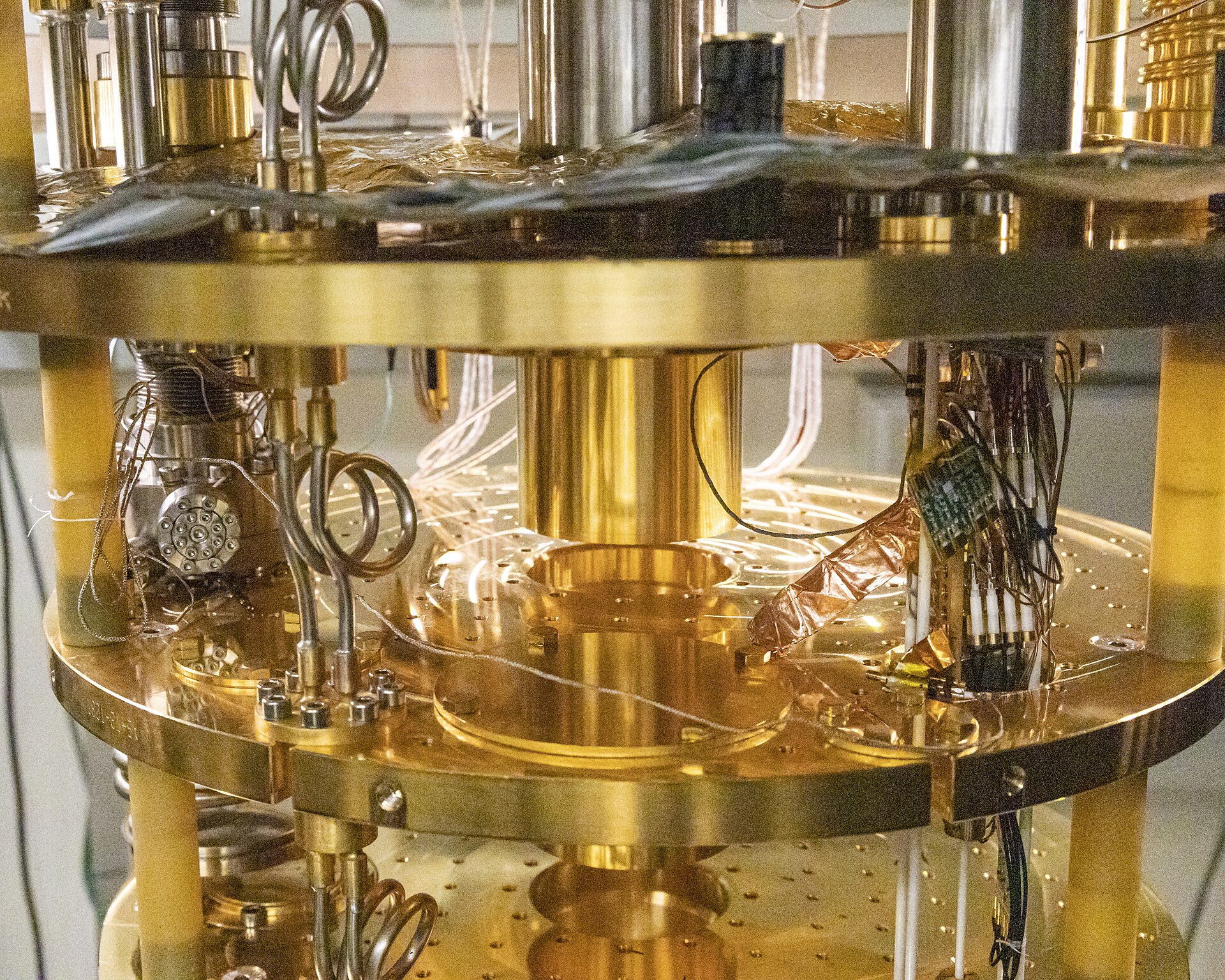
DARPA Gets Hands-On Access to Microsoft's Majorana Qubits
Microsoft has opened a quantum research centre at the University of Maryland and will give DARPA on-site access to its latest topological system, including qubits built on the Majorana 2 chip. The evaluation runs under DARPA's Underexplored Systems for Utility-Scale Quantum Computing programme, which asks whether any quantum approach can produce a commercially useful machine by 2033.
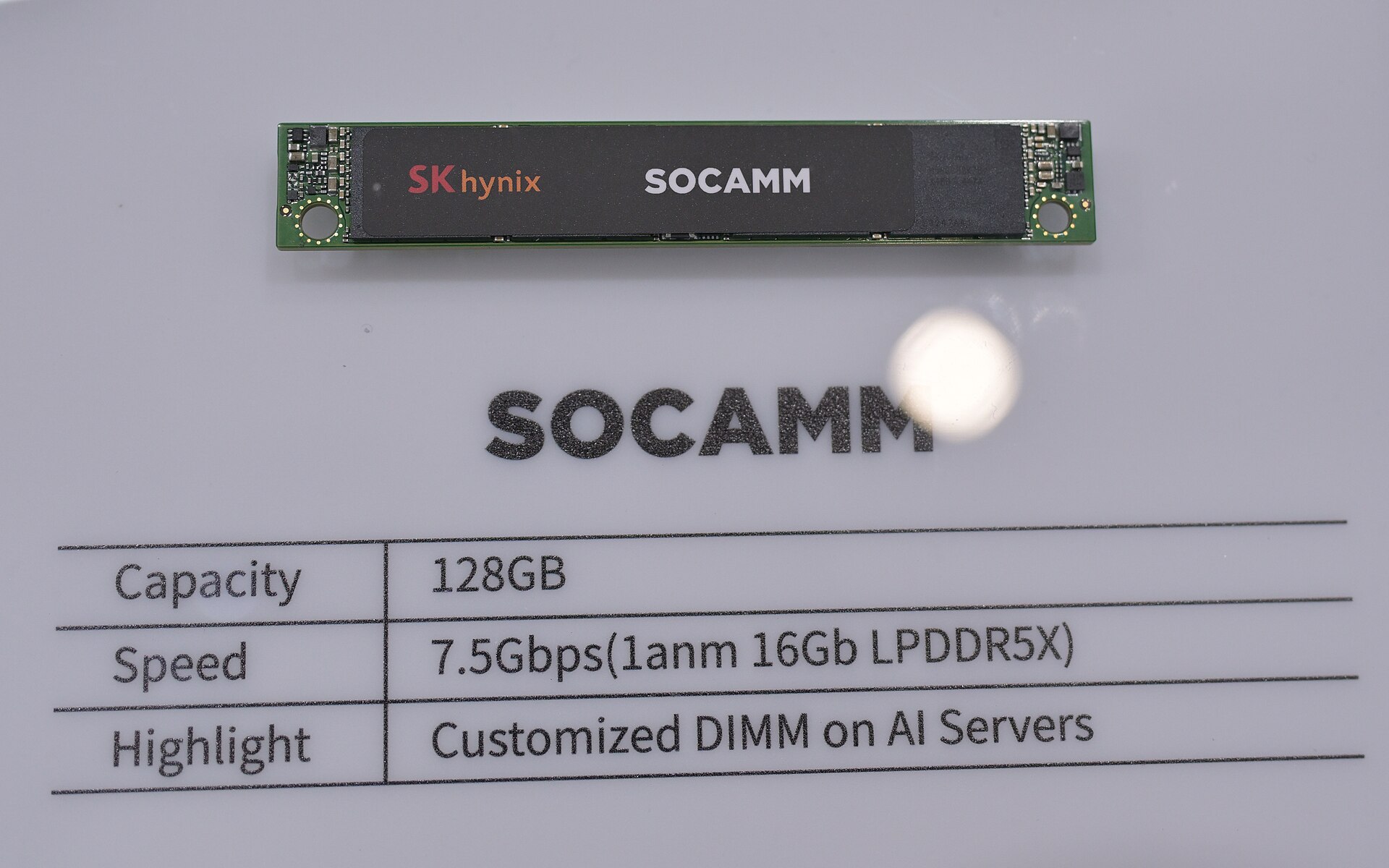
SK Hynix Weighs Making Memory Chips at Intel's Ohio Site
SK Hynix is in talks with Intel about manufacturing memory chips in the United States for the first time, three people familiar with the discussions told Reuters on 16 September 2026. One option is leasing part of Intel's Ohio complex, whose two plants have slipped to 2030 and 2031; another is a venture with Intel and cloud firms seeking memory supply. Any deal involving HBM or DRAM could face review under South Korea's Industrial Technology Protection Act.
Amazon Takes a Stake in Its Next Chip Supplier
Qualcomm announced a multi-generation collaboration with Amazon on custom AI inference silicon and 1.6T optical connectivity on 8 September 2026. An SEC filing shows Amazon received a warrant for up to 25 million Qualcomm shares at $161.26, vesting in tranches tied to commercial arrangements and purchases up to a $60 billion cap.
The Inference Economy
A data story on why inference is overtaking training as the dominant compute and cost story, and what it means for chips, data centres and pricing.