COP31 Ends Without a Deal, the First Collapse Since 2009
The words "fossil fuels" appeared nowhere in the final draft cover decision, and the European Union, Panama and the Marshall Islands refused it. The $120bn adaptation finance floor that survived into the 16 November draft did not survive to the end.
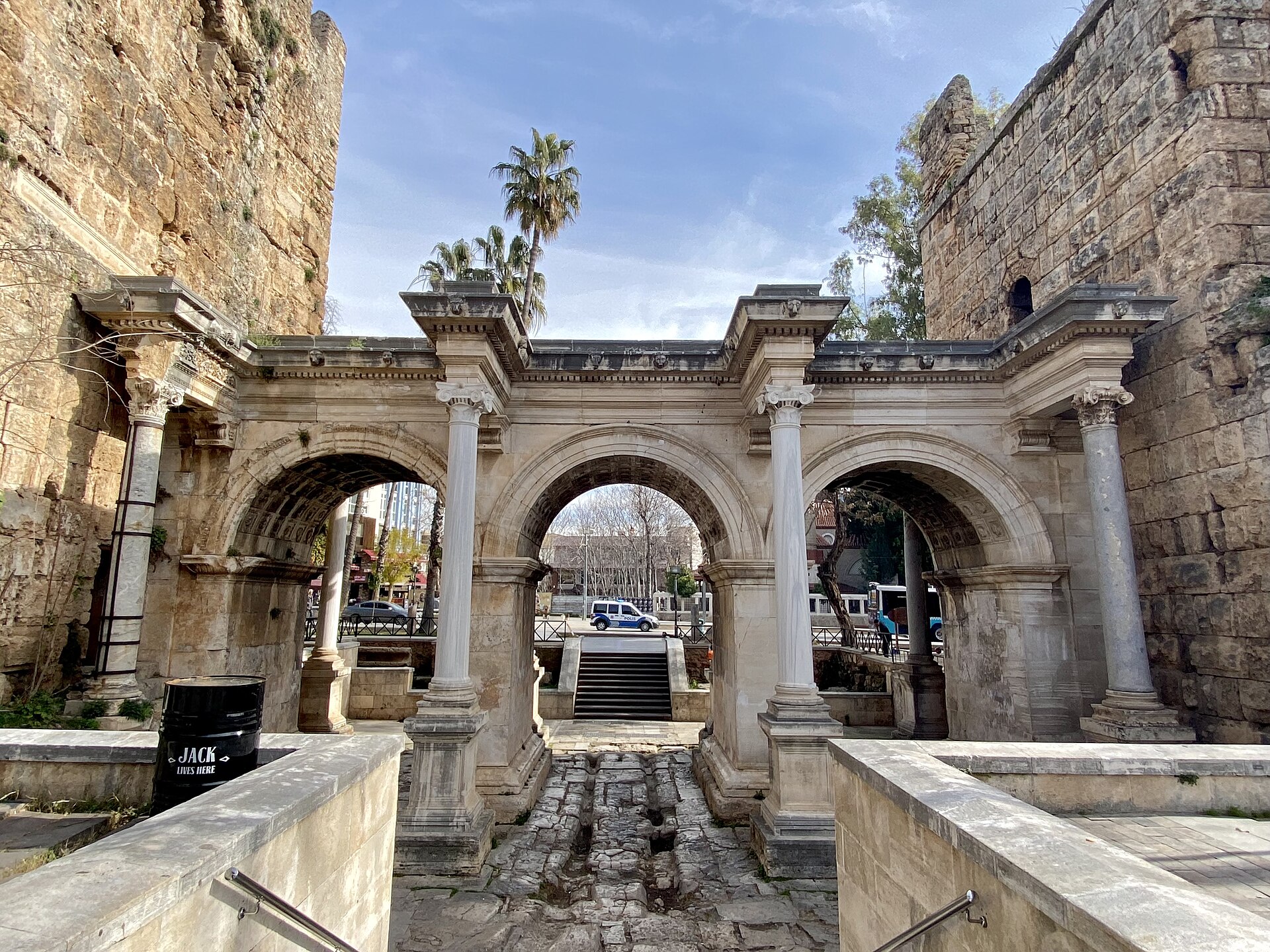
The UN climate conference in Antalya ended on 22 November 2026 without adopting its central political text. After two weeks of talks and two days of overtime, which made COP31 the longest conference in the series, the European Union, Panama, the Marshall Islands and others refused the fourth draft of the cover decision known as the Antalya Pact. It is the first time a COP's main agreement has collapsed since Copenhagen in 2009.
I understand that there is no agreement on this text. For that reason, these decisions have not been adopted.
Kurum told delegates there would be no new text, and left the stage while country representatives were still speaking, according to Reuters. Chris Bowen, the Australian minister who led the negotiations as COP31 president of negotiations under the shared Türkiye and Australia presidency, said the talks had run into "unbridgeable red lines" in what he called the most complicated and fraught geopolitical environment in living memory.
The phrase that was not in the text
The sticking point was two words. The BBC, reporting from Antalya, found that "fossil fuels" did not appear anywhere in the draft handed to exhausted delegates in the early hours of Sunday; the only indirect reference to coal, oil and gas was a nod to the COP28 decision of 2023 in which countries agreed to transition away from them in energy systems. The first draft, circulated on the Monday, had used the phrase six times.
It is unconscionable that we would have a climate pact that makes no mention of fossil fuels.
Saudi Arabia, speaking for the League of Arab States, defended the text's references to carbon capture and storage and rejected the suggestion that the technology amounts to greenwashing, telling the plenary that scientific assessments identify a role for it. Russia warned against moving away from fossil fuels at a pace that would create fuel poverty. Ghana, speaking for the African Group, criticised the handling of finance, loss and damage and the just transition, which it said received a single generic sentence, but said the group would not block consensus.
What happened to the finance figure
The money was the other half of the failure. At COP30 in Belém, countries agreed to triple adaptation finance. As Parallax Nexus reported on 16 November, the presidencies' 18-page draft cover decision put a $120 billion floor under that pledge and cited UN figures showing that even a tripling would meet no more than 29 per cent of estimated need. The final draft carried neither the figure nor a baseline against which tripling could be measured, and substituted a new process, the Antalya to Addis Ababa Road Map on Adaptation and Resilience Finance. Poorer countries read the change as room to manoeuvre rather than a commitment.
That is a sharper loss than the headline suggests, because the pledge itself still stands from Belém. What Antalya failed to produce was the number, the baseline and the tracking that would have made it collectable. The Adaptation Fund, which said on 17 November that new COP31 pledges came to about $50 million against a four-year target of at least $1.2 billion, now has no stronger claim on donors than it had a fortnight ago.
What was adopted anyway
The conference did not produce nothing. The UNFCCC has published advance unedited versions of decisions adopted under the COP, the Kyoto Protocol's governing body and the Paris Agreement's, covering long-term climate finance, the Adaptation Fund and capacity building, among others. Negotiators also moved the just transition mechanism forward, though its structure is deferred to COP32, and the presidency said more than 80 countries had backed Türkiye's target of raising electricity to 35 per cent of global energy use by 2035. The World Resources Institute's statement on 22 November put the loss precisely: with no consensus, the draft pact and its many elements have no formal standing.
Simon Stiell, the UN's climate chief, told the BBC he would seek advice on possible reform of a process that requires consensus among nearly 200 parties, while arguing it had delivered Paris and could work again. The counter-evidence to writing the week off is real: the UN's own assessment is that current policies point to about 2.8C of warming by 2100, against the 4C or more considered plausible in the early 2010s, and none of that was undone in Antalya. What is not known is whether the countries that rejected this text can assemble a stronger one in Ethiopia, or whether the governments that stripped the fossil fuel language out will simply arrive with the same position and more time.
What happens next?
- COP32 takes place in Addis Ababa, Ethiopia, in November 2027, where the Belém-Antalya just transition mechanism's structure and the adaptation finance baseline both return to the table.
- Simon Stiell said he will seek advice on reforming the UNFCCC's consensus process.
- The Antalya to Addis Ababa Road Map on Adaptation and Resilience Finance is the only live track for turning the tripling pledge into measurable delivery.
- The UNFCCC will publish full reports of the decisions that were adopted, replacing the advance unedited versions now online.
Related topics
Sources & references
- 01Outcomes of the Antalya Climate Change Conference, Advance Unedited Versions — UNFCCCprimaryLists the decisions actually adopted at COP31, CMP21 and CMA8.
- 02COP31 ends without climate pact as UN chief warns there is 'no ambiguity in the science' — UN Newsnews22 November 2026; carries the Kurum closing-plenary quote and country objections.
- 03COP31 fails to reach major climate deal as talks expose deep divisions — BBC Newsnews22 November 2026; the fossil fuel wording count, the O'Brien quote and the Stiell interview.
- 04Countries react as COP31 climate talks collapse — Reutersnews22 November 2026.
- 05Hollow Outcome at COP31 a Failure of Political Leadership — World Resources Institutereport22 November 2026; states the draft pact has no formal standing.
- 06COP31 Outcomes, your questions answered — UK GovernmentprimaryConfirms COP31 formally concluded on 22 November and that other negotiations concluded.
More from Climate
Fossil CO2 Falls 0.4% but Total Emissions Reach 43.3bn Tonnes
Fossil CO2 emissions are projected at 38.2 billion tonnes in 2026, down about 0.4 per cent, but a rise in land-use emissions to 5.1 billion tonnes lifts the total to a record 43.3 billion tonnes. The remaining budget for a 50 per cent chance of holding warming to 1.5C is now 150 billion tonnes.
EU Lawmakers Cut the 2035 Car CO2 Target to 87.5 Per Cent
A committee vote in Brussels replaced the 100 per cent tailpipe CO2 cut that would have ended sales of new combustion cars in 2035 with an 87.5 per cent cut plus steel credits. The compromise was written by the centre-right, centre-left and centrist groups together.
COP17 Sets a $150m Trigger for a Fund Holding Under $9,000
The COP17 decision on digital sequence information reaffirms voluntary contribution rates of 1 per cent of profit or 0.1 per cent of revenue, defers the unresolved questions to a new working group reporting in 2028, and sets a $150 million capitalisation trigger for exceptional disbursements. Carbon Brief, reporting from Yerevan, put actual deposits at under $9,000.
Gas Fields Alone Now Exceed the Entire 1.5C Carbon Budget
Fossil fuel projects already producing or under construction hold an estimated 897 billion tonnes of carbon dioxide against a remaining 1.5C budget of 130 billion tonnes, according to analysis published on 29 October 2026. Existing gas fields on their own exceed the whole budget.