France May Forgo 65bn Euros of EDF Dividends for New Reactors
The Cour des comptes priced EDF's six-reactor EPR2 programme at 84 billion euros in 2025 values on 16 November 2026 and said wholesale power below 70 euros a megawatt hour would widen the company's financing gap. Forward contracts for 2028 and 2029 already trade below that level.
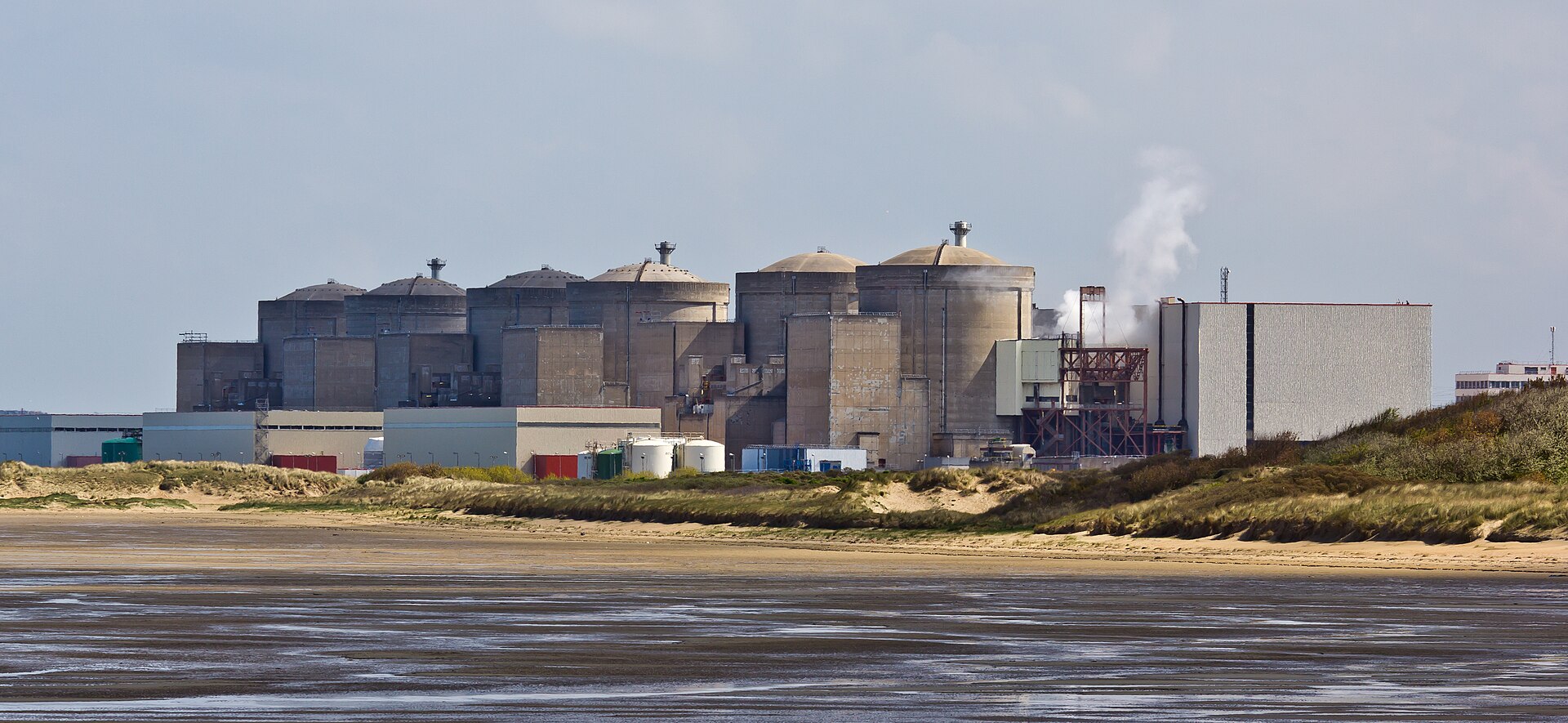
France's state audit office said on 16 November 2026 that EDF could struggle to finance the six EPR2 reactors it plans to build at Penly, Gravelines and Bugey, and priced the programme at 84 billion euros in 2025 values. The company's own figure, presented as a ceiling agreed with the state as shareholder, is 72.8 billion euros in 2020 values. First commercial operation is scheduled from 2038.
The warning sits in a thematic note on state support for energy production, published in French as part of the Court's series on structural challenges for France. Its central trigger is a price level.
pour des prix de moins de 70 €/MWh, le besoin de financement d'EDF pour la construction des futurs EPR2 s'accroîtrait lourdement
At prices below 70 euros a megawatt hour, in other words, EDF's financing requirement for building the future EPR2 reactors would rise heavily, constraining the group's ability to fund the programme without a further state contribution on top of the subsidised loans already announced. The Court noted that it had made the same point in its recent report on EDF's economic model.
The dividend lever
In unfavourable price scenarios, the Court wrote, one of the levers available to the state would be to give up all cash dividends for part or all of the EPR2 construction period. It put the effect on the public finances at around 65 billion euros cumulatively between 2026 and 2040 under certain scenarios. The state is EDF's sole shareholder, so the cost of that option falls on the budget rather than on the company.
The financing architecture was set after France's Nuclear Policy Council met on 17 March 2025. Subsidised loans from the Caisse des dépôts et consignations, backed by regulated savings funds, are to cover up to 60 per cent of construction costs, with the first budget outlays for the interest subsidy expected from 2027. From 2038, the first three pairs of reactors would receive a contract for difference at a strike price of at most 100 euros per megawatt hour in 2024 values, fixing the unit payment on a reference volume for 40 years. That mechanism carries no budgetary impact until the first units are commissioned.
What the forward curve shows
The 70 euro threshold is not hypothetical at the near end of the market. Reuters reported that French baseload power for delivery in 2027 closed on 13 November just under 120 euros a megawatt hour, while contracts for 2028 and 2029 stood at 65.75 euros and 60.10 euros, according to London Stock Exchange Group data.
Those two contracts sit below the level the Court flagged. The qualification matters, though: the first EPR2 unit is not due to generate before 2038, and no liquid market prices that far out. A forward curve that softens for 2028 and 2029 is evidence about the next three years of EDF's cash generation, not about the decade in which the reactors would earn.
The direction of that softening fits the supply picture Parallax Nexus reported on 6 November, when the International Energy Agency forecast almost 4,800GW of new renewable capacity between 2026 and 2031. More zero-marginal-cost generation pushes down the captured price for everything running alongside it, nuclear included.
The cheaper option is the old fleet
The Court's comparison is pointed. Extending the operating life of EDF's existing reactors to 60 years remains the least costly low-carbon option available to France, it said, conditional on safety approvals and strict control of maintenance costs. It also set the EPR2 exposure against Flamanville 3, the single reactor whose cost and schedule both ran well past plan.
The honest reading is that the Court has not argued against EPR2 so much as priced the insurance. A state that owns the whole company, lends it 60 per cent of the construction cost cheaply and then guarantees its output price for 40 years has already taken on the price risk; the note says where that risk surfaces and when. What is not known is the content of EDF's final investment decision, which Reuters reported is expected by the end of this year, or how the European Commission will treat the support package.
What happens next?
- EDF is expected to take a final investment decision on the six-reactor programme by the end of 2026, according to Reuters.
- The first budget outlays for the interest subsidy on the Caisse des dépôts loans are expected from 2027.
- Construction at Penly, the pilot site, is pencilled in to start in 2027, with first commercial operation from 2038 at the earliest.
- The contract for difference at up to 100 euros per megawatt hour begins to carry budgetary consequences only once the first units are commissioned.
Related topics
Sources & references
- 01Les soutiens de l'État à la production d'énergie — Cour des comptesprimaryThematic note published 16 November 2026, in French; source for the 84 billion euro figure, the 70 euro threshold and the 65 billion euro dividend scenario
- 02La Cour des comptes française met en garde contre la menace que représentent les bas prix de l'électricité pour le programme de réacteurs d'EDF — Reuters, via ZoneboursenewsReuters report of 16 November 2026, translated by Zonebourse; source for the 2027 to 2029 forward prices and the expected timing of EDF's final investment decision
- 03Low electricity prices could impact EPR2 programme funding, auditor warns — World Nuclear NewsnewsPublished 16 November 2026; source for the March 2025 Nuclear Policy Council financing parameters
- 04France's State Auditor Warns On Funding Problems For Six Planned EPR2 Nuclear Power Plants — NucNetnewsSpecialist coverage of the 16 November 2026 report, including the Flamanville 3 comparison
More from Energy
IEA Sees a 1.7m Barrel Oil Surplus as Gulf Exports Return
The International Energy Agency's November Oil Market Report, published on 13 November 2026, forecasts fourth-quarter supply of about 105 million barrels a day against demand roughly 1.7 million lower, reversing the deficit it projected a month ago. Diesel stays tight, and the gap between the IEA's demand estimate and OPEC's is now wider than most years' total growth.
Dominion's Data Centre Queue Reached 54.9GW as Construction Fell
The three-tier disclosure in Dominion Energy's third-quarter slides, published 30 October 2026, shows the Virginia data centre pipeline growing 13 per cent in nine months while its construction-authorised slice shrank. Most of the increase sits in the least binding category.
Wind Turbine Imports Ruled a Security Threat With No Tariff
A section 232 proclamation published on 28 October 2026 found that imported wind turbines and their parts threaten to impair United States national security, but imposed no new tariff and instead directed Commerce and the US Trade Representative to negotiate with trading partners.
EQT Buys Range Resources to Pass 9 Bcfe a Day in Appalachia
EQT and Range Resources agreed on 26 October 2026 to an all-stock merger at 0.987 EQT shares per Range share, leaving EQT holders with about 73 per cent of a company producing more than 9 Bcfe a day. Closing is expected in the first quarter of 2027, subject to regulatory clearances and shareholder votes.