IEA Sees a 1.7m Barrel Oil Surplus as Gulf Exports Return
The agency raised its fourth-quarter supply forecast by 3.3 million barrels a day and now expects production to run above consumption for the first time since the Iran war began. Its demand number sits 3.4 million barrels a day below OPEC's.

Global oil supply will exceed demand by about 1.7 million barrels a day in the fourth quarter of 2026, the International Energy Agency said in its monthly Oil Market Report on 13 November, the first surplus it has recorded since the war with Iran began. The agency put fourth-quarter supply at around 105 million barrels a day and raised that estimate by 3.3 million barrels a day against the forecast it published on 14 October, which had the quarter in deficit.
The swing came from the Gulf. Global production rose by 2.3 million barrels a day in October to 105.4 million, following a 3 million-barrel increase in September, the agency said. That recovery has arrived faster than consumption, which is the whole of the story: the IEA has not raised its demand forecast, it has simply stopped assuming the barrels would stay missing.
A year of losses that is still a year of losses
For 2026 as a whole, the picture remains grim. The IEA expects supply to fall by 4.8 million barrels a day to average 101.6 million, before rebounding 6.6 million to 108.1 million in 2027, with a 5.3 million increase coming from Gulf production. Supply losses from the Mideast Gulf and Russia were partially offset this year by growth in the Americas, where the United States, Canada, Brazil, Argentina and Guyana are on track to add a combined 1.6 million barrels a day, according to the report as reported by Argus on 13 November.
Demand is forecast to fall by 2.7 million barrels a day in 2026 to 102.3 million, then recover by 2 million to 104.3 million in 2027. The year-on-year contraction narrows to 2.7 million barrels a day in the fourth quarter from an average 4.4 million across the second and third quarters. Petrochemical feedstocks such as LPG, ethane and naphtha account for roughly 80 per cent of next year's gain.
Global oil demand continues to be weighed down by ongoing disruptions to exports of refined products and LPG from the [Mideast] Gulf, remaining at roughly half of pre-war levels, and high fuel prices.
Crude is cheap again, diesel is not
Brent was trading near $95.71 a barrel, down 0.1 per cent, after the report was published at 09:00 GMT, heading for a second consecutive weekly decline of about $2. West Texas Intermediate was around $88 a barrel. A crude price falling while an annual supply deficit of nearly 5 million barrels a day persists is not a contradiction; it is what happens when the market stops paying for insurance against the next disruption.
Middle distillates are the exception, and they are the part that reaches households. The IEA's October report recorded wholesale diesel above $200 a barrel in Singapore in mid-September and all-time highs near $220 in Europe and the United States, with total OECD gasoil stocks drawing counter-seasonally to 565 million barrels in July, 5 per cent below pre-conflict levels and the lowest since November 2023. The November report says diesel remains tight, with attacks on Russian energy infrastructure continuing to weigh on supply. Crude benchmarks are the headline number; diesel cracks are the one that decides whether freight and heating costs come down.
The 3.4 million barrel disagreement
Two days before the IEA published, OPEC kept its own demand forecasts unchanged in its Monthly Oil Market Report of 11 November, projecting global demand growth of 180,000 barrels a day to 105.72 million in 2026 and 2.55 million to 108.28 million in 2027. Set those against the IEA's 102.3 million and 104.3 million and the two institutions are describing different worlds.
| Forecast | IEA (13 Nov 2026) | OPEC (11 Nov 2026) |
|---|---|---|
| 2026 demand | 102.3 mb/d | 105.72 mb/d |
| 2027 demand | 104.3 mb/d | 108.28 mb/d |
| 2026 change | -2.7 mb/d | +0.18 mb/d |
| 2027 change | +2.0 mb/d | +2.55 mb/d |
A 3.4 million barrel a day gap on 2026 demand is larger than global demand growth in a normal year, and it is not a rounding difference in methodology. The IEA counts the lost Gulf product and LPG exports as demand destroyed; OPEC's framing keeps more of it as demand deferred. The honest judgment is that the next two quarters will settle which reading was right, because a genuine surplus shows up in inventories rather than in forecasts. FGE, reading the same report on 13 November, said the agency had confirmed an OECD stock draw in October alongside the supply surplus, which is not what a comfortable market looks like.
The IEA cautioned that continued attacks on shipping remain a significant downside risk to the supply outlook, which is the sentence that undercuts the headline. What is not public is the report's own detail: the OMR is a subscription product, and the figures above come from the agency's release as carried by the Wall Street Journal, Argus and the Oil & Gas Journal rather than from a public document. OPEC publishes next on its usual mid-month schedule, and the IEA's December report is due on 11 December.
What happens next?
- The IEA publishes its December Oil Market Report on 11 December 2026, which will show whether the fourth-quarter surplus appeared in inventories.
- OPEC's next Monthly Oil Market Report is due in mid-December and will indicate whether it narrows the gap with the IEA's demand estimate.
- Attacks on shipping and on Russian energy infrastructure remain the main risk the agency flags to its supply recovery.
- Diesel cracks and OECD gasoil stocks will show whether the crude price fall reaches middle distillates.
Sources & references
- 01Oil Market Report (OMR) data product and release schedule — International Energy AgencyprimaryConfirms the November 2026 edition was released on 13 November at 10:00 Paris time; the report itself is a subscription product.
- 02Global Oil Market Expected to Return to Surplus, International Energy Agency Says — The Wall Street Journalnews13 November 2026; source of the October production figures of 2.3 million and 105.4 million barrels a day.
- 03Global oil supply to surpass demand in 4Q: IEA — Argus Medianews13 November 2026; source of the 101.6 million and 108.1 million barrel supply path, the Americas figure, the verbatim IEA quotation and the OPEC comparison.
- 04IEA sees oil market surplus returning as Gulf exports recover — Oil & Gas Journalnews13 November 2026; source of the 3.3 million barrel upward revision and the shipping risk caveat.
- 05Oil Market Report - October 2026 — International Energy AgencyprimaryPublished 14 October 2026; source of the diesel price records and the 565 million barrel OECD gasoil stock figure for July.
- 06Flash Alert: IEA keeps global oil demand outlook unchanged and confirms OECD stock draw in October amid supply surplus — FGEreport13 November 2026 consultancy note on the same IEA release.
- 07IEA: Oil Market to Swing Into Surplus in Q4 2026, Brent Falls to $95.71 — IndexBoxnews13 November 2026; source of the Brent price and the 09:00 GMT publication time.
More from Energy
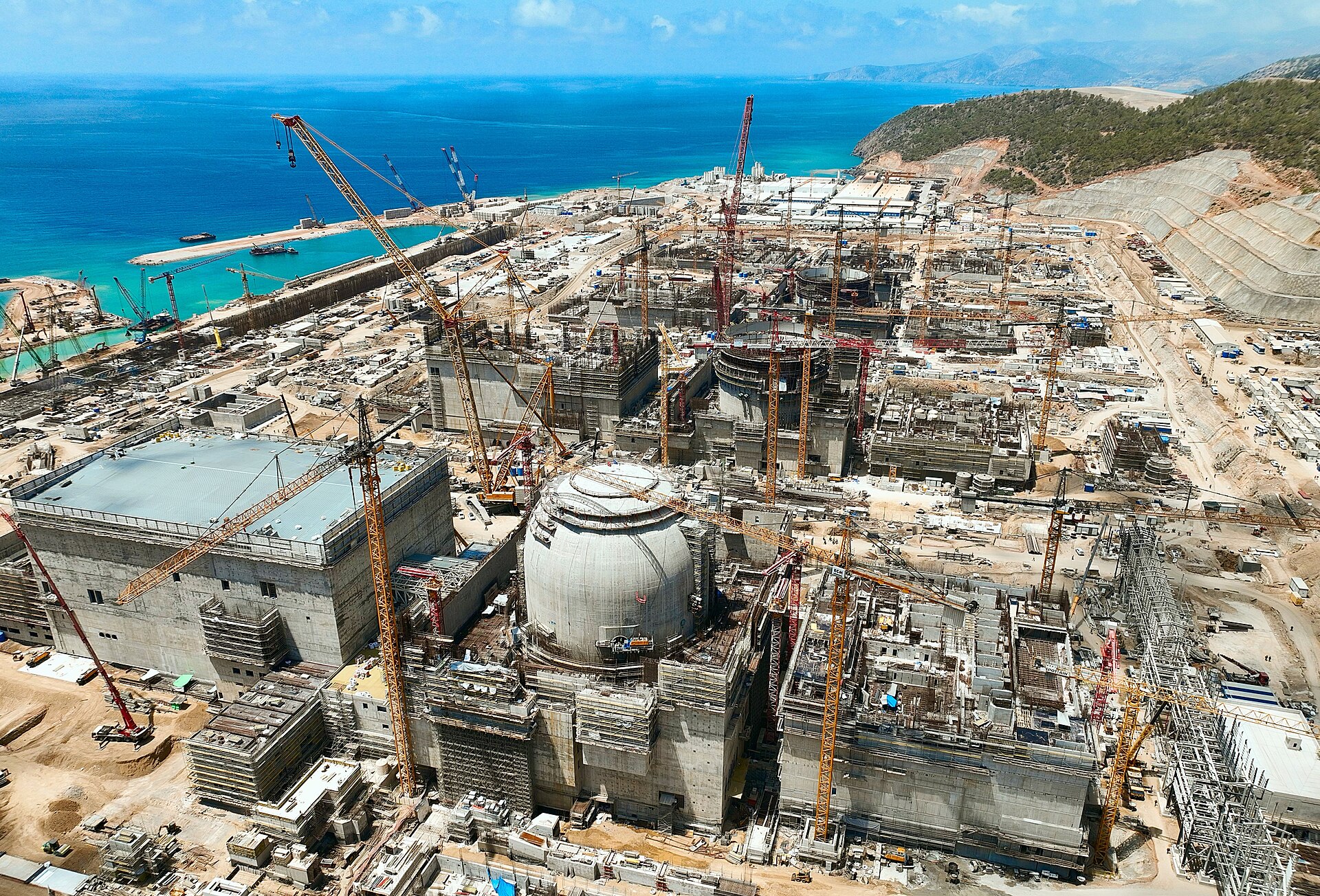
Turkey Puts $500bn Behind a 281GW Power System by 2040
Energy Minister Alparslan Bayraktar set out a $500bn investment plan taking Turkey from 123GW of installed capacity to 281GW by 2040, with $116bn of it going into transmission and distribution rather than generation. It lands four days before Turkey hosts COP31 in Antalya.
Dominion's Data Centre Queue Reached 54.9GW as Construction Fell
The three-tier disclosure in Dominion Energy's third-quarter slides, published 30 October 2026, shows the Virginia data centre pipeline growing 13 per cent in nine months while its construction-authorised slice shrank. Most of the increase sits in the least binding category.

Wind Turbine Imports Ruled a Security Threat With No Tariff
A section 232 proclamation published on 28 October 2026 found that imported wind turbines and their parts threaten to impair United States national security, but imposed no new tariff and instead directed Commerce and the US Trade Representative to negotiate with trading partners.

Power Poles in Melbourne Cost NextDC A$140m of FY27 Revenue
NEXTDC cut FY27 net revenue guidance to A$475m to A$500m from A$615m to A$640m on 21 October 2026 after its electricity distributor suspended network works. Shares fell 42 per cent the same day, their lowest since 2018.