US Treasury Adds Russia and North Korea to Investment Curbs
A proposed rule published on 22 October 2026 would extend the Outbound Investment Security Program beyond China and widen the covered technologies to supercomputing, biotechnology and hypersonic systems. It applies only above $50,000 and leaves most stock purchases alone.
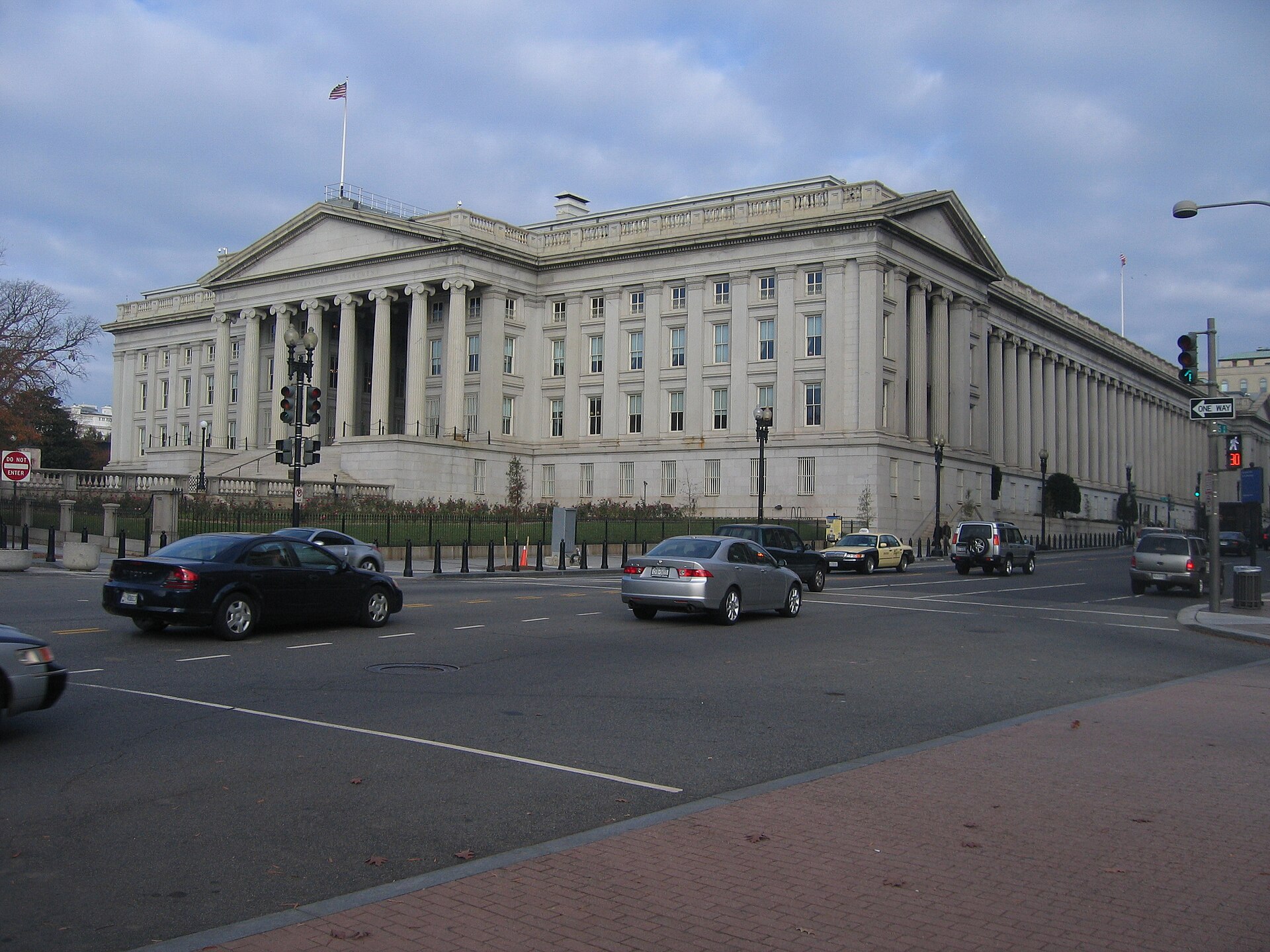
The US Treasury proposed a rule on Thursday 22 October 2026 that would extend its outbound investment restrictions beyond China to Russia, Iran, North Korea and Cuba, and widen the list of covered technologies. The Outbound Investment Security Program currently covers China, including Hong Kong and Macau. Under the proposal, certain investments by US persons involving covered foreign entities engaged in specified sensitive technologies would be prohibited, while other transactions would carry a notification requirement, Treasury told Yonhap.
The notice was scheduled for publication in the Federal Register that Thursday. It implements the Comprehensive Outbound Investment National Security Act, which Congress enacted in December 2025 as part of the fiscal 2026 National Defense Authorization Act. The underlying programme dates to a 2023 executive order signed by President Joe Biden, which restricted US investment in Chinese semiconductors, quantum computing and artificial intelligence.
The proposed regulations would strengthen the existing Outbound Investment Security Program to prevent our adversaries from using U.S. investment to develop critical technologies that threaten U.S. national security.
What counts as covered
Treasury listed semiconductors, microelectronics, artificial intelligence, quantum information technologies, high-performance computing and supercomputing, according to Yonhap's report from Washington on 23 October. The Associated Press reported the same day that the proposal also reaches hypersonic systems and biotechnology, and noted that Treasury used the administration's preferred term for AI, superintelligence or SI, in the text.
The $50,000 floor does most of the work
AP reported that the rule would apply only to investments exceeding $50,000 and would exclude many financial investments, including stock purchases. That exclusion matters more than the technology list. The owned judgment here is that the headline reads as a broad expansion of American capital controls while the carve-outs keep it narrow: a rule aimed at direct and venture investment in named entities, not at the index funds and public equity through which most American exposure to Chinese technology actually runs.
Enforcement so far has been modest. In July 2026 Treasury issued a $200,000 fine against a US-based company for failing to report a $92,500 investment in a Chinese artificial intelligence and robotics company made by one of its subsidiaries, AP reported.
Russia on the list, days after a sanctions waiver
AP noted that the inclusion of Russia comes days after President Donald Trump waived sanctions on Russia following a diesel deal with President Vladimir Putin. The two moves sit in different parts of the government and serve different statutes, but they land in the same week.
Jason Chipman, a partner at WilmerHale who works on investment rules and export controls, said the new rule "will require more substantial compliance programs to manage risk". Craig Singleton, a senior fellow at the Foundation for Defense of Democracies, said the proposal "sends an important signal to markets that Washington is tracking where U.S. capital is flowing and what capabilities it is helping build".
Nothing changes for investors until a final rule exists. Ryan Majerus, a former US trade official now a partner at King & Spalding, told AP it is "just the first step in a fairly long process to get to changes which presumably will be more enforcement-minded, to put more teeth behind the outbound investment program". What the notice does not settle is how many transactions the expanded list would have caught had it been in force this year, because Treasury has published no estimate of the volume involved.
What happens next?
- Public comments on the proposed regulations run through 7 December 2026.
- Treasury is expected to issue final implementing rules at a later date, with the definition of a covered foreign entity the detail to watch.
- Compliance teams at private equity and venture firms will have to screen deals above $50,000 against a five-country list rather than one.
Related topics
Sources & references
- 01US Treasury proposes a rule to crack down on high-tech investments in China, other adversaries — Associated PressnewsBy Paul Wiseman and Didi Tang, 22 October 2026; source of the $50,000 threshold, the hypersonics and biotechnology additions and the July 2026 penalty.
- 02U.S. Treasury Department proposes expanding tech investment restrictions to N. Korea — Yonhap News AgencynewsFiled from Washington on 23 October 2026; carries the Bessent statement, the covered sector list and the 7 December comment deadline.
- 03Outbound Investment Security Program — US Department of the TreasuryprimaryProgramme page for the regime the proposed rule would expand.
More from Technology
Nvidia Floats $2,000 a Year per GPU for Agent Software
Nvidia's chief executive named a per-GPU, per-year price for the software that runs AI agents on its hardware, in remarks at GTC Berlin on 22 October 2026 first reported by The Register. The company has not confirmed the scope, the product or the start date, and the figure sits below the list price of a product it already sells.
CXMT Guided to 742% Revenue Growth and Its Shares Still Fell
ChangXin Memory Technologies estimated January to September revenue of 265bn to 270bn yuan, up 742 per cent, and net profit of up to 132.5bn yuan. Its chairman proposed a buy-back of up to 2bn yuan; the shares dropped 6.5 per cent on 19 October.
ASML Says Its 2027 and 2028 Supply Will Fall Short of Demand
ASML reported third-quarter net sales of €11,662 million and net income of €4,960 million on 14 October 2026, raised its full-year outlook to €44 billion to €45 billion, and said customers are asking about orders for 2029 and 2030. It published no quarterly bookings figure.

Microsoft Will Run Most of Its AI on Chips It Designs
Microsoft unveiled Maia 300 on 12 October 2026 and said it will scale its in-house accelerator family to multi-gigawatt deployments from 2027. Reuters reported the company plans to deploy potentially more than a million of the chips next year. None of the claimed efficiency gains has been independently measured.