Twenty-One States Take EPA's Power Plant Repeal to the DC Circuit
A coalition led by New York asked the US Court of Appeals for the DC Circuit on 1 October 2026 to strike down the EPA's repeal of the 2024 Carbon Pollution Standards. The agency itself puts the savings from that repeal at $310 billion.
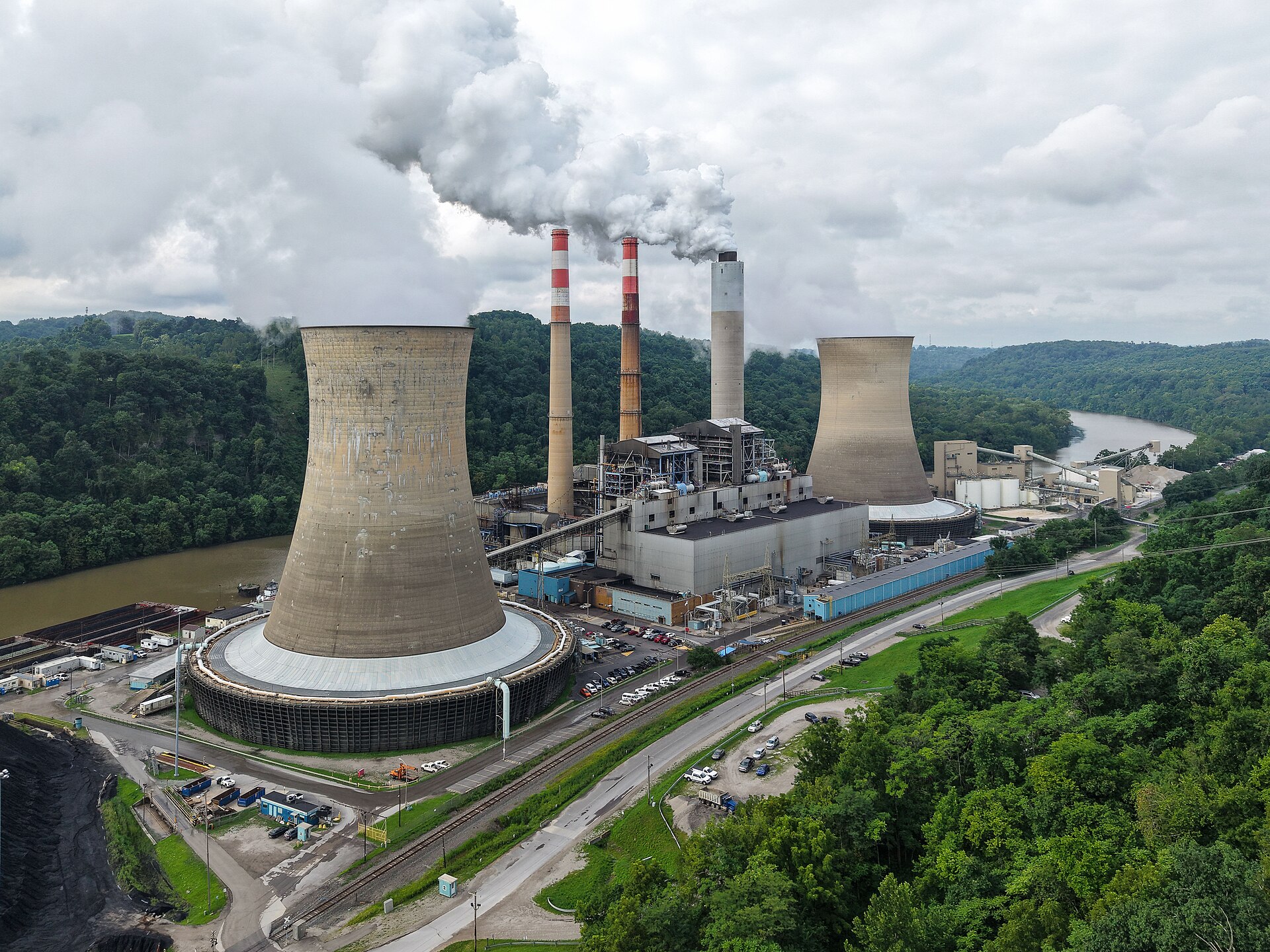
Twenty-one states, the District of Columbia and three cities asked the US Court of Appeals for the DC Circuit on 1 October 2026 to strike down the Environmental Protection Agency's repeal of federal greenhouse gas limits for coal- and gas-fired power plants. New York Attorney General Letitia James, who led the filing, describes the coalition as 25 states, counties and cities.
The EPA finalised that repeal on 14 September 2026, when Administrator Lee Zeldin announced it at the G20 Energy Abundance Ministerial in Houston. The agency's news release says the rule strikes most of the 2024 Carbon Pollution Standards and projects savings of $310 billion. At the same event the EPA proposed rescinding every remaining greenhouse gas standard for the power sector, which it estimates would save a further $370 million in direct compliance costs.
Two filings, not one
The coalition lodged two documents. The first is a petition for review asking the DC Circuit to vacate the repeal. The second is a notice of intent to sue over what the states call the EPA's continued failure to regulate greenhouse gas pollution from many existing gas-fired plants, among them the peakers that run during periods of high demand. The attorney general's office says the agency set standards for new gas plants more than a decade ago and has never done the same for existing ones. New York also testified at an EPA hearing the same day against scrapping the remaining standards.
The argument is about arithmetic
The legal claim is narrow. The coalition contends the EPA abandoned the limits without properly considering reasonable alternatives or the health and climate costs of allowing more pollution, and that the rescission was arbitrary and capricious because the agency did not sufficiently calculate the full cost of repealing the rule. That is an administrative law argument about process, not a request that the court impose any emissions standard.
This administration's insistence on giving the nation's biggest polluters a free pass will set our country back decades in the fight against climate change.
Power plants produce roughly one quarter of the nation's carbon dioxide emissions, according to the attorney general's office, which makes the sector the second largest US source of greenhouse gases after vehicles, as Reuters reported on 1 October. The states say removing the limits clears the way for millions of additional tons of emissions, without publishing the modelling behind that figure. The case turns on what the agency weighed, not on a forecast.
What the EPA says it was fixing
The agency's case is that the 2024 rule was unlawful rather than merely expensive. Its news release says the standards exceeded the EPA's authority under the Clean Air Act by requiring control technologies that are not adequately demonstrated, effectively forcing plants to retire rather than setting standards they could meet, and that the rule failed to account for the Supreme Court's decision in West Virginia v. EPA. The standards were contested from the day they appeared: the New York Times reported on 1 October that utilities and nearly two dozen Republican-run states, led by West Virginia, sued to block them as unachievable and destabilising for the grid.
The honest reading is that the states have picked the stronger of two available fights. A court that agrees the EPA failed to calculate the full cost of rescission can send the rule back for better reasoning without ordering a single tonne of abatement, leaving the agency free to redo the arithmetic and reach the same conclusion. The weakness is that the Supreme Court has already narrowed what the EPA may do under this part of the Clean Air Act, so the agency can argue the 2024 standards could not have survived however carefully the costs were counted. As Parallax Nexus reported on 19 September, an appeals court had already found the administration's emergency orders keeping a Michigan coal plant running unlawful, and the Department of Energy issued fresh orders for two Indiana stations eight days later.
Pennsylvania joined through its governor rather than its attorney general, the only state to do so, putting a major coal and gas producer on the petition without its elected law officer's signature.
What happens next?
- The DC Circuit will set a briefing schedule; no hearing date has been announced.
- The EPA's separate proposal to rescind every remaining greenhouse gas standard for the power sector is still open and would face its own challenge if finalised.
- The coalition's notice of intent to sue over existing gas-fired plants starts a statutory waiting period before that second case can be filed.
- Republican-led states and utilities that backed the repeal are expected to intervene in support of the EPA.
Related topics
Sources & references
- 01Attorney General James Challenges EPA Rollback of Power Plant Pollution Limits — Office of the New York Attorney Generalprimary1 October 2026; links the petition for review and the notice of intent to sue, and lists the coalition members.
- 02EPA Finalizes Repeal of 2024 Power Plant Regulations, Delivering $300+ Billion in Savings, Proposes Repeal of All Remaining Greenhouse Gas Emissions Standards for Power Plants — US Environmental Protection Agencyprimary14 September 2026; source of the $310 billion projection and the $370 million compliance estimate.
- 03New York, 20 states sue EPA to block power plant carbon rule repeal — Reutersnews1 October 2026, by Valerie Volcovici.
- 04States Sue Over Trump's Repeal of Climate Rules for Power Plants — The New York Timesnews1 October 2026, by Brad Plumer; source for the 2024 rule's original challengers.
- 05Trump's EPA eliminating rule that limits emissions from power plants — Associated Pressnews14 September 2026, by Matthew Daly; contemporaneous account of the repeal.
More from Climate

Amazon Deforestation Halved Under Lula as Brazil Votes
Brazilian Amazon deforestation more than halved between 2022 and 2025 according to INPE's PRODES record, and preliminary satellite alerts point to a further fall this year. Carbon Brief's 28 September analysis compares that against a modelled scenario without forest code enforcement and finds at least 20,000 square kilometres of forest still standing, days before Brazil's 4 October election.

Two in Five Corporate Climate Target Changes Cut Ambition
A new Harvard database of climate targets across the Russell 3000 finds that most companies revise their emissions goals before the target year, and that about 42 per cent of those revisions lowered ambition against 15 per cent that raised it.

Data Centres Took a Third of Climate Tech's Capital
Currence's H1 2026 report shows climate tech venture investment at $26.1 billion, 55 per cent up year on year, with low-carbon data centre developers taking 34 per cent of the total and two deals accounting for roughly a quarter of the half. Fuels and carbon equity funding went the other way.

Oceans, Not Air, Drove 84% of Polar Ice Loss Since 1979
The IMBIE team’s dataset in Scientific Data, published on 16 September 2026, finds Greenland and Antarctica lost 11,309 billion tonnes of ice from 1979 to 2023, adding 31.4 mm to sea level, with 84% of the loss driven by faster glacier discharge into the ocean rather than surface melt.