DOE Clears PJM Plants to Exceed Emissions Limits to 16 October
PJM asked for the order on 11 October, warning it would come within 900 MW of its reserve margin the following Wednesday with about 61,591 MW of generation already out for autumn maintenance.
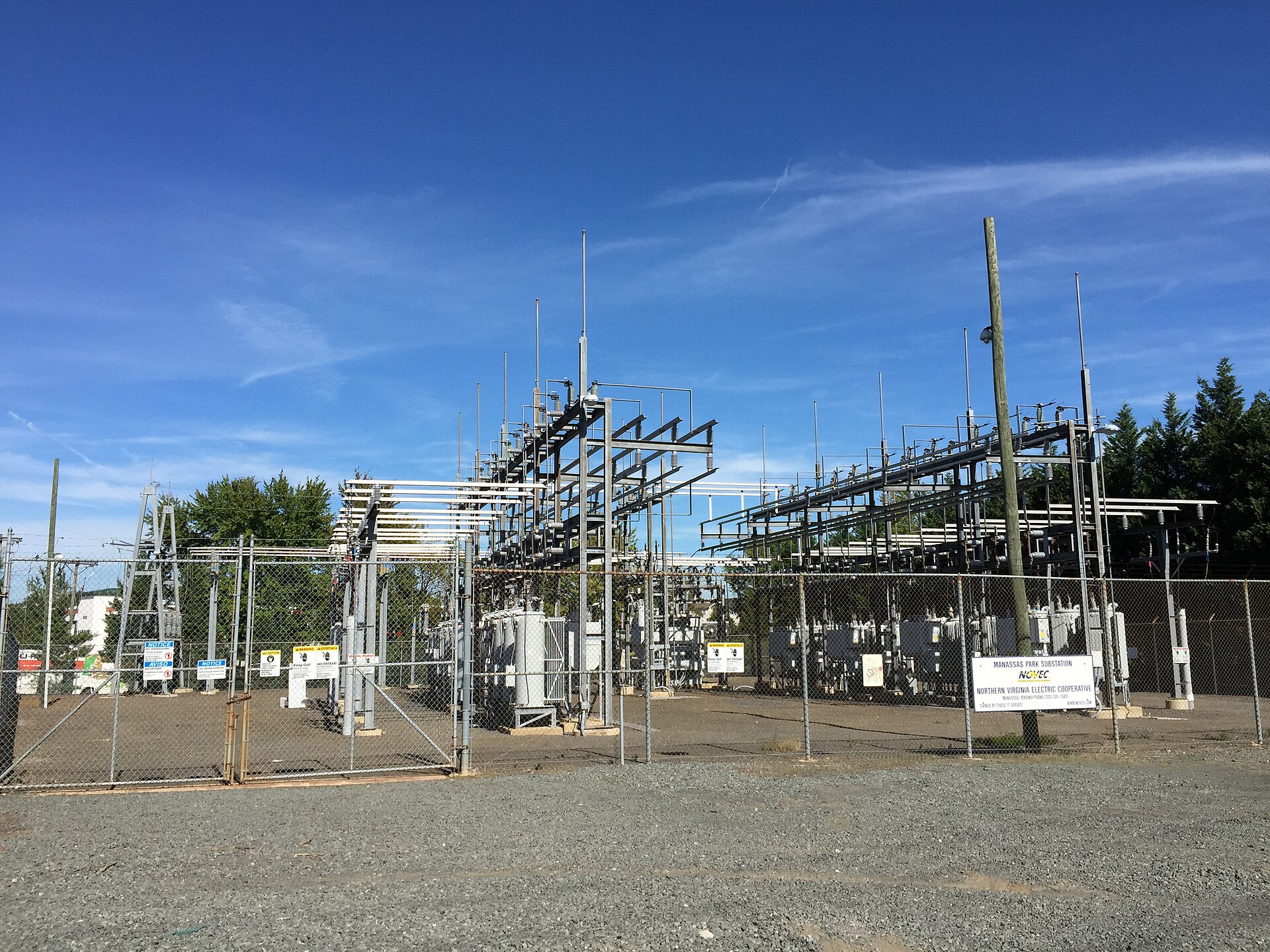
The US Department of Energy has authorised PJM Interconnection to run named power plants beyond the emissions limits written into their environmental permits, and to order data centres and other large customers onto their own backup generators, until 11:59pm Eastern on 16 October.
Energy Secretary Chris Wright signed Order No. 202-26-50 in Washington on 12 October 2026 under section 202(c) of the Federal Power Act, the emergency provision that lets the secretary compel generation and transmission when reliability is threatened. The order took effect on 13 October. It answers an application PJM filed on 11 October, signed by Michael Bryson, the grid operator's senior vice president for operations.
What PJM told Wright
The application sets out the arithmetic. PJM wrote that it "forecasts demand at or around 111,500 MW (or higher)" on 13 October and that "PJM is forecasted to be within 900 MW of its reserve margin on October 14, 2026". Generation outages across the region were anticipated to reach around 61,591 MW, the filing states, with the squeeze worst in the BGE, PEPCO and Dominion zones, which cover central Maryland, the Washington area and much of Virginia.
The comparison PJM drew is the useful one. On 17 September the grid carried a peak load of 127,729 MW with 33,899 MW of generation out of service. This week's forecast peak is roughly 16,000 MW lower, but 27,692 MW more generation is unavailable. Three named lines were also limiting transfers across the footprint, among them the Conastone to Peach Bottom 5012 500 kV facility and the Crete to St Johns 345 kV tie with MISO.
The alerts PJM issued anyway
Having obtained the order, PJM still ran most of its emergency playbook. It extended a Maximum Generation Alert and a Load Management Alert through 14 October, issued a Pre-Emergency Load Management Action on 13 October to cover the afternoon peak and the evening net-load peak "when solar resources reduce to zero", recalled non-firm sales to neighbouring systems, and recalled every active generation maintenance outage ticket in the region from noon on 14 October. As of 2pm on 13 October it was forecasting 112,447 MW that day and 113,312 MW the next, according to its own operations update.
Unseasonable weather patterns are providing fewer days to perform important maintenance or construction on the generation and transmission equipment serving our footprint. This is the new reality that grid operators are facing, but PJM is confident that our procedures, along with the DOE orders, gives us additional tools to maintain our reserve margins and allow us to operate reliably.
Not the power FERC refused
Four days before Wright signed, the Federal Energy Regulatory Commission rejected the central parts of PJM's plan for connecting data centres, including the interim service and bring-your-own-new-capacity rules that would have let the grid operator curtail new large loads during shortages, while approving its large load registry. Parallax Nexus reported that order on 13 October. The two actions are not the same authority. FERC turned down a tariff mechanism for cutting a data centre's grid supply, on the grounds that it set retail rates and decided which retail customers get curtailed. Wright's order instead lets PJM push those customers onto generation they already own, as a last resort before or during an Energy Emergency Alert 3.
The honest reading is that the federal government handed PJM, for four days and by emergency decree, a thin slice of the operational grip over large loads that its own regulator had just told it to go and settle with the states. What the two share is a premise: that a grid whose operator expects data centre demand to triple to about 29 GW by 2030, a forecast Reuters reported on 12 October, cannot be balanced on generation alone.
One caution belongs in the record. PJM said on 13 October that it "has not had to make use of Large Load backup generation to date", so that authority is untested in practice. Nor has DOE published how many units ran past their permit limits under its run of 2026 orders, or what the extra sulphur dioxide and nitrogen oxide amounted to, which leaves the cost side of the trade unquantified.
What happens next?
- The order lapses at 11:59pm Eastern on 16 October 2026 unless DOE extends it, with PJM expecting temperatures in the region to fall from that date.
- PJM must notify DOE at AskCR@hq.doe.gov if any unit was dispatched in reliance on the order, and post the affected units on its website.
- PJM has said it will make a revised large load cost allocation filing to FERC by 29 October 2026 in docket ER26-3380.
- PJM must decide whether to refile the interconnection rules FERC rejected on 9 October, or leave curtailment priorities to individual states.
Related topics
Sources & references
- 01Federal Power Act Section 202(c): PJM Interconnection, L.L.C. Order No. 202-26-50 — US Department of EnergyprimaryOrder signed 12 October 2026, effective 13 to 16 October 2026.
- 02PJM's 202(c) Application, Order No. 202-26-50 — PJM Interconnection via US Department of EnergyprimaryFiled 11 October 2026; source of the 111,500 MW, 900 MW and 61,591 MW figures.
- 03Operations Update: PJM Extends Maximum Generation Alert to Oct. 14, Calls on Demand Response — PJM Inside LinescompanyPublished 13 October 2026; source of the Bryson quote and load forecasts.
- 04US panel approves PJM's registry of data centers, rejects plan to curtail power to them — ReutersnewsReported 12 October 2026 on the FERC order of 9 October.
More from Energy

EQT Buys Range Resources to Pass 9 Bcfe a Day in Appalachia
EQT and Range Resources agreed on 26 October 2026 to an all-stock merger at 0.987 EQT shares per Range share, leaving EQT holders with about 73 per cent of a company producing more than 9 Bcfe a day. Closing is expected in the first quarter of 2027, subject to regulatory clearances and shareholder votes.

Power Poles in Melbourne Cost NextDC A$140m of FY27 Revenue
NEXTDC cut FY27 net revenue guidance to A$475m to A$500m from A$615m to A$640m on 21 October 2026 after its electricity distributor suspended network works. Shares fell 42 per cent the same day, their lowest since 2018.

Amazon Funds a 960MW Reactor Study at an Indiana Coal Site
AEP agreed on 19 October 2026 to study 960 megawatts of small modular reactors at a retired Indiana coal site, with Amazon funding development and contracting for the power. There is no final investment decision, no disclosed cost and no in-service date.
NERC Grid Rules Clear Ballot With 36-Month Recorder Delay
NERC announced on 15 October 2026 that Project 2026-02, a package of three new reliability standards for data centres, AI facilities and cryptocurrency mines, had passed its final stakeholder ballot. It now goes to NERC's Board of Trustees and then to FERC, which ordered the standards filed by 31 December 2026.