Senate Bill Makes Data Centres Above 20MW Pay Their Own Costs
The Bipartisan American Affordability and Jobs Act, introduced on 30 September 2026, would add a section to the Federal Power Act barring utilities from recovering any part of a large data centre's incremental cost from anyone else. The vote waits until after the midterms.
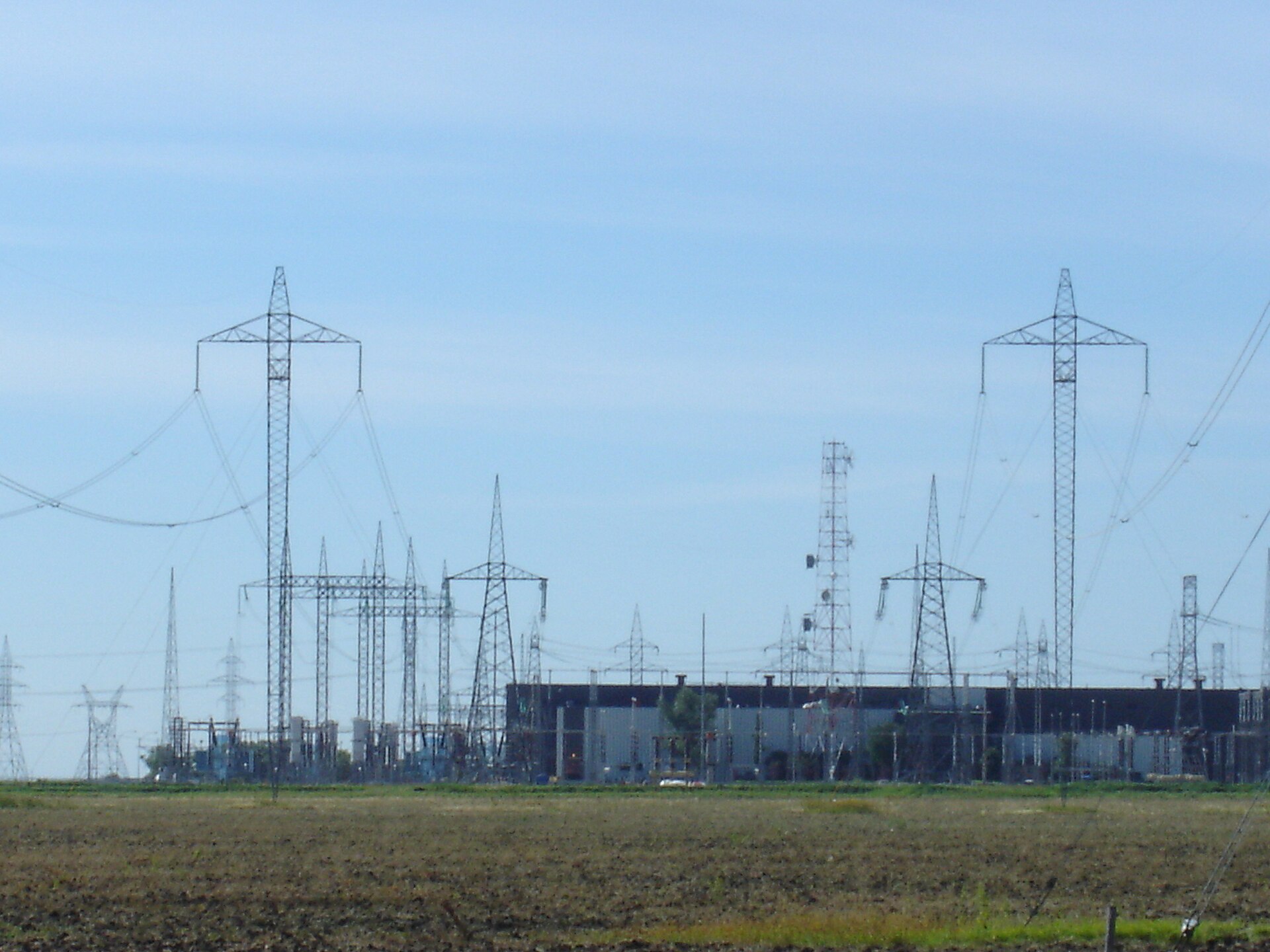
A data centre drawing 20 megawatts or more would have to carry every incremental dollar its power supply costs, under a permitting bill four senators introduced on 30 September 2026. The Bipartisan American Affordability and Jobs Act of 2026 was brought forward by Shelley Moore Capito, who chairs the Senate Environment and Public Works Committee, Mike Lee, who chairs Energy and Natural Resources, and the ranking Democrats on both committees, Sheldon Whitehouse and Martin Heinrich.
Most of the attention on the package has gone to what it does to environmental review, and there is plenty there: a 150-day deadline for filing judicial review claims over federal environmental decisions, limited to parties that submitted a substantive comment during the public comment period. The provision with the sharper edge for the power industry sits in Division B, as a new section 228 of the Federal Power Act.
What counts as a covered load
The bill defines a covered load as electric load attributable to one or more data centres or high-density computing facilities at a single site, or at multiple sites under common ownership or control, that equals or exceeds 20 megawatts. Phased projects count if they are reasonably expected to reach 20 megawatts at full buildout. The definition reaches artificial intelligence training and inference, cloud computing and data hosting, and cryptocurrency mining, and it explicitly excludes computing equipment that is ancillary to some other industrial activity.
Twenty megawatts is a low bar. It is well below the hyperscale campuses that dominate the siting fights, and it catches a large share of the colocation market. The multiple-sites clause closes the obvious workaround of splitting one project across several addresses.
The operative sentence is short. "No portion of the incremental cost may be allocated to, or recovered in the rates of, any customer other than a covered load," the text reads. Incremental cost is defined broadly: everything that would have been avoided had the load not been served, including all costs to construct, own and operate generation or storage resources and the transmission and distribution service that goes with it.
The clause that stops a walk-away
The provision that should worry developers is not the rate floor but what the bill calls continuing recovery on exit. A charge for service to a covered load must be designed to recover the utility's full incremental cost, and that recovery continues after the customer terminates its contract or simply stops buying electricity, until the cost has been recovered in full. Before building or upgrading any facility needed to serve a covered load, the utility must also take financial assurances or contributions from the customer sufficient to cover the cost, with anything already posted to a transmission organisation credited against it.
That is the heart of the matter. The risk in the current wave of grid connections has never been that a signed data centre refuses to pay its bills; it is that a utility builds a gas plant or a 345 kV line against a 15-year commitment and the tenant's business case changes in year four. Section 228 moves that stranded-cost risk onto the balance sheet of whoever asked for the capacity.
The direction travels with regulators elsewhere. Argentina's Energy Secretariat now requires new data centre demand of roughly 80 MW or more to show firm capacity equal to 115 per cent of consumption, as Parallax Nexus reported on 26 September, and California's seven data centre laws signed on 21 September put operators on separate electricity rates so they carry their own connection costs. The American bill is the version with teeth in the retail relationship.
States get an auction, not a queue
The bill then hands states a set of powers that go well beyond cost recovery. A state may set rates for covered loads above both embedded average cost and incremental cost, and require the surplus to be credited to other retail customers' bills. It may condition service on the data centre procuring, building or contracting for new generation sufficient to meet its own demand. It may condition service on the customer accepting a curtailable transmission service category that limits how much energy it can withdraw, or when.
Most consequentially, a state may run an open season or competitive solicitation to allocate service among competing data centres, making awards "in such manner as returns the greatest benefit to other ratepayers on a present value basis, notwithstanding the order in which applications or requests for service are received." That sentence ends first-come, first-served as the organising principle of large-load interconnection. Queue position becomes a bid.
Separately, the bill orders the Federal Energy Regulatory Commission to revise its 1994 transmission pricing policy statement within 270 days of enactment so that customers taking transmission service on behalf of computational load operators pay both embedded and incremental cost, with incremental payments credited against the utility's annual transmission revenue requirement to prevent double recovery from everyone else. Loads that accept non-firm service are to be charged less. A proposed rule follows within 270 days of that revision, and a final rule within a year of the proposal.
Add those deadlines up and a final FERC rule arrives roughly two and a half years after a signature, which is the most important number in the whole section. Nothing in it reaches a connection request filed this winter.
Why the vote waits
No vote is scheduled. Reuters reported on 30 September that Capito said the goal is for the permitting bill to be the first vote the chamber takes after returning from the 3 November midterms, and that the House, which has not passed the bill, is in recess until after the elections. Whitehouse told the press conference that the administration's return to regular order on wind and solar permits remains unresolved, and that Democrats need more clarity on it.
And as data centers drive demand for more power, it will ensure they pay their fair share of the grid upgrades they require, not leave that bill to American families. Our bill puts teeth behind that principle.
The strongest argument against reading too much into this: the no-subsidy floor is only as good as the estimate behind it. The bill defines incremental cost using figures the utility itself produces at or around the time the load becomes operational, subject to approval by FERC or a state. Every fight about whether a data centre is paying its way will now be a fight about that estimate, conducted in a rate case, after the concrete has set. And the 2024 Manchin-Barrasso permitting deal also arrived with four sponsors and bipartisan praise, and never came to the floor.
What happens next?
- Senate negotiators have agreed to hold a vote until after the 3 November midterm elections, with Capito aiming for the first slot when the chamber returns.
- The House has not passed a permitting bill and is in recess until after the elections, so any package would need to clear both chambers in a lame-duck session.
- Edison Electric Institute and the National Rural Electric Cooperative Association have not stated positions on the transmission provisions; the cooperatives opposed the comparable 2024 deal.
- If enacted, FERC would have 270 days to revise its 1994 transmission pricing policy statement before the rulemaking clock on data centre transmission rates starts.
Related topics
Sources & references
- 01Capito, Lee, Whitehouse, and Heinrich Introduce Bipartisan American Affordability and Jobs Act of 2026 — US Senate Committee on Environment and Public WorksprimaryDated 30 September 2026; source of the Heinrich quote
- 02Bipartisan American Affordability and Jobs Act of 2026, bill text — US Senate Committee on Environment and Public WorksprimarySource of the 20 MW covered-load threshold, the new Federal Power Act section 228, the 270-day FERC deadlines and the 150-day litigation deadline
- 03US senators hit deal on energy project permitting bill, vote seen after November — ReutersnewsDated 30 September 2026; Capito on the timing of a vote and the House recess
- 04Senators strike bipartisan permitting deal — Latitude MedianewsDated 30 September 2026; Whitehouse at the press conference, and the 2024 Manchin-Barrasso comparison
- 05Senate inches closer to US infrastructure permitting reform bill — ReutersnewsDated 24 September 2026; background on the negotiations and industry pressure
More from Energy
Samsung Puts $1 Billion Behind AI's Power Bottleneck
Samsung Electronics and five affiliates committed a combined $1 billion to Helix Digital Infrastructure on 29 September 2026, taking the KKR-formed company's secured capital past $11 billion. Helix says power availability is the greatest bottleneck in AI infrastructure and is buying generation and transmission alongside data centres.
Brussels Proposes A-to-G Energy Labels for Large Data Centres
The European Commission proposed a common EU rating scheme on 21 September 2026 that would give every data centre above 500 kW an automatically generated electronic label from 15 August 2027, grading energy efficiency A to G on Power Usage Effectiveness and water efficiency on Water Usage Effectiveness. A parallel consultation asks whether minimum performance standards should follow.
DOE Renews Indiana Coal Orders Days After a Court Struck One Down
The US Department of Energy issued fresh section 202(c) emergency orders on 19 September 2026 keeping two Indiana coal stations available through 18 December, eight days after a federal appeals court ruled the same authority had been used unlawfully to keep a Michigan coal plant running.
Ofgem Moves to Charge Batteries for Holding Grid Slots
Ofgem said on 17 September 2026 it is minded to approve CMP470, a code modification raised by developer Field Energy that would make battery projects post financial security of £3,000 to £25,000 per megawatt to keep a connection slot while the queue is oversubscribed.