Kagan and Soai Win Chemistry Nobel for One-Handed Molecules
The Royal Swedish Academy of Sciences cited non-linear effects and autocatalysis in asymmetric organic synthesis. Soai's 2003 reaction was the first time anyone produced chirality from a non-chiral starting mixture.
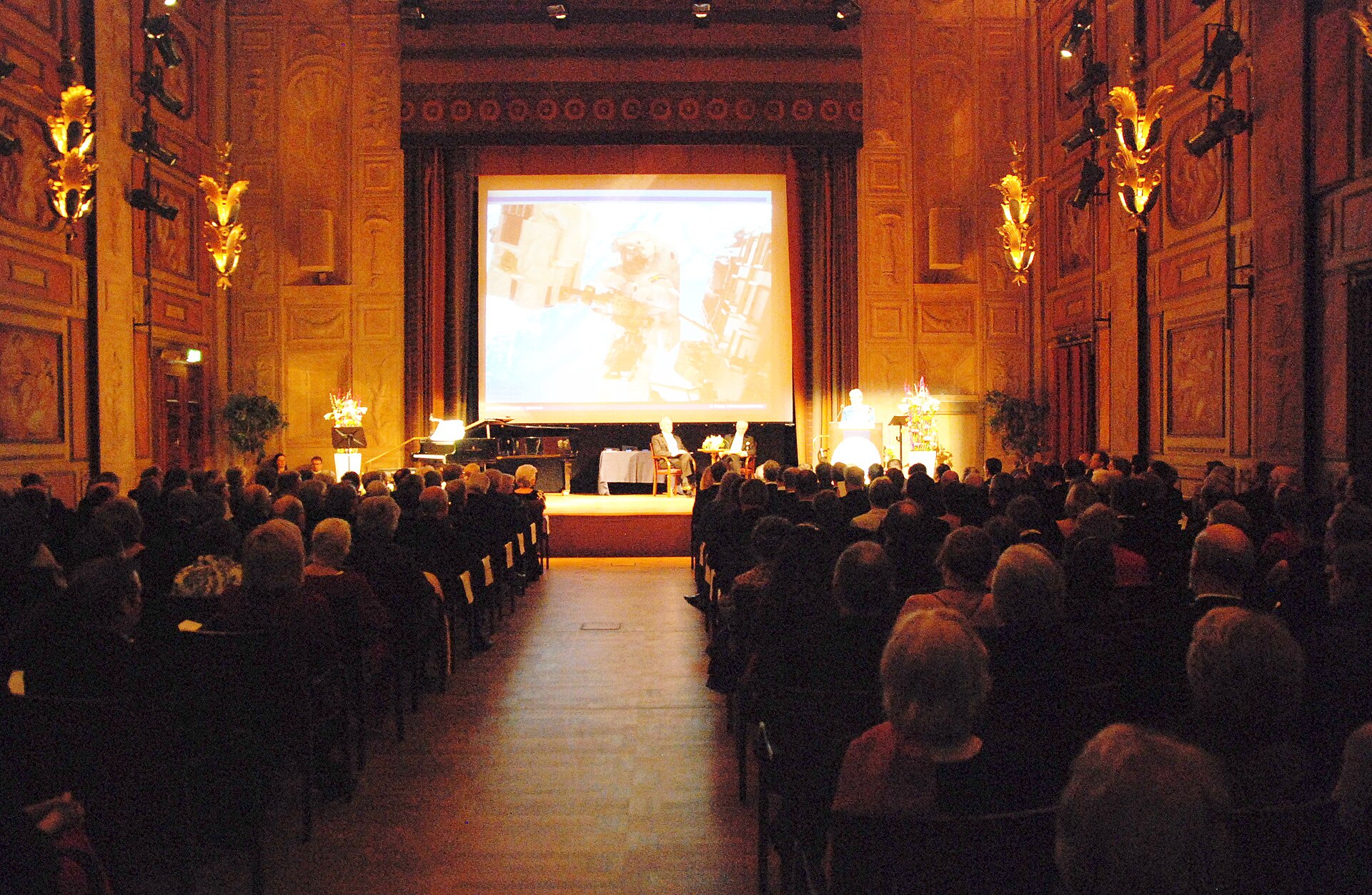
The Royal Swedish Academy of Sciences awarded the 2026 Nobel Prize in Chemistry on 7 October to Henri B. Kagan, professor emeritus at what was then Université Paris-Sud, and Kenso Soai, professor emeritus at Tokyo University of Science, with the citation "for the discovery of non-linear effects and autocatalysis in asymmetric organic synthesis". They share 12 million Swedish kronor, about $1.2 million. Kagan was born in 1930 in Boulogne-Billancourt, France; Soai in 1950 in Hiroshima, Japan.
The problem they worked on is easy to state. Many molecules come in two forms that are mirror images of each other, the way a left hand mirrors a right. Living things use only one of each pair: amino acids in proteins bend polarised light to the left, the sugars in DNA bend it to the right. Chemists call this homochirality. When chemists built the same molecules in a flask, they got an even mix of both forms, and for a long time nobody could design a reaction that produced only one.
The recipe Charles Frank wrote in 1953
Frank, a theoretical physicist at the University of Bristol, published a model in 1953 after a colleague told him chemists still could not explain life's asymmetry. His paper set three conditions a reaction would have to meet to produce one mirror image only:
- A chiral catalyst driving an asymmetric reaction, so one mirror image forms in excess.
- Some mechanism that amplifies the formation of one mirror image and suppresses the other.
- Autocatalysis, meaning the reaction produces its own catalyst, so the excess compounds on itself.
The German chemist Willy Marckwald had met the first condition in the early 1900s, with a chiral catalyst that gave a very small excess of one form. Later pioneers of asymmetric reactions were recognised with Nobel Prizes in Chemistry in 2001 and 2021. This year's prize covers Frank's second and third conditions, forty years apart.
Kagan's curved graph
Working at Université Paris-Sud in the early 1980s, Kagan questioned an assumption everyone else was making. Catalysts for these reactions pair a metal atom with a chiral molecule, and chemists assumed the product's mirror-image purity simply tracked the catalyst's, in a straight line. Kagan reasoned that the metal atom probably binds at least two chiral molecules at once, which means a mixture of left and right forms would generate three catalysts: right-right, left-right and left-left.
The mixed left-right catalyst turned out to drive the reaction far more slowly than the other two. So when Kagan plotted product purity against catalyst purity, the line bent. The excess in the product was larger than the excess in the catalyst, which is Frank's amplification condition. He described three asymmetric reactions showing these non-linear effects in 1986, in a paper the Academy's background cites as J. Am. Chem. Soc. 1986, 108, 2353 to 2357.
Soai's reaction that builds its own catalyst
Soai noticed that in one strongly non-linear reaction the catalyst and the product looked structurally similar, which suggested the product might be able to catalyse its own formation. Trial and error brought him to 5-pyrimidyl alkanol. In a 1995 paper he started with a 2 per cent excess of one mirror image and finished with 87 per cent. The reaction reinforced itself, satisfying all three of Frank's conditions, but it still needed a chiral head start.
Eight years later he removed the head start. In 2003 Soai reported a reaction that began with a non-chiral combination of molecules, produced slightly more of one mirror image by chance, and then let that tiny excess take over until it reached as much as 99.99 per cent of the product. Run it again and the other form could win instead. Which one came out depended on what happened at random in the opening moments.
Other than life itself, no one had ever achieved this feat.
The award came the day after the physics prize went to Francis Halzen for the IceCube Neutrino Observatory, which Parallax Nexus covered on 7 October. Both prizes reward work whose central question is still open: Halzen's detectors find cosmic neutrinos without yet identifying most of their sources, and Soai's reaction creates homochirality without establishing how life did.
Why pharmaceutical chemists care about the curve
The commercial stake is older than either discovery. Thalidomide, the sedative that caused birth defects in thousands of children in the early 1960s, did its harm through the mirror image of the active substance. Since then, making a drug means making one form and not the other, and the same applies to flavours, scents, agricultural chemicals and some materials. Kagan's non-linear effects are useful twice over here: as a way to purify a product, and as a diagnostic, because the shape of the curve tells chemists something about how the reaction actually works, which is what they need to optimise it.
What the Soai reaction does not settle
The Academy is direct about the limit. Its own background describes the Soai reaction as artificial and different to the chemistry of life, and notes that researchers are still trying to repeat the achievement with amino acids and sugars rather than a pyrimidyl alcohol. The honest reading is that this is a prize for proving a mechanism is available, not for showing it is the one the early Earth used. Nobody has yet run Frank's recipe on a molecule life actually uses.
What happens next?
- The laureates deliver their Nobel lectures in Stockholm ahead of the award ceremony on 10 December 2026.
- Groups working on the origin of life are attempting Soai-type autocatalysis with amino acids and sugars, which the Academy identifies as the open problem.
- Remaining 2026 prizes, including literature and peace, are announced through 12 October.
Sources & references
- 01The Nobel Prize in Chemistry 2026: They solved chemistry's asymmetric mystery — Royal Swedish Academy of SciencesprimaryPopular science background published 7 October 2026; citation, laureate biographies, Frank's conditions and the 1995 and 2003 figures
- 02Nobel chemistry prize goes to pair who solved mystery of mirror-image molecules — Reutersnews7 October 2026
- 03Chemistry Nobel for solving mystery of how 'handed' organic molecules can emerge — Naturenews7 October 2026; prize sum of 12 million Swedish kronor, about $1.2 million
- 042026 Nobel Prize in Chemistry goes to France's Henri Kagan and Japan's Kenso Soai — Le Monde with AFPnews7 October 2026; announcement in Stockholm
More from Science
OpenAI Says Its Models Disproved the Exponential Time Hypothesis
OpenAI announced on 26 October 2026 that its internal models produced a disproof of the Exponential Time Hypothesis, a proof of the local smoothing conjecture in every dimension, and an existence proof for quantum chromodynamics. It is handing verification to unpaid external groups rather than to journals.
mRNA Melanoma Vaccine Cuts Recurrence Risk by 42%
Merck and Moderna reported a hazard ratio of 0.58 for recurrence-free survival in more than 1,100 patients with completely resected stage IIB to IV melanoma, the first phase 3 evidence that a vaccine built from each patient's own tumour mutations adds to a checkpoint inhibitor.
MMX Is on Its Way to Phobos With a 10-Gram Target
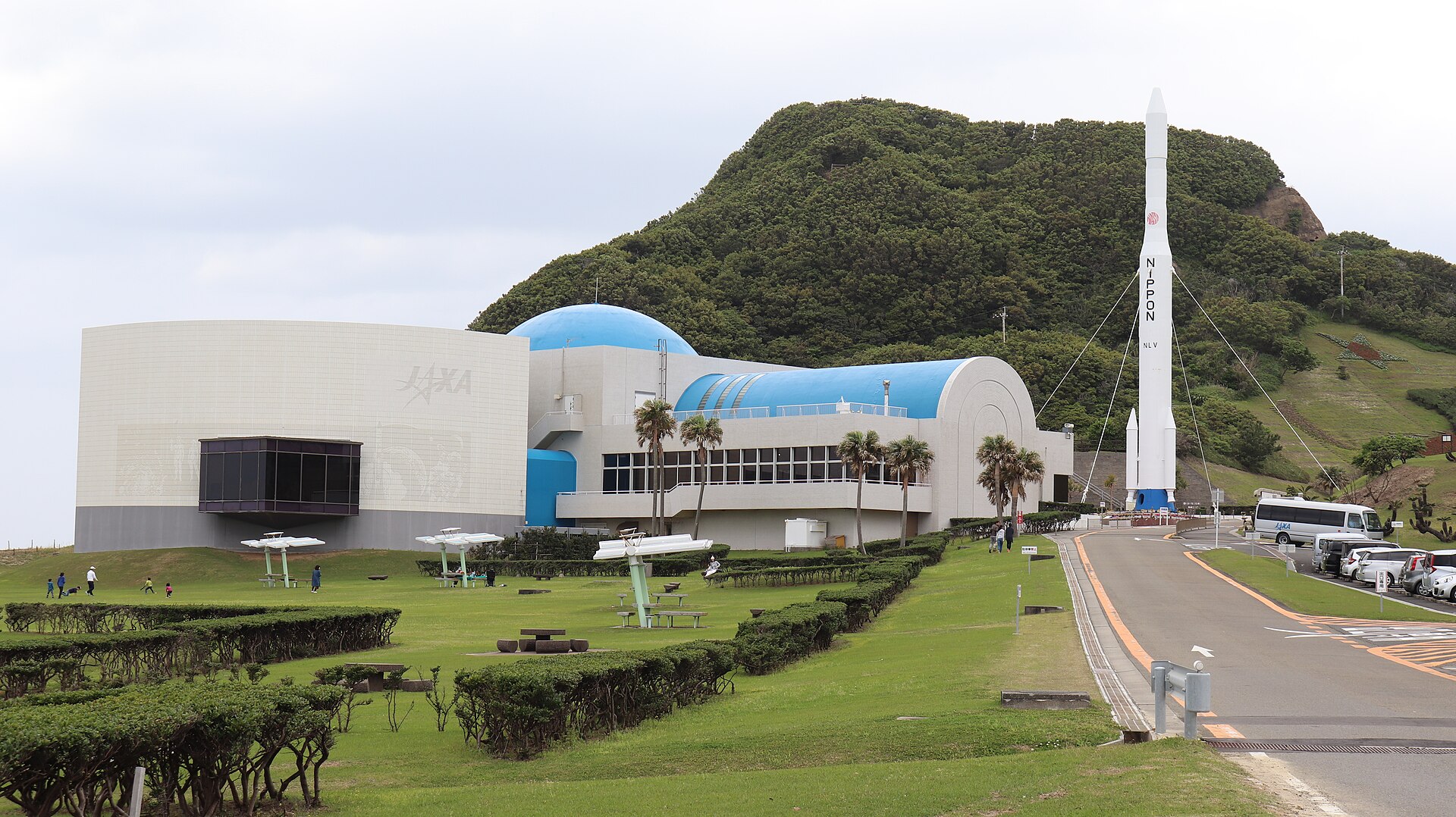
MMX separated from H3 flight No.10 about 71 minutes after liftoff from Tanegashima. If the five-year plan holds, it will collect at least 10 grams of regolith from the Martian moon Phobos and drop a capsule in Australia in 2031.
Sheltering From Heat Adds 46 Radon Deaths per 10,000
Researchers at the University of California, Irvine and Italy's National Institute of Health modelled four patterns of behavioural adaptation to heat and found the combined case added 46 lung cancer deaths per 10,000 people in the United States and 42 in a pooled French, German and Italian population, published on 17 October 2026.