ASML's European Revenue Share Has Fallen to Zero
Frank Heemskerk told an Amsterdam audience on 21 September that the company is selling nothing on its home continent because no chip factories are being built there. Europe was 5 per cent of its business in 2024.
ASML's European revenue share is zero. Frank Heemskerk, the company's executive vice president for global public affairs, said so at a public event at De Balie in Amsterdam on 21 September 2026, putting the figure against 1 per cent in the 2025 financial year and a recent high of 5 per cent in 2024. DataCenterDynamics, which reported his remarks, quoted him saying that because "Europe is not investing and ... no chip factories are being built" across the continent, the company is "selling absolutely nothing in Europe". He called that "genuinely worrying". Bloomberg reported on the same panel the following day.
The number is easy to misread as a company in trouble on home ground. It is not. ASML reported second-quarter 2026 net sales of €9.3 billion and net income of €2.9 billion on 15 July, and raised full-year guidance to between €43 billion and €45 billion. Chief executive Christophe Fouquet said after those results that ASML was "pretty much already close" to receiving all the EUV orders it needs for 2027, "this is with us adding about 30 percent capacity for EUV in 2027 versus 2026", and that the company had begun exploring a further increase of about 30 per cent for 2028. On 8 September, Samsung and ASML announced an expansion of their partnership covering High NA EUV, one of two such commitments from leading foundries that month.
Europe is building the wrong tier of fab
Zero is a statement about product mix, not about European industrial activity. Money is going into European semiconductor manufacturing. Intel has pledged €5 billion (about $5.7 billion) to expand capacity at its Leixlip campus in Ireland. The European Commission approved a €5 billion state aid package in 2024 for the European Semiconductor Manufacturing Company fab in Dresden, a TSMC-led venture in which NXP, Infineon and Bosch each hold 10 per cent. Infineon and GlobalFoundries are both building in Germany.
None of it needs an EUV machine. ASML is the only supplier in the world of extreme ultraviolet and High NA EUV lithography, the tools required to print the most advanced nodes, and a High NA unit costs roughly $370 million. European fabs under construction are aimed at mature automotive and industrial processes, where 193-nanometre deep-ultraviolet immersion lithography is sufficient and far cheaper to run. So the continent can pour capital into wafer capacity and still generate no order for the product line that carries ASML's revenue. As Parallax Nexus reported on 8 September, when the industry aligned on moving to 12-inch photomasks, the roadmap for High NA runs through TSMC and Samsung, with TSMC targeting high-volume manufacturing from 2030.
The demand side Brussels left out
Heemskerk's argument in Amsterdam was not that Europe should subsidise more, but that it has been subsidising the wrong end of the transaction. Fabs are built against order books. No operator commits several billion euros to a leading-edge line without buyers who have agreed in advance to take the output, and no European buyer has done so at that scale. "We need to make sure that some of those buyers ... start talking much more closely with European manufacturers again," he said, according to DataCenterDynamics. "In areas such as artificial intelligence for industry, for example, there are still plenty of opportunities that Europe can seize. But you have to organize this collectively." He said ASML has taken the case to European Commission President Ursula von der Leyen directly.
Europe's own auditors reached a version of this conclusion before Heemskerk did. The European Court of Auditors, in special report 12/2025 on the EU's strategy for microchips, found that the bloc's share of the global semiconductor value chain would rise only slightly, to 11.7 per cent in 2030, against the Chips Act target of 20 per cent. The auditors recommended the Commission carry out an urgent reality check on the Act's ambitions in light of available resources, global competition and structural factors including energy costs and raw material dependencies.
What Chips Act 2.0 changes, and when
The Commission has absorbed the critique on paper. On 3 June 2026 it adopted a proposal for the Chips Act 2.0, COM(2026) 504, inside the European Technological Sovereignty Package alongside the Cloud and AI Development Act. The proposal repeals and replaces Regulation (EU) 2023/1781 and, for the first time, treats demand as a policy instrument in its own right: "Demand Accelerators", public and innovation procurement, a business-to-business supply chain platform, and explicit synergies with the cloud and AI legislation covering data centres and AI gigafactories.
It is a proposal. The European Parliament and the Council have yet to take positions, trilogues follow, and the indicative target for concluding negotiations is the second quarter of 2027. Funding beyond 2027 depends on the next multiannual financial framework, which is itself unsettled. On the timeline that matters to a fab, demand aggregation is at least three years from being a commitment a lender would price.
The honest reading is that ASML's zero is a symptom of a policy sequencing error rather than a European decline, and that Heemskerk is describing a problem the Commission now agrees with but cannot fix on his schedule. The uncomfortable part for Brussels is that a company with a genuine monopoly on the most strategically consequential machine in the world, headquartered in the Netherlands, is telling European politicians it has no European customers for it while the United States, China and India court its expansion.
Two things are not established. Whether the EU can lawfully steer buyers toward domestically fabricated chips at scale is untested against its own procurement rules and its World Trade Organization commitments, and the Commission's own competition directorate has not ruled on the instruments in the proposal. And ASML has not yet published the regional breakdown for its third quarter, so whether the European figure stays at zero for a full calendar year is not yet a matter of record.
What happens next?
- ASML's third-quarter 2026 results will show whether the European share stays at zero for a full calendar year.
- The European Parliament and Council must adopt positions on Chips Act 2.0 before trilogues, with negotiations targeted to conclude in the second quarter of 2027.
- Funding for post-2027 semiconductor measures depends on the next EU multiannual financial framework, still under negotiation.
- ASML has said the United States, China and India are all offering to host expansions of its manufacturing and research operations.
Related topics
Sources & references
- 01ASML's revenue share drops to zero percent in Europe, says it's sold absolutely nothing in the region this year — DataCenterDynamicsnews25 September 2026; Heemskerk's remarks at De Balie on 21 September and the zero, 1 and 5 per cent revenue shares.
- 02Special report 12/2025: The EU's strategy for microchips — European Court of AuditorsprimarySource of the 11.7 per cent 2030 projection against the 20 per cent target and the reality-check recommendation.
- 03Chips Act 2.0 — European CommissionprimaryProposal COM(2026) 504 adopted 3 June 2026 within the European Technological Sovereignty Package.
- 04Samsung Electronics and ASML Expand Strategic Collaboration for Next-Generation Semiconductor Manufacturing — Samsung Electronicscompany8 September 2026; High NA EUV collaboration.
- 05ASML posts Q2 net sales of $9.3bn, reveals Intel Panther Lake chip deal — DataCenterDynamicsnewsASML's second-quarter 2026 results of 15 July 2026 and Fouquet's EUV capacity remarks.
More from Technology
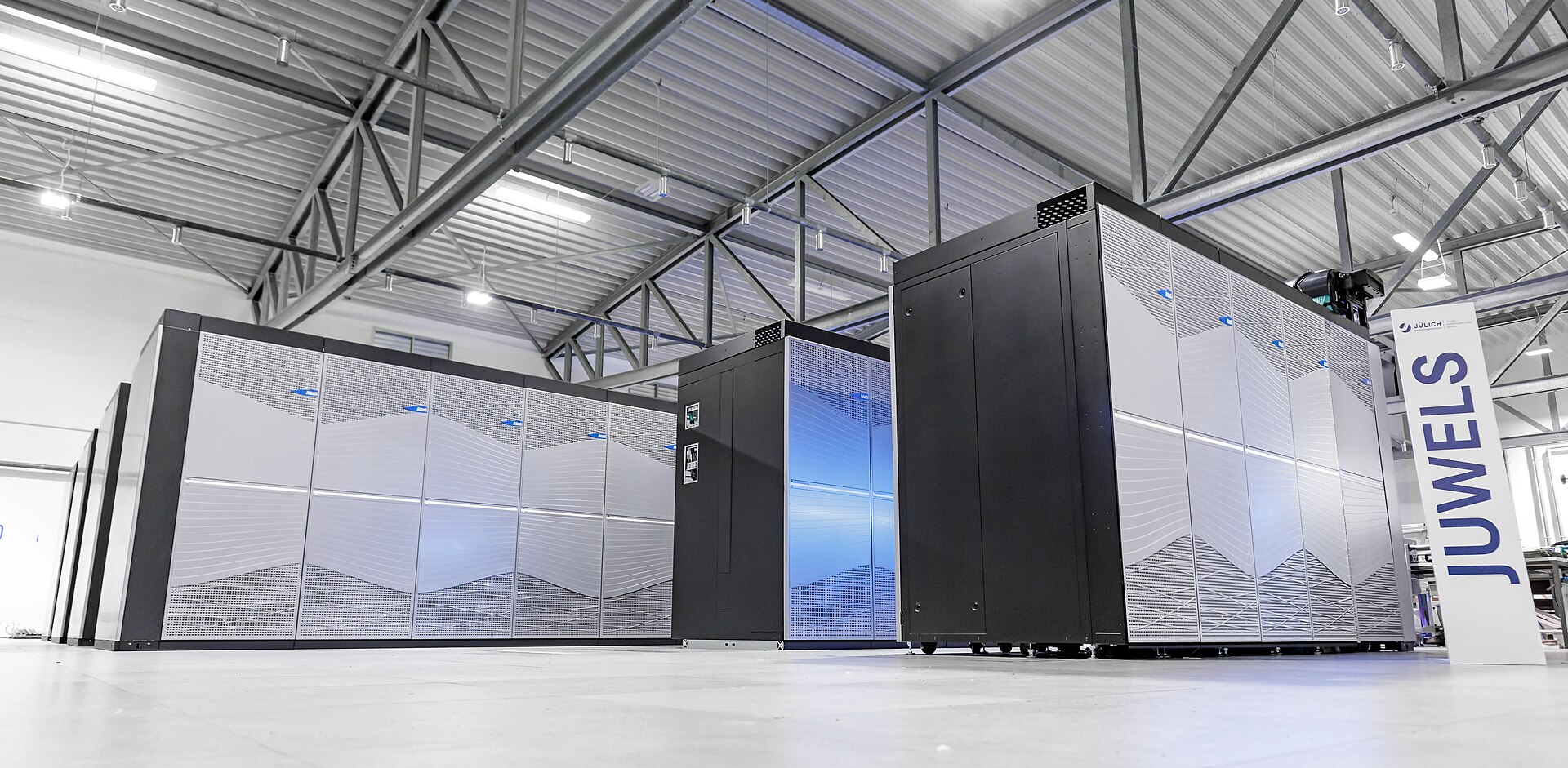
Europe's First Exascale Machine Gets Its European Chip
SiPearl said on 22 September 2026 that it has shipped the first Rhea1 CPU samples to Bull for integration into JUPITER at the Jülich Supercomputing Centre, the company's first Rhea1 order and its first significant revenue.
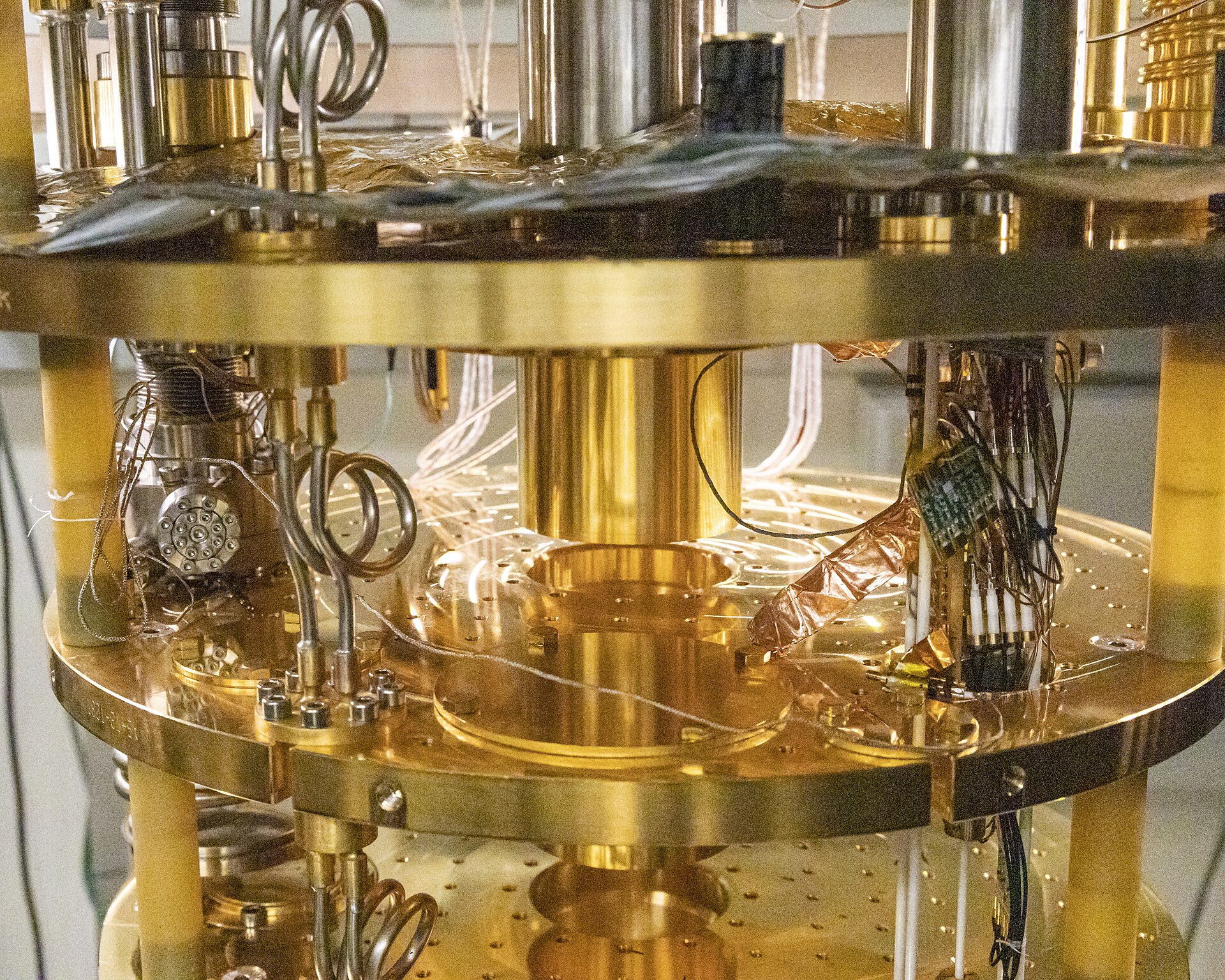
DARPA Gets Hands-On Access to Microsoft's Majorana Qubits
Microsoft has opened a quantum research centre at the University of Maryland and will give DARPA on-site access to its latest topological system, including qubits built on the Majorana 2 chip. The evaluation runs under DARPA's Underexplored Systems for Utility-Scale Quantum Computing programme, which asks whether any quantum approach can produce a commercially useful machine by 2033.
CXMT Puts an 11.95-Nanometre DRAM Platform Into Production
CXMT said on 20 September 2026 that its fifth-generation DRAM platform has entered mass production with the memory array's critical spacing cut to 11.95 nanometres, achieved with quadruple patterning rather than the extreme ultraviolet tools US export controls keep out of China. The company published no yield figure.
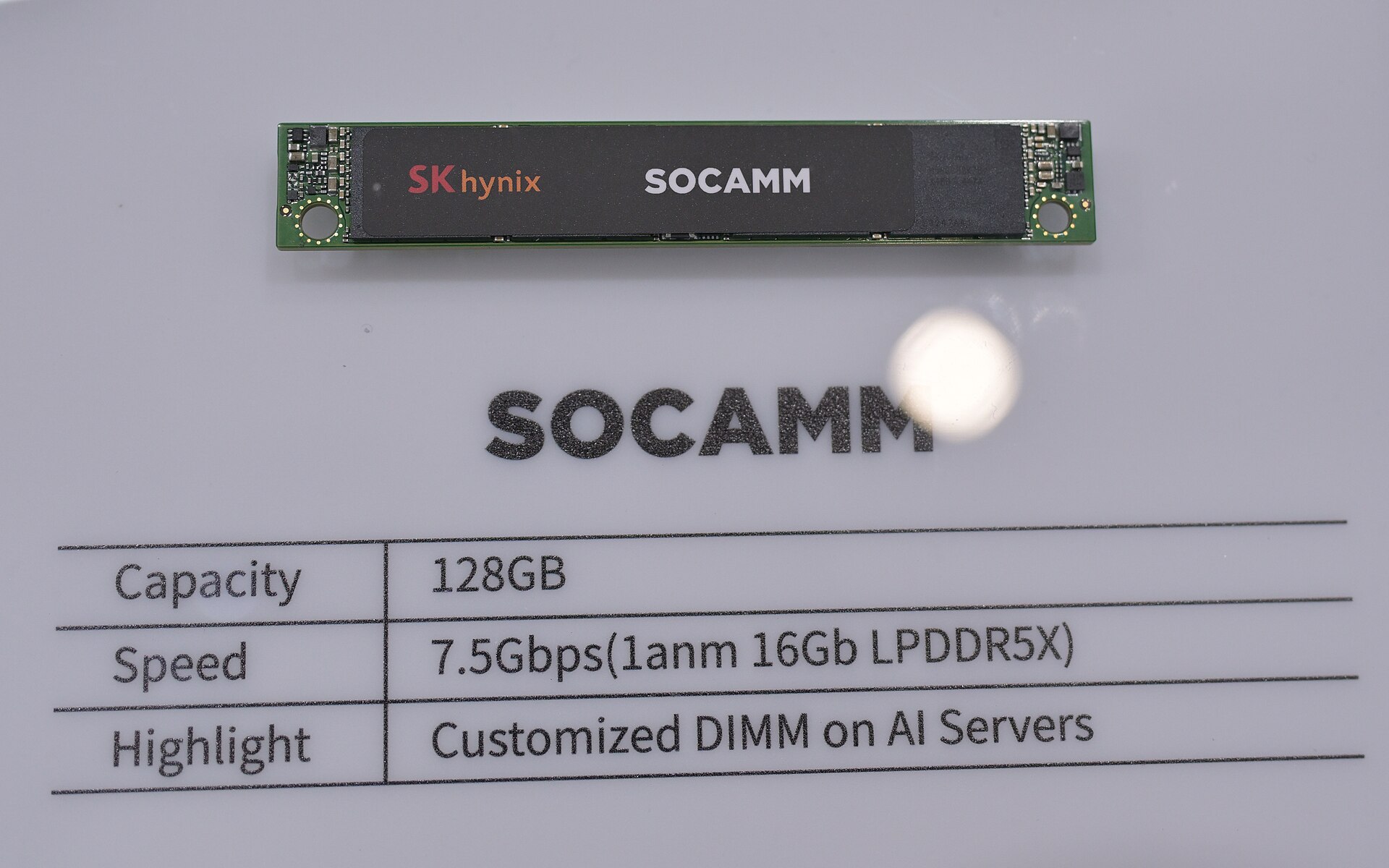
SK Hynix Weighs Making Memory Chips at Intel's Ohio Site
SK Hynix is in talks with Intel about manufacturing memory chips in the United States for the first time, three people familiar with the discussions told Reuters on 16 September 2026. One option is leasing part of Intel's Ohio complex, whose two plants have slipped to 2030 and 2031; another is a venture with Intel and cloud firms seeking memory supply. Any deal involving HBM or DRAM could face review under South Korea's Industrial Technology Protection Act.